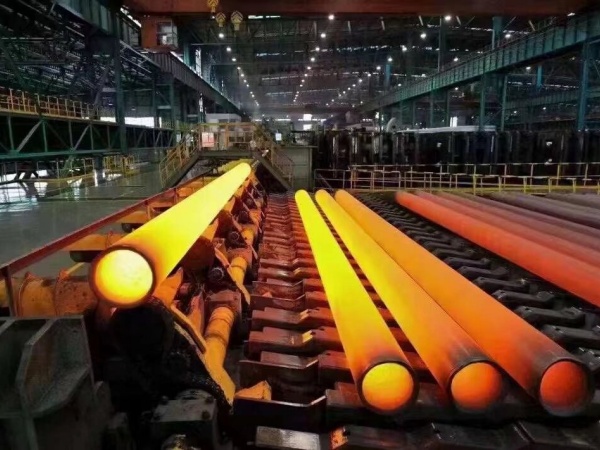
1. Mild Steel Properties at a Glance
Mild steel is a low-carbon steel valued for its ductility, weldability, formability, and moderate strength. Its density is commonly taken as approximately 7.85 g/cm³, while its modulus of elasticity is about 200 GPa. Yield strength, tensile strength, elongation, and hardness vary with the steel grade, product form, thickness, and applicable material standard.
2. Mechanical Properties of Mild Steel
The mechanical properties of mild steel describe its strength, ductility, hardness, and ability to withstand deformation and impact. Typical values vary with the steel grade, product form, thickness, manufacturing process, and applicable material standard.
Typical Mechanical Properties
|
Property
|
Typical Value
|
|
Yield Strength
|
250 – 350 MPa
|
|
Tensile Strength
|
400 – 550 MPa
|
|
Elongation
|
20 – 30%
|
|
Hardness
|
120 – 180 HB
|
|
Modulus of Elasticity
|
Approximately 200 GPa
|
|
Impact Toughness
|
Generally good; varies by grade and test temperature
|
2.1 Yield Strength
Yield strength is the stress at which mild steel begins to deform permanently. It is one of the primary indicators used when selecting steel for structural and load-bearing applications.
2.2 Tensile Strength
Tensile strength represents the maximum stress that mild steel can withstand before fracture.
2.3 Elongation (Ductility)
Elongation measures how much the material can stretch before breaking and reflects the ductility of mild steel.
High elongation allows mild steel to be bent, rolled, stamped, and formed with a lower risk of cracking during fabrication.
2.4 Hardness
Hardness indicates the material's resistance to indentation and surface wear. Mild steel has relatively low to moderate hardness, which generally supports good machinability and ease of fabrication.
2.5 Impact Toughness
Impact toughness describes the ability of mild steel to absorb sudden impact energy without brittle fracture.
This property is particularly important for structural members, transportation equipment, machinery, and applications subject to dynamic loading.
Impact toughness varies with steel grade, thickness, test temperature, and applicable impact test requirements.
2.6 Modulus of Elasticity
The modulus of elasticity (Young's modulus) describes the stiffness of mild steel.
The modulus of elasticity of mild steel is approximately 200 GPa and is commonly used in structural design and engineering calculations.
3. Physical Properties of Mild Steel
Physical properties describe characteristics such as density, thermal conductivity, thermal expansion, electrical resistivity, and specific heat capacity. These properties are relevant to weight calculations, thermal systems, fabrication, and engineering design.
Typical Physical & Thermal Properties
|
Property
|
Typical Value*
|
|
Density
|
7.85 g/cm³
|
|
Melting Range
|
1,425 – 1,540°C
|
|
Thermal Conductivity
|
45 – 60 W/m·K
|
|
Electrical Resistivity
|
~0.16 μΩ·m
|
|
Thermal Expansion Coefficient
|
11 – 13 × 10⁻⁶ /°C
|
|
Specific Heat Capacity
|
~490 J/kg·K
|
*Values may vary slightly depending on steel grade, chemical composition, and manufacturing standard.
Related Resource:Carbon Steel Pipe Weight Calculator
3.1 Density
The density of mild steel is approximately 7.85 g/cm³, a standard value used for calculating pipe weight, structural load, transportation weight, and material consumption.
For tubular products, density is also the basis of theoretical weight calculations, allowing buyers to estimate the weight of different pipe sizes before production.
3.2 Thermal Conductivity
Mild steel has a thermal conductivity of approximately 45–60 W/m·K. This property is relevant to heat transfer calculations in boilers, steam pipelines, heat exchangers, and other thermal systems.
Related Resource: Carbon Steel Thermal Conductivity
3.3 Thermal Expansion
Like other carbon steels, mild steel expands when heated and contracts as it cools.
Its predictable expansion coefficient helps engineers determine expansion allowance, support spacing, and pipeline movement in high-temperature systems.
3.4 Melting Point
Mild steel has a melting range of approximately 1,425–1,540°C.
Although this temperature range is far above normal operating conditions, it is relevant to processes such as hot rolling, forging, welding, and heat treatment.
3.5 Electrical Resistivity
Mild steel conducts electricity but has a much higher electrical resistivity than copper or aluminum, making it unsuitable for electrical transmission while remaining acceptable for grounding structures and welded assemblies.
3.6 Specific Heat Capacity
The specific heat capacity of mild steel is approximately 490 J/kg·K. It is mainly relevant to welding and heat treatment, where the amount of heat required affects heating and cooling rates.
4. Chemical Composition of Mild Steel
The chemical composition of mild steel directly influences its strength, ductility, weldability, and corrosion behavior. Mild steel typically contains a low percentage of carbon together with small amounts of manganese, silicon, phosphorus, and sulfur.
Typical Chemical Composition
|
Element
|
Typical Range
|
|
Carbon (C)
|
0.05 – 0.25%
|
|
Manganese (Mn)
|
0.30 – 1.50%
|
|
Silicon (Si)
|
≤ 0.30%
|
|
Sulfur (S)
|
≤ 0.05%
|
|
Phosphorus (P)
|
≤ 0.04%
|
Actual chemical composition varies according to the applicable material standard and steel grade.
For detailed grade comparison and composition tables, see: Mild Steel Pipe Chemical Composition
5. Key Performance Characteristics of Mild Steel
The following characteristics explain why mild steel is widely used in structural fabrication and industrial manufacturing.
5.1 Excellent Weldability
The low carbon content allows mild steel to be welded using most conventional welding processes without requiring complex welding procedures in most general applications.This makes it one of the most widely used materials for structural fabrication and industrial piping.
5.2 Good Machinability
Mild steel can be cut, drilled, threaded, milled, and turned using standard machining equipment, making it suitable for both mass production and custom fabrication.
5.3 Easy Formability
Its good ductility allows mild steel to be bent, rolled, stamped, and cold formed with a relatively low risk of cracking, making it suitable for components requiring bending and forming.
5.4 Moderate Corrosion Resistance
Uncoated mild steel will corrode when exposed to moisture or aggressive environments. Protective treatments such as galvanizing, painting, or coating are commonly applied to improve service life.
5.5 Reliable Structural Performance
The combination of adequate strength, toughness, and ductility enables mild steel to perform reliably in buildings, bridges, machinery, pipelines, and general structural applications.
5.6 Cost-Effective Material
Compared with stainless steel and alloy steel, mild steel offers a lower material cost while providing sufficient performance for many structural and industrial applications, making it one of the most economical engineering materials available.
6. FAQs
Q1. What are the main properties of mild steel?
Mild steel is characterized by moderate strength, good ductility, weldability, machinability, and relatively low cost.
Q2. What is the yield strength of mild steel?
The yield strength of commercial mild steel typically ranges from 250 MPa to 350 MPa, depending on the steel grade, manufacturing process, and applicable standard.
Q3. What is the density of mild steel?
The density of mild steel is approximately 7.85 g/cm³ (7,850 kg/m³). This value is widely used for weight calculation, structural design, and estimating material quantities.
Q4. What is the chemical composition of mild steel?
Mild steel mainly contains iron with a low carbon content (typically 0.05–0.25%), together with manganese, silicon, phosphorus, and sulfur. The exact composition varies according to the applicable material standard and steel grade.
Q5. Is mild steel stronger than carbon steel?
Mild steel is a type of carbon steel. Compared with medium- or high-carbon steel, mild steel generally has lower strength but better ductility, weldability, and machinability.
Q6. Why does mild steel rust?
Mild steel rusts because it contains little or no chromium to form a protective oxide layer. Galvanizing, painting, or protective coatings are commonly used to improve corrosion resistance.
Q7. Can the properties of mild steel vary?
Yes. Mild steel properties can vary by steel grade, chemical composition, product form, thickness, heat treatment, and applicable material standard. Mechanical properties such as yield strength, tensile strength, elongation, and hardness are particularly affected.
7. Related Mild Steel Resources
Material Basics
Mild Steel Pipe (MS Pipe): Specifications, Grades, Types & Applications
Mild Steel Pipe Material Selection
Mild Steel Pipe Grades and Material Standards
Mild Steel Chemical Composition
Specifications & Standards
Mild Steel Pipe Standards: ASTM, EN, JIS, IS, BS & AS
Common Specifications & Sizes of Mild Steel Tube
SCH 40 Mild Steel Pipe: Specifications, Grades and Applications
Material Comparison
Difference Between Mild Steel Pipe and Carbon Steel Pipe
Mild Steel Pipe vs Stainless Steel Pipe vs Alloy Steel Pipe
Mild Steel Pipe vs Black Steel Pipe
Galvanized vs. Non-galvanized Mild Steel Tube



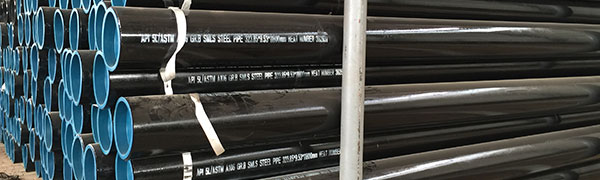

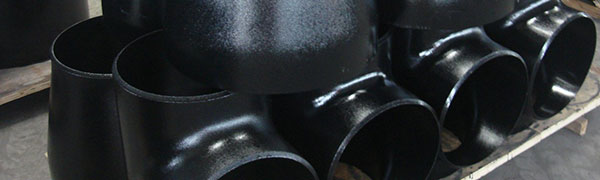
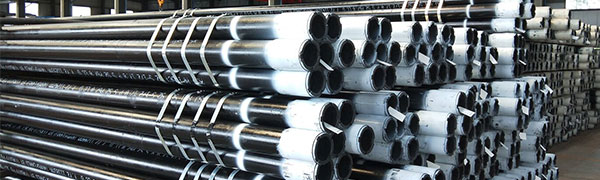


 Eastern Steel Manufacturing Co.,Ltd not only improve product production and sales services, but also provide additional value-added services. As long as you need, we can complete your specific needs together.