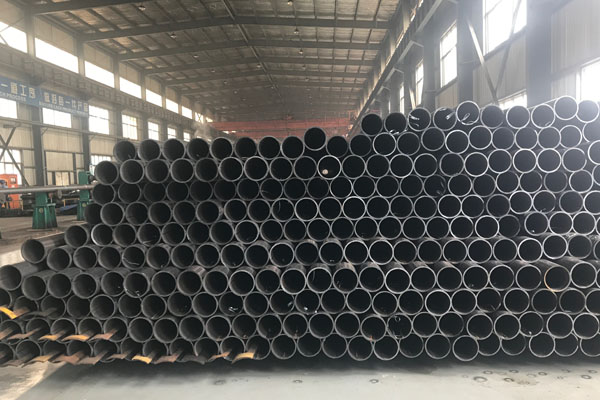
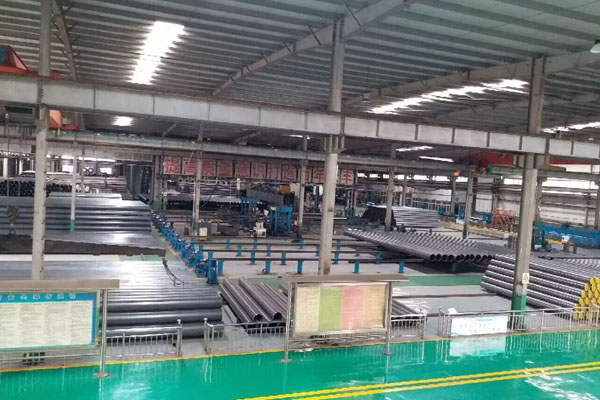
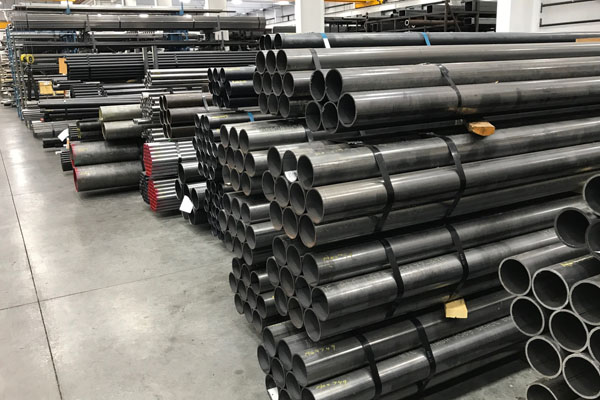
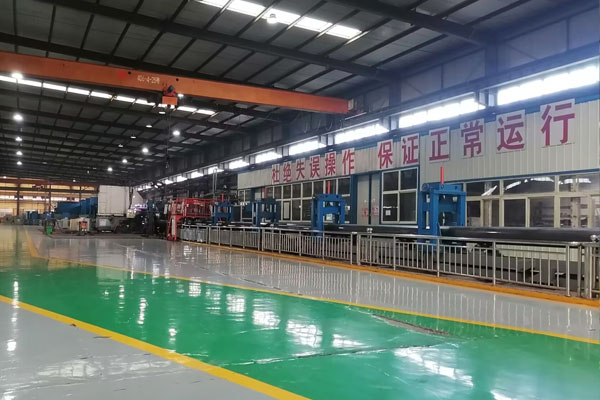
1. ERW Steel Pipe Manufacturer & Supplier
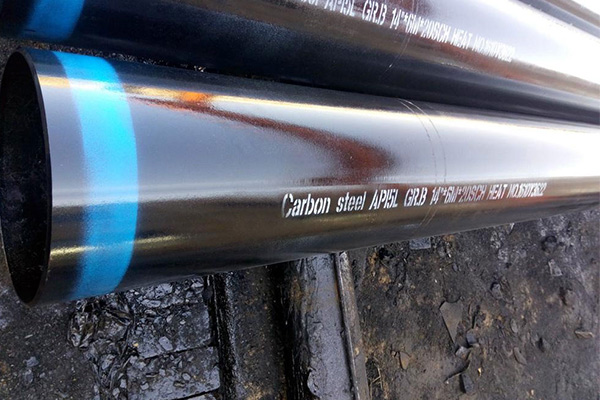
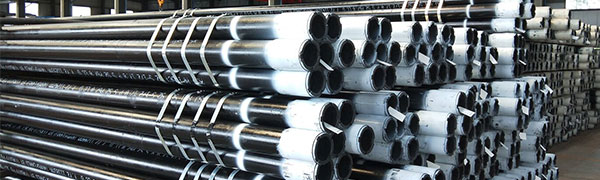
ERW (Electric Resistance Welded) steel pipe is manufactured by continuously forming steel strip into a cylindrical shape and joining the edges through high-frequency electrical resistance welding. The process produces a uniform weld seam, consistent dimensional accuracy, and high production efficiency.
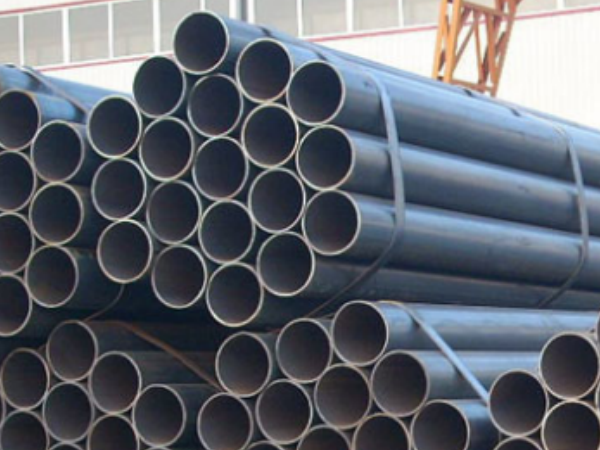
ERW pipes are widely used in oil and gas transportation, water transmission systems, structural construction, piling projects, mechanical engineering, and general industrial applications. Available in carbon steel and low-alloy steel grades, ERW pipe can be supplied according to ASTM, API, EN, and ISO standards with various coating and end-finish options.
2. ERW Steel Pipe Specifications
ERW steel pipes are manufactured in carbon steel and low-alloy steel grades for structural, pipeline, mechanical, and industrial applications. Multiple international standards and material grades are available to meet different project requirements.
|
Item
|
Specification
|
|
Product Type
|
Electric Resistance Welded (ERW) Steel Pipe
|
|
Manufacturing Process
|
High-Frequency Electric Resistance Welding
|
|
Available Materials
|
Carbon Steel • Low-Alloy Steel
|
|
Available Grades
|
ASTM A53 Gr.A / Gr.B • API 5L Gr.B • API 5L X42–X70
|
|
Outside Diameter
|
21.3–660 mm
|
|
Wall Thickness
|
1–20 mm
|
|
Standard Length
|
0.5–22 m
|
|
Surface Finish
|
Black • FBE • 3PE • Coal Tar Epoxy • Bitumen
|
|
Standards
|
API 5L • ASTM A53 • ASTM A500 • EN 10217 • ISO 3183
|
|
Pipe Ends
|
Plain End • Beveled End
|
For detailed dimensions, schedules, wall thicknesses, and theoretical weights, please refer to our ERW Pipe Specifications & Size Chart Guide.
3. Key Characteristics of ERW Steel Pipe
ERW steel pipe combines manufacturing efficiency with reliable mechanical performance, making it one of the most widely used welded steel pipes for structural, pipeline, and industrial applications.
Reliable Weld Integrity
High-frequency electric resistance welding produces a continuous weld seam with consistent quality for structural and pipeline applications.
Excellent Dimensional Accuracy
The manufacturing process provides consistent outside diameter, wall thickness, and straightness, making ERW pipe suitable for precision fabrication and automated installation.
Cost-Effective Production
Compared with seamless steel pipe, ERW pipe offers lower manufacturing costs while meeting the requirements of most structural and pressure applications.
High Production Efficiency
Continuous production enables stable quality, short lead times, and large-volume supply for commercial projects.
Compatible with Multiple Surface Finishes
ERW pipes are available with multiple protective coatings, including FBE, 3PE, bitumen, and other surface finishes according to project requirements.
Broad Size Availability
ERW steel pipe is available in a wide range of diameters and wall thicknesses, making it suitable for different pipeline, structural and industrial applications.
4. Typical Applications of ERW Steel Pipe
ERW steel pipe is widely used for conveying fluids, structural fabrication, and industrial engineering. Different industries typically specify different standards and steel grades according to service conditions and project requirements.
|
Industry
|
Common Standard
|
Typical Applications
|
|
Oil & Gas Pipelines
|
API 5L
|
Oil transmission pipelines, natural gas pipelines, gathering systems
|
|
Water Transmission
|
ASTM A53
|
Water supply pipelines, municipal water networks, irrigation systems
|
|
Structural Construction
|
ASTM A500
|
Steel structures, columns, scaffolding, equipment supports
|
|
Industrial Fluid Systems
|
ASTM A53 / EN 10217
|
Compressed air, cooling water, process piping
|
|
Mechanical Engineering
|
ASTM A513
|
Machinery components, conveyor systems, equipment frames
|
|
Infrastructure & Civil Engineering
|
API 5L / ASTM A53
|
Bridges, utility projects, public infrastructure
|
|
Drainage Systems
|
ASTM A53
|
Drainage pipelines, stormwater systems, underground utility lines
|
ERW steel pipe is selected in many projects because it offers stable dimensional accuracy, consistent weld quality, and cost-effective production for medium-pressure fluid transportation and structural applications.
5. Quality Assurance & Inspection
Typical quality control procedures include:
Raw Material Inspection
Chemical composition and mechanical properties are verified before production to ensure compliance with the specified material grade.
Weld Seam Monitoring
The welding process is continuously monitored to maintain stable weld quality throughout production.
Dimensional Inspection
Outside diameter, wall thickness, straightness, and length are measured to ensure compliance with applicable tolerances.
Non-Destructive Testing
Ultrasonic testing (UT) or Eddy Current Testing (ECT) can be performed according to the applicable standard or customer requirements.
Hydrostatic Testing
Hydrostatic pressure testing is available where required to verify pipe integrity and pressure performance.
Mill Test Certificate (MTC)
Material traceability and inspection records are provided upon request.
6. ERW Steel Pipe Manufacturing Process
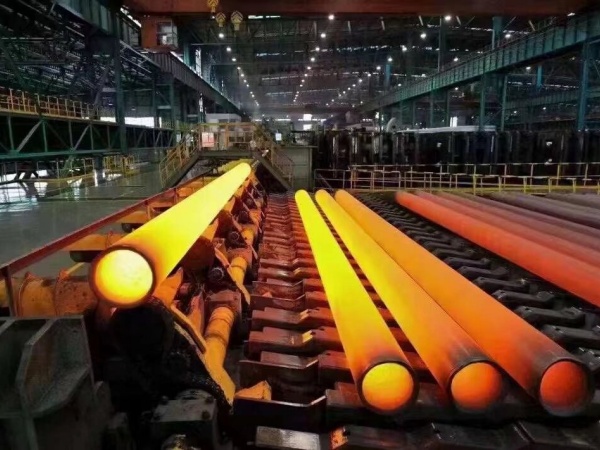
ERW pipes are produced through a continuous forming and high-frequency welding process, ensuring stable dimensions and efficient mass production.
Main Production Steps:
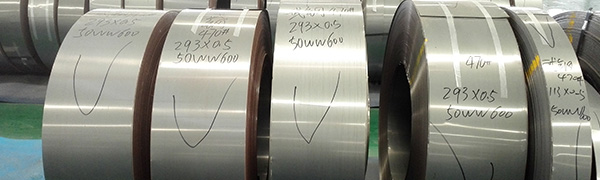
1. Slitting and Feeding – Steel coils are slit to required width and fed into the line.
2. Cold Forming – Strip steel is gradually formed into a round tube.
3. HFI Welding – Edges are heated and pressure welded into a solid seam.
4. Scarfing – Internal and external weld beads are removed.
5. Sizing and Straightening – Final OD is calibrated and pipe is straightened.
6. Cutting and Packing – Pipes are cut to length, inspected, and packed.
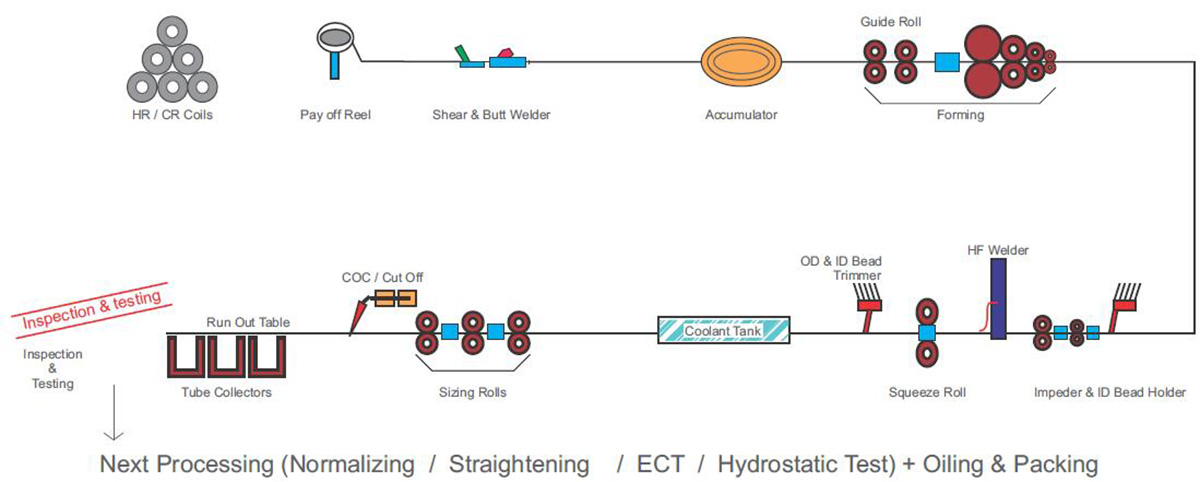
For detailed production capability, contact our team.
7. Manufacturing & Supply Capability
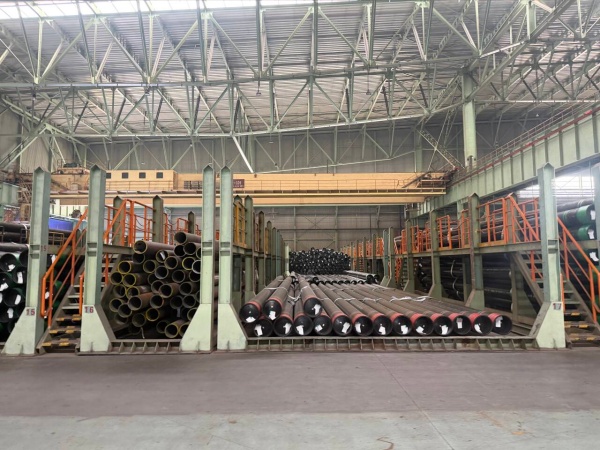
Beyond manufacturing, we provide flexible supply solutions for distributors, EPC contractors, and project procurement worldwide.
What We Offer
- High-frequency ERW production lines for stable manufacturing quality
- Products manufactured to ASTM, API, EN and ISO standards
- Carbon steel and low-alloy steel grades available
- Custom lengths, pipe ends and coating systems
- OEM manufacturing for project specifications
- Third-party inspection available upon request (SGS, BV, etc.)
- Export experience covering more than 40 countries and regions
Whether you require standard ERW pipes or project-specific production, our team can support custom manufacturing and international delivery.
8. FAQs
Q1. What is ERW pipe used for?
ERW pipes are widely used in oil and gas transport, water pipelines, structural construction, fencing, scaffolding, and industrial applications.
Q2. Is ERW pipe strong?
Yes. ERW pipes offer reliable mechanical strength and are suitable for most standard pressure and structural applications when manufactured to standards such as API 5L or ASTM A53.
Q3. Is ERW pipe cheaper than seamless pipe?
Yes. ERW pipes are generally more cost-effective because of higher production efficiency and lower manufacturing costs.
Q4. What material grades are available for ERW steel pipe?
ERW steel pipe is commonly supplied in carbon steel and low-alloy steel grades, including ASTM A53 Grade A/Grade B, API 5L Grade B, API 5L X42–X70 and other grades depending on project requirements and applicable standards.
Q5. Can ERW pipes be supplied with coating?
Yes. Available options may include 3PE coating, FBE coating, black painting, bitumen coating, and galvanized finish based on project requirements.
Q6. What sizes are available for ERW steel pipe?
ERW steel pipes are available from 21.3 mm to 660 mm outside diameter with wall thicknesses from 1 mm to 20 mm. Standard lengths are available, while custom dimensions can be produced according to project requirements.
9. ERW Pipe Buying Guide & Technical Resources
Explore practical guides, technical comparisons, and selection tips to help you choose the right ERW steel pipe for your project.
① Selection Guides
What Is ERW Pipe?
ERW Pipe Specifications and Models
Difference between Seamless Pipe and ERW Pipe
ERW vs Seamless Pipe Cost
② Manufacturing & Welding
ERW Pipe Production Line
What Are the Main Equipment in the ERW Pipe Production Line?
Breaking Down the Welding Techniques in ERW Pipe Production
ERW High Frequency Welding Process and Quality Control
③ Quality & Inspection
ERW Steel Pipe Quality Assessment Process
Ultrasonic Testing of ERW Pipes
ERW Pipe Flaw Detection Method
Factors Affecting the Quality of ERW Steel Pipe
④ Applications
What Are the Functions of ERW Pipes in Different Industries?
Application of ERW Pipes in Transporting Gas
The Advantages of Using ERW Pipe for HVAC Systems



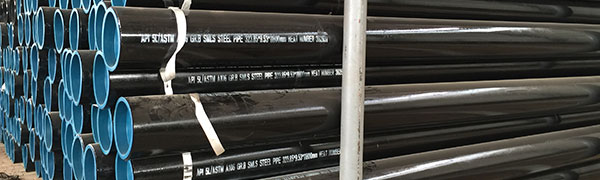
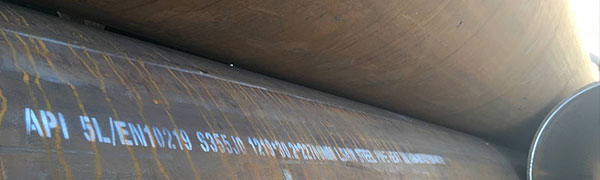
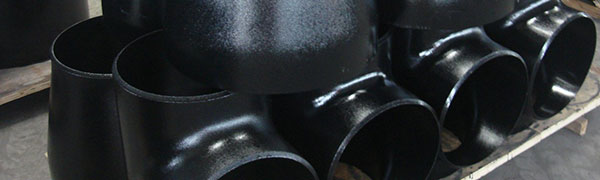


 Eastern Steel Manufacturing Co.,Ltd not only improve product production and sales services, but also provide additional value-added services. As long as you need, we can complete your specific needs together.