1. Mild Steel Pipe vs. Black Steel Pipe at a Glance
Many people use mild steel pipe and black steel pipe as if they mean the same thing. In fact, they describe two different characteristics of a steel pipe.
Mild steel refers to the material and its chemical composition, while black steel refers to the pipe's surface condition. A black steel pipe is often made from mild steel, but not every mild steel pipe is black.
The table below highlights the key differences.
|
Feature
|
Mild Steel Pipe
|
Black Steel Pipe
|
|
Defined by
|
Material (low-carbon steel)
|
Surface finish
|
|
Surface
|
Black, galvanized, painted, or coated
|
Black oxide scale (uncoated)
|
|
Material
|
Low-carbon steel
|
Usually low-carbon or carbon steel
|
|
Corrosion resistance
|
Depends on the surface treatment
|
Lower without additional protection
|
|
Outdoor use
|
Suitable when galvanized or coated
|
Normally requires coating before outdoor use
|
|
Typical applications
|
General fabrication, machinery, structural and fluid systems
|
Fire protection, gas lines, structural and industrial piping
|
Key Point: Mild steel describes what the pipe is made of, while black steel describes how its surface is finished.
2. What Is the Difference Between Mild Steel Pipe and Black Steel Pipe?
The main difference is that mild steel pipe is classified by material, whereas black steel pipe is classified by surface finish.
Mild steel pipe is manufactured from low-carbon steel with good weldability and formability. Depending on the application, it may be supplied with a black finish, hot-dip galvanizing, paint, or other protective coatings.
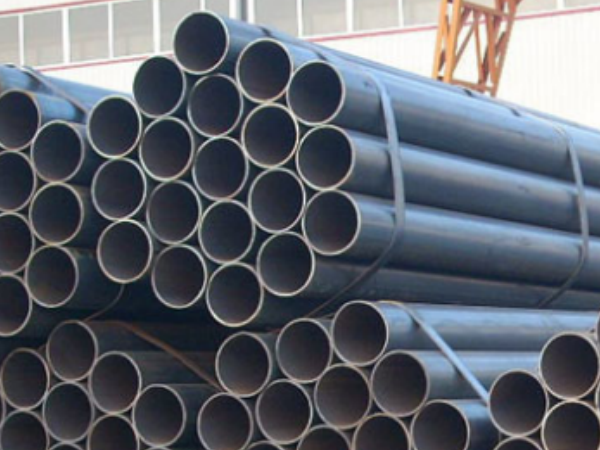
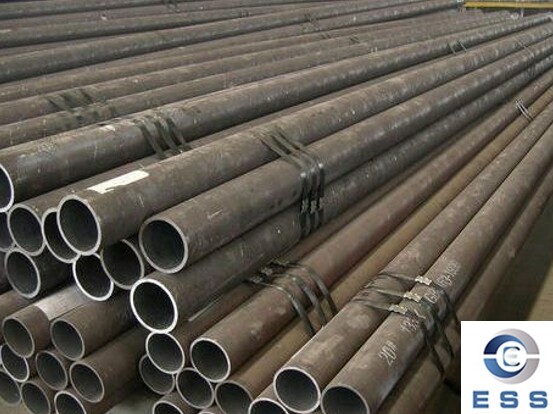
Black steel pipe, on the other hand, is carbon steel pipe that retains the dark oxide scale formed during the manufacturing process. It is supplied without galvanizing or other protective coatings, which is why it is commonly called black steel pipe.
3. Why Are Mild Steel Pipe and Black Steel Pipe Often Confused?
Because many black steel pipes are manufactured from mild steel, the two terms are often used interchangeably in everyday conversation. However, they do not describe the same property.
Mild steel refers to the material—a low-carbon steel known for good weldability and formability.
Black steel refers to the surface condition—steel pipe supplied without galvanizing or other protective coatings.
A mild steel pipe can be supplied as:
- Black pipe
- Galvanized pipe
- Painted pipe
- Coated pipe
Likewise, a black steel pipe is not necessarily a different material—it is simply a pipe with its original mill scale left on the surface.
The simplest way to distinguish them is this:
Mild steel describes what the pipe is made of.
Black steel describes how the pipe surface is supplied.
4. Mild Steel vs Black Steel Comparison
The comparison below summarizes the key differences that affect material selection.
|
Feature
|
Mild Steel Pipe
|
Black Steel Pipe
|
|
Definition
|
Defined by material composition
|
Defined by surface condition
|
|
Surface Finish
|
Black, galvanized, painted, coated
|
Black mill scale only
|
|
Corrosion Resistance
|
Depends on surface treatment
|
Lower without coating
|
|
Weldability
|
Excellent
|
Depends on steel grade (usually good)
|
|
Strength
|
Depends on grade
|
Depends on grade
|
|
Cost
|
Varies with finish
|
Usually lower
|
|
Typical Applications
|
General industrial, structural, machinery
|
Fire protection, gas, oil, structural
|
In practice, the mechanical properties of both products depend primarily on the steel grade and manufacturing standard rather than the term "black steel" or "mild steel." For example, ASTM A53 Grade B can be supplied as either black or galvanized pipe while maintaining the same base material properties
5. Which One Should You Choose?
The right choice depends on the service environment, corrosion requirements, and project specifications.
Choose Mild Steel Pipe if you:
- Need a material defined by its mechanical properties or steel grade.
- Require galvanized, painted, or other protective surface finishes.
- Are purchasing pipe based on ASTM, API, EN, JIS, or other material standards.
- Need flexibility for structural, mechanical, or fluid transportation applications.
Choose Black Steel Pipe if you:
- Need an uncoated carbon steel pipe with a mill-scale surface.
- Are working in indoor, dry, or non-corrosive environments.
- Require pipe for fire sprinkler systems, natural gas distribution, steam lines, or general industrial service.
- Plan to apply painting or protective coatings after fabrication.
Selection Tip:
If the project specification already defines a material grade (such as ASTM A53 Grade B or API 5L Grade B), the remaining decision is usually the required surface finish—black, galvanized, or another protective coating.
6. Common Misunderstandings
Myth 1: Black steel pipe is a different type of steel.
Reality:
Black steel pipe is not a different material. The term black refers to the surface finish, while mild steel refers to the chemical composition of the steel.
Myth 2: Black steel pipe is always stronger than mild steel pipe.
Reality:
Mechanical properties are determined by the material grade and manufacturing standard, not by whether the pipe has a black surface. A black ASTM A53 Grade B pipe and a galvanized ASTM A53 Grade B pipe have essentially the same strength.
Myth 3: Mild steel pipe is always galvanized.
Reality:
Not necessarily. Mild steel pipe may be supplied with a black finish, hot-dip galvanizing, painting, epoxy coating, or other protective treatments depending on the application.
Myth 4: Black steel pipe has better corrosion resistance.
Reality:
Black steel pipe has no corrosion-resistant coating. In outdoor or humid environments, galvanized or coated mild steel pipe generally provides much better protection against rust.
7. Related Guides
Continue reading the following guides to compare related materials, understand international standards, and choose the right steel pipe for your project.
- Mild Steel Pipe — Material properties, specifications, grades, and applications.
- Black Steel Pipe — Manufacturing process, standards, and typical uses.
- Mild Steel Pipe Material Selection Guide — How to choose the right grade, manufacturing method, and standard.
- Mild Steel Pipe Standards — Comparison of ASTM, API, EN, JIS, and other international standards.
- Mild Steel Pipe vs. Carbon Steel Pipe — Material definition and performance comparison.
- Black Steel Pipe vs. Carbon Steel Pipe — Differences in material, surface finish, and applications.



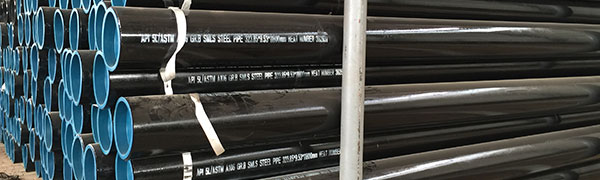


 Eastern Steel Manufacturing Co.,Ltd not only improve product production and sales services, but also provide additional value-added services. As long as you need, we can complete your specific needs together.