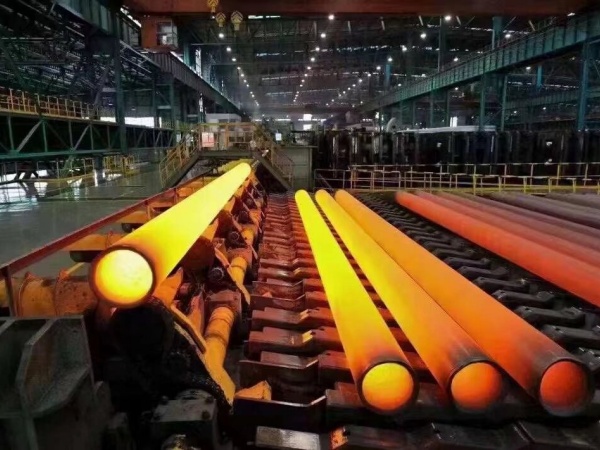
Accurately calculating the weight of the carbon
steel pipe is a fundamental and crucial technical step in steel
structure engineering, piping system design, international trade pricing, and
logistics. The weight of carbon steel pipes directly affects material costs,
transportation expenses, and load-bearing design, and is also an important
basis for settlement in foreign trade contracts.
1. Calculating Formula for Carbon Steel
Pipe Weight
The weight of carbon steel pipes can be
calculated using a theoretical formula, based on
the principle of volume multiplied by density. The specific formula is as
follows:
Weight (kg) = [π×(D²−d²)×L×ρ] / 4
Where:
Outer diameter D: mm
Inner diameter d: mm
Length L: m
Carbon steel density ρ = 7850 kg/m³
Or simplified to: Weight (kg) = 0.02466×t×(D−t)×L
Where:
Outer diameter D: mm
Wall thickness t: mm
Length L: m
In practical applications, please note: the
outer diameter and wall thickness need to be adjusted according to standard
tolerances. For example, the outer diameter of a DN50 steel pipe is usually
60.3 mm, and the wall thickness error is ±10%.
Reference standards:
GB/T 17395-2008
ASTM A53 / A106
EN
10210 / EN 10219
2. Pipe Weight Calculation Examples
To better understand how to calculate carbon steel pipe weight, here are several practical examples based on common pipe sizes and standards.
Example 1: Small Diameter Carbon Steel Pipe
Pipe Size: DN25
Outer Diameter (OD): 33.7 mm
Wall Thickness (WT): 2.5 mm
Weight = 0.02466 × WT × (OD − WT)
= 0.02466 × 2.5 × (33.7 − 2.5)
= 1.92 kg/m
For a 6-meter pipe: Total Weight = 1.92 × 6 = 11.52 kg
Example 2: SCH 40 Carbon Steel Pipe
Pipe Size: NPS 2" SCH 40
Outer Diameter (OD): 60.3 mm
Wall Thickness (WT): 3.91 mm
Weight = 0.02466 × 3.91 × (60.3 − 3.91)
= 5.44 kg/m
For a 6-meter pipe: Total Weight = 5.44 × 6 = 32.64 kg
Example 3: Large Diameter Carbon Steel Pipe
Pipe Size: DN150
Outer Diameter (OD): 168.3 mm
Wall Thickness (WT): 6.0 mm
Weight = 0.02466 × 6.0 × (168.3 − 6.0)
= 24.01 kg/m
For a 6-meter pipe: Total Weight = 24.01 × 6 = 144.06 kg
3. Carbon Steel Pipe Weight Chart (SCH 40, kg/m & kg/ft)
The following chart provides the theoretical weight of SCH 40 carbon steel pipes. It is widely used fo based on standard dimensions.
It is widely used for quick reference in engineering design, procurement, and logistics estimation.
|
NPS (in)
|
OD (mm)
|
Wall Thickness (mm)
|
Weight (kg/m)
|
Weight (kg/6 m)
|
|
1/2"
|
21.3
|
2.77
|
1.27
|
7.62
|
|
3/4"
|
26.7
|
2.87
|
1.68
|
10.08
|
|
1"
|
33.4
|
3.38
|
2.50
|
15.00
|
|
1-1/4"
|
42.2
|
3.56
|
3.38
|
20.28
|
|
1-1/2"
|
48.3
|
3.68
|
4.05
|
24.30
|
|
2"
|
60.3
|
3.91
|
5.44
|
32.64
|
|
2-1/2"
|
73.0
|
5.16
|
8.63
|
51.78
|
|
3"
|
88.9
|
5.49
|
11.29
|
67.74
|
|
4"
|
114.3
|
6.02
|
16.07
|
96.42
|
|
6"
|
168.3
|
7.11
|
28.26
|
169.56
|
|
8"
|
219.1
|
8.18
|
42.55
|
255.30
|
|
10"
|
273.0
|
9.27
|
60.31
|
361.86
|
4. Steel Weight Related Terms
4.1 Gross Weight
Corresponding to "net weight", it
refers to the total weight of the steel itself and its packaging materials.
Shipping companies calculate freight
charges based on gross weight. However, steel transactions are typically
calculated based on net weight.
The following chart provides the theoretical weight of SCH 40 carbon steel pipes. It is widely used fo based on standard dimensions.
It is widely used for quick reference in engineering design, procurement, and logistics estimation.
4.2 Net Weight Corresponding to "gross
weight".
The weight of the steel after subtracting
the weight of packaging materials from its gross weight is called net weight.
Steel transactions are typically calculated
based on net weight.
4.3 Tare Weight
The weight of the steel packaging materials
is called tare weight. Used for logistics accounting.
4.4 Ton Weight
The unit of weight used when calculating
freight charges based on the gross weight of steel.
The legal unit of measurement is the ton
(1000 kg), but there are also long tons (1016.16 kg in imperial units) and
short tons (907.18 kg in US units).
4.5 Chargeable Weight
Also known as "chargeable ton" or
"freight ton". Commonly used for sea/air freight.
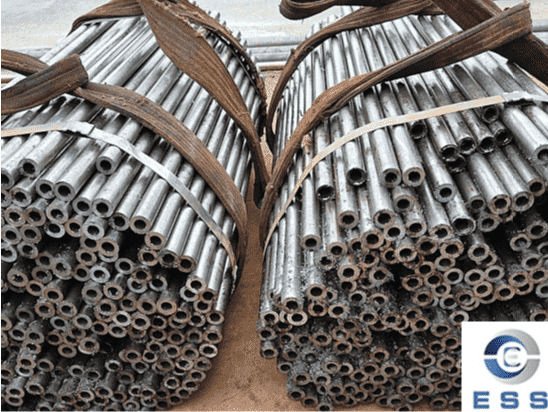
5. Key Factors Affecting Calculation
Accuracy
5.1 Density Value
Different carbon steel grades have slightly
different densities. For example, Q235A has a density of 7.85 g/cm³, while high-carbon steel can reach 7.87 g/cm³.
5.2 Geometric Dimensional Deviation
Wall thickness tolerance: ±10% (ASTM/EN universal). Actual steel pipes may have ovality or
uneven wall thickness; it is recommended to take multiple measurements and
average the results.
5.3 Surface Treatment
The galvanized layer adds approximately
3%~5% to the weight, requiring additional calculation of the coating density
(zinc density 7.14 g/cm³).
6. Weight Calculation for Carbon Steel
Pipes of Different Specifications
6.1 Small Diameter Carbon Steel Pipes (≤ DN50)
Carbon steel pipes with smaller diameters
and thinner walls are relatively lighter.
Special attention must be paid to the
accuracy of the outer diameter and wall thickness during calculation to ensure
the accuracy of the results.
6.2 Large-Diameter
Carbon Steel Pipes (≥ DN150)
Carbon steel pipes with larger diameters
and thicker walls are relatively heavier.
Calculations must consider the impact of
increased pipe diameter and wall thickness on weight to obtain accurate
results.
7. Factors Affecting the Weight of Carbon
Steel Pipe
7.1 Wall Thickness
Thicker walls mean greater load-bearing
capacity, but also increased weight.
Therefore, when selecting carbon steel pipes,
the relationship between wall thickness and weight must be weighed based on the
actual application scenario.
7.2 Pipe Diameter
The pipe diameter directly affects the
capacity and flow rate of the carbon steel pipe. Generally, larger diameters
result in heavier pipes.
However, in certain specific situations,
such as when structural weight reduction or optimized space layout is required,
smaller diameter carbon steel pipes may be chosen.
7.3 Material Density
Different materials used in carbon steel pipes may have slight variations in density, which directly affect their overall weight. For instance, high-strength grades typically exhibit higher density, leading to increased weight under the same dimensions.
When selecting pipe materials, it is important to consider not only weight, but also strength, corrosion resistance, and cost to achieve the best balance in practical applications.
8. Common Carbon Steel Pipe Weight in KG
The following are the theoretical weights
for some specifications (calculated based on a 6-meter standard length):
|
Outer Diameter (mm)
|
Wall Thickness (mm)
|
Weight per Meter (kg/m)
|
Weight per 6 Meters (kg)
|
|
25
|
2.5
|
1.39
|
8.34
|
|
50
|
3.0
|
3.48
|
20.88
|
|
100
|
5.0
|
11.71
|
70.26
|
|
150
|
6.0
|
21.34
|
128.04
|
Note: Actual weight may have a deviation of ±5% due to different production processes or surface
treatments (such as galvanizing).
9. Precautions for Carbon Steel Pipe Weight
Calculation
9.1 Accuracy of Outer Diameter and Wall
Thickness
The accuracy of the outer diameter and wall
thickness is crucial when calculating the weight of carbon steel pipes.
Therefore, we need to select a reliable carbon
steel pipe supplier and strictly follow the specifications for
measurement and calculation.
9.2 Length Selection
The length of the carbon steel pipe is
selected based on actual needs. When calculating the weight, it is necessary to
ensure that the selected length matches the actual length used to avoid
deviations in the calculation results.
While the above formula applies to the
weight calculation of most carbon steel pipes, in special cases, such as shaped
pipes or oval pipes, adjustments may be necessary or other calculation methods
may be required.
10. FAQ
Q1. How much heavier is galvanized carbon
steel pipe?
The weight of hot-dip galvanized carbon
steel pipe is typically higher than that of black
steel pipe:
Approximately 3% – 5% increase.
This is due to the zinc layer adhering to
the outer surface of the pipe; zinc has a density of 7.14 g/cm³.
Steps for calculating the weight of a
Schedule 40 pipe:
Check the standard outer diameter (OD)
Check the corresponding Schedule 40 wall
thickness
Apply the formula to calculate
Example (NPS 2″ SCH
40):
OD = 60.3 mm
WT = 3.91 mm
This will accurately calculate the weight
per meter or per pipe.
Q3. Which standards are used for carbon
steel pipe weight calculation?
Commonly used international standards
include:
ASTM A53 / ASTM A106
ASME B36.10M
EN 10210 / EN 10219
GB/T 17395
These standards are all based on 7.85 g/cm³ Theoretical density.
11. Summary
In conclusion, pipe weight is primarily determined by diameter, wall thickness, and length. By applying accurate formulas and considering practical factors such as tolerances and material properties, it is possible to achieve reliable and precise results.
In real-world applications, selecting the right material specification and using proper calculation methods are essential to ensure cost efficiency, safe transportation, and overall project success. For projects requiring precise specifications or bulk supply, working with an experienced supplier can help ensure consistent quality, accurate weight control, and timely delivery.
Read more: A complete list of steel weight calculation formulas or What is the density of carbon steel pipe?



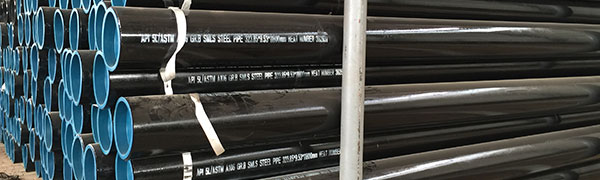
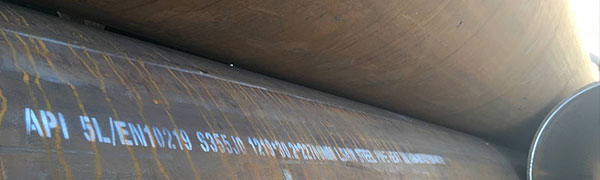


 Eastern Steel Manufacturing Co.,Ltd not only improve product production and sales services, but also provide additional value-added services. As long as you need, we can complete your specific needs together.