1. What Is Carbon Steel Pipe Welding Temperature Control?
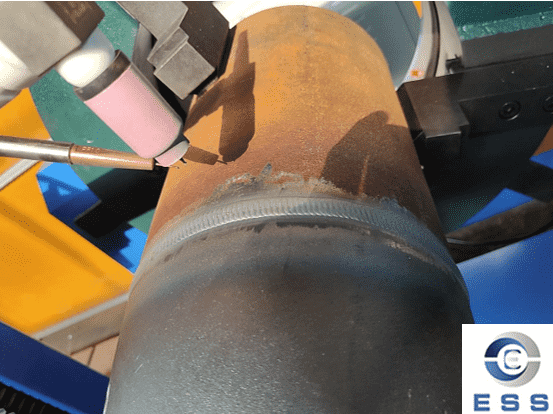
Carbon steel pipe welding temperature control refers to the management of heat throughout the welding process to produce sound welds, prevent defects, and maintain the required mechanical properties of the pipe. Rather than a single welding temperature, it involves controlling several critical stages, including preheat temperature, interpass temperature, and post-weld heat treatment (PWHT) where required.
Proper temperature control directly affects the cooling rate of the weld and heat-affected zone (HAZ). Excessively rapid cooling may increase hardness and the risk of hydrogen-induced cracking, while excessive heat input can lead to grain coarsening, reduced toughness, and distortion. For this reason, qualified welding procedures specify acceptable temperature ranges based on material grade, wall thickness, carbon equivalent (CE), welding process, and service conditions.
For most carbon steel pipe welding applications, temperature requirements are established in the Welding Procedure Specification (WPS) and verified through the Procedure Qualification Record (PQR). Applicable standards, such as ASME Section IX, ASME B31.3, and API 1104, may also define preheating, interpass, and PWHT requirements for specific projects.
2. Carbon Steel Pipe Welding Temperature Chart
The table below summarizes the typical temperature ranges used during carbon steel pipe welding. Actual values should always follow the qualified WPS, applicable design codes, and project specifications.
|
Welding Stage
|
Typical Temperature
|
Primary Purpose
|
|
Preheat Temperature
|
50–200°C (122–392°F)
|
Reduces cooling rate, minimizes hydrogen cracking, and improves weldability.
|
|
Interpass Temperature
|
Typically ≤150°C (302°F), or as specified by WPS
|
Maintains consistent weld quality and prevents excessive heat accumulation during multi-pass welding.
|
|
PWHT Temperature
|
580–650°C (1,076–1,202°F)
|
Relieves residual stress, reduces hardness, and improves the long-term performance of welded joints.
|
The values shown above are typical industry recommendations rather than fixed limits. Depending on the pipe grade, carbon equivalent, welding process, and applicable code, the qualified WPS may specify different temperature requirements. Therefore, welding personnel should always verify the approved procedure before production welding.
3. Recommended Preheat Temperature
Preheating is one of the most effective methods for improving weld quality in carbon steel pipe welding. By raising the temperature of the base metal before welding, preheating slows the cooling rate of the weld and heat-affected zone (HAZ), reducing the risk of hydrogen-induced cracking, excessive hardness, and residual stress.
Preheating is not required for every welding application. The required temperature depends on several factors, including pipe wall thickness, carbon equivalent (CE), welding process, joint restraint, and ambient temperature.
3.1 When Is Preheating Required?
Preheating is commonly recommended when:
- Welding thick-wall carbon steel pipes
- The material has a high carbon equivalent (CE)
- Welding is performed in cold weather or at low ambient temperatures
- The joint has high restraint or is susceptible to hydrogen cracking
- Low-hydrogen welding procedures are specified
3.2 Typical Preheat Temperature Recommendations
|
Pipe Condition
|
Recommended Preheat Temperature
|
|
Thin-wall mild steel pipe
|
50–100°C (122–212°F)
|
|
Standard carbon steel pipe
|
100–150°C (212–302°F)
|
|
High carbon equivalent (CE ≥ 0.40) or thick-wall pipe
|
150–200°C (302–392°F)
|
|
Low ambient temperature or highly restrained joints
|
As specified by the qualified WPS
|
3.3 Best Practices for Preheating
To achieve consistent weld quality:
- Measure the preheat temperature before arc initiation using calibrated temperature indicators or infrared thermometers.
- Heat the weld area uniformly on both sides of the joint rather than concentrating heat at a single point.
- Maintain the required preheat temperature throughout the welding operation, especially during multi-pass welding.
4. Interpass Temperature Requirements
Interpass temperature is the maximum temperature permitted at the weld joint immediately before the next welding pass is deposited. Maintaining the specified interpass temperature helps control heat input, preserve the desired microstructure, and achieve consistent weld quality throughout multi-pass welding.
If the specified limit is exceeded, excessive heat accumulation may cause grain coarsening, reduced toughness, increased distortion, and other weld quality issues.
4.1 Typical Interpass Temperature Guidelines
Welding Application Typical Interpass Temperature
General carbon steel pipe welding ≤150°C (302°F)
Heavy-wall or high heat input applications 150–260°C (302–500°F), as specified by WPS
4.2 How to Control Interpass Temperature
To maintain a consistent interpass temperature throughout multi-pass welding:
- Measure the joint temperature before depositing each subsequent weld pass.
- Allow the weld to cool naturally if the maximum interpass temperature specified in the WPS is exceeded.
- Avoid localized overheating by distributing heat evenly along the joint.
- Use calibrated temperature-indicating crayons, contact thermometers, or infrared thermometers for temperature verification.
5. Post-Weld Heat Treatment (PWHT) Temperature
Post-Weld Heat Treatment (PWHT) is a controlled heat treatment process performed after welding to reduce residual stress, lower weld hardness, and improve the mechanical stability and service performance of welded joints. It is commonly specified for thick-wall carbon steel pipes, pressure piping, pressure vessels, and welded components operating under elevated temperatures or cyclic loading, where stress relief is required by the applicable design code or qualified Welding Procedure Specification (WPS).
|
Carbon Steel Material
|
Typical PWHT Temperature
|
|
Low-carbon steel
|
580–600°C (1,076–1,112°F)
|
|
Medium-carbon steel
|
600–650°C (1,112–1,202°F)
|
|
Carbon steel requiring stress relief
|
As specified by the applicable code or qualified WPS
|
PWHT should be carried out at the specified temperature while following the required holding time and controlled heating and cooling rates. For most carbon steel pipe applications, the holding time is approximately 1 hour per 25 mm (1 in.) of wall thickness, although the exact requirement depends on the applicable code or project specification. Temperature should be monitored throughout the heat treatment cycle using calibrated thermocouples or other approved measuring devices.
6. Factors Affecting Welding Temperature Selection
6.1 Material Composition
Different carbon steel grades have different welding requirements. Pipes with a higher carbon equivalent (CE) generally require higher preheat temperatures and stricter welding procedures than low-carbon steel.
6.2 Pipe Wall Thickness
Thick-wall pipes require more preheating than thin-wall pipes because they cool more quickly after welding. PWHT may also be specified for heavy-wall applications.
6.3 Ambient Conditions
Low ambient temperatures and strong wind increase heat loss during welding. Additional preheating or thermal insulation may be required to maintain the specified welding temperature
6.4 Welding Process
Welding processes such as SMAW, GTAW, GMAW, and SAW have different temperature requirements. The selected process determines the allowable preheat, interpass temperature, and heat input specified in the WPS.
6.5 Applicable Codes
Applicable codes, such as ASME Section IX, ASME B31.3, and API 1104, establish welding procedure qualification and temperature requirements for different materials and applications.
7. FAQs
Q1. Is preheating always required?
No. Preheating is not required for every carbon steel pipe. It is generally recommended for thick-wall pipes, materials with a high carbon equivalent (CE), low-temperature environments, or applications specified by the qualified WPS.
Q2. What is the maximum interpass temperature for carbon steel?
For most carbon steel welding applications, the interpass temperature is commonly limited to 150°C (302°F), although higher limits may be permitted by the qualified WPS for specific materials and welding procedures.
Q3. When is PWHT required?
PWHT is typically required for thick-wall carbon steel pipes, pressure piping, and other applications where stress relief is specified by the design code or project requirements.
Q4. How is welding temperature measured?
Preheat and interpass temperatures are commonly measured with temperature-indicating crayons, infrared thermometers, or contact thermometers. PWHT is usually monitored with calibrated thermocouples throughout the heat treatment cycle.
Q5. What happens if preheat temperature is too low?
Insufficient preheating can increase the risk of hydrogen cracking, while welding at temperatures below the specified range may affect weld quality and mechanical properties.
Q6. Can carbon steel pipe be welded without preheating?
Yes. Many low-carbon, thin-wall steel pipes can be welded without preheating under suitable conditions. However, thicker sections, higher carbon equivalent materials, or low ambient temperatures often require preheating.
8. Conclusion
Choosing the correct welding temperature is only one part of a successful welding procedure. Selecting the appropriate pipe material, applicable standards, and welding process is equally important for achieving reliable long-term performance. If you have questions about carbon steel pipe specifications or welding applications, Eastern Steel's technical team is available to provide project-based recommendations.
Related Article:
Key Points for Welding Low Temperature Carbon Steel Pipes
Carbon Steel Pipe Temperature Range
What Is The Heat-resistant Temperature of Carbon Steel Pipe?
High-Temperature Carbon Steel Pipe Models
Low-Temperature Brittleness Temperature of Carbon Steel Pipe





 Eastern Steel Manufacturing Co.,Ltd not only improve product production and sales services, but also provide additional value-added services. As long as you need, we can complete your specific needs together.