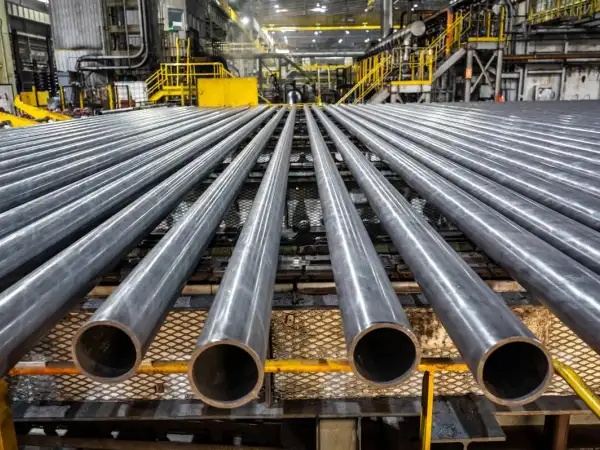
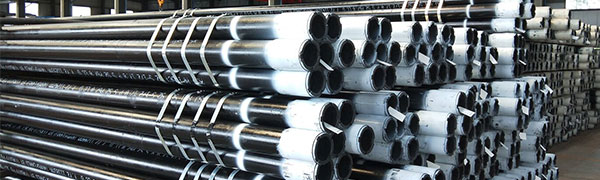
The seamless
pipe is widely used in boilers, heat exchangers, petrochemicals, power
generation, and high-temperature, high-pressure systems. Their thermal
conductivity is one of the key physical parameters for evaluating a material's
heat transfer capacity. A proper understanding of the thermal conductivity of seamless
pipes is helpful for engineering selection, energy-saving design, and safe
system operation.
This article will introduce the numerical
values of the thermal conductivity of seamless pipes, the reasons for
differences, and the materials, characteristics, and applications of thermally
conductive seamless pipes.
Thermal Conductivity of Seamless Pipes
The thermal conductivity (λ) of a seamless pipe refers to its ability to transfer heat per unit
area per unit time under certain temperature and conditions; it is also called
thermal conductivity.
According to the definition of the
International System of Units (SI), the unit of thermal conductivity for seamless
pipes is W/(m·K). The magnitude of the thermal
conductivity of a seamless pipe is related to the material of the tube,
temperature, and other factors.
The thermal conductivity of seamless pipes
is generally between 20 and 40 W/(m·K), with the
specific value also depending on the type of material.
For example, some materials with high
thermal conductivity, such as magnesium, copper, and aluminum, have higher
thermal conductivity than ordinary steel. In addition, temperature and pressure
also affect the thermal conductivity of seamless pipes.
For seamless pipes, thermal conductivity
directly affects: heat exchange efficiency (boiler tubes, heat exchanger
tubes), thermal response speed (high-temperature pipelines), energy utilization
and operating costs, and the risk of localized overheating and thermal fatigue.
Materials of Thermally Conductive Seamless
Pipes
The materials used for thermally conductive
seamless pipes are diverse, with common materials including carbon
steel, stainless steel, and alloy steel. These materials possess good
thermal conductivity, corrosion resistance, and high-temperature strength,
enabling thermally conductive seamless pipes to maintain stable performance
even in harsh working environments.
1. Carbon Steel
Carbon steel is the most common material
for thermally conductive seamless pipes, possessing a high thermal conductivity
and low cost. However, carbon steel has poor corrosion resistance and is
suitable for general industrial applications.
2. Stainless Steel
Stainless steel thermally conductive seamless
pipes have excellent corrosion resistance and high thermal conductivity, making
them suitable for industries with high material requirements, such as chemical,
pharmaceutical, and food industries.
3. Alloy Steel
Alloy steel seamless thermally conductive
pipes, through the addition of alloying elements, improve the high-temperature
resistance, corrosion resistance, and strength of the steel pipes, making them
suitable for harsh working environments such as high temperature and high
pressure.
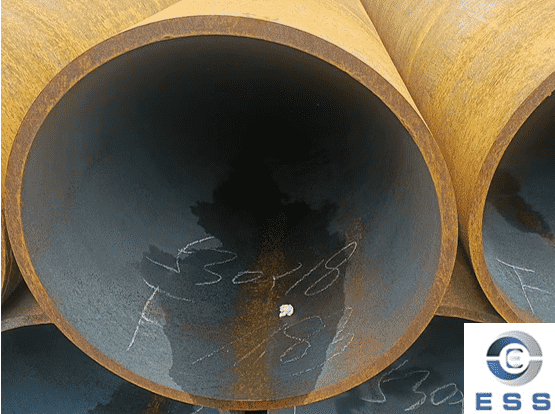
Reasons for Differences in Thermal
Conductivity of Seamless Pipes
1. Elemental Composition
Carbon Steel: Carbon atoms in the iron
matrix form interstitial solid solutions, which have little impact on electron
scattering, resulting in high thermal conductivity (e.g., 20# steel 46 W/(m·K)).
Alloy Steel: Alloying elements such as
chromium and molybdenum form substitutional solid solutions, increasing
electron scattering and decreasing thermal conductivity (e.g., 42CrMo only 32
W/(m·K)).
Stainless Steel: Nickel (content 8%-18%)
significantly inhibits electron movement; 304 stainless steel has a thermal
conductivity of only 16.3 W/(m·K), one-third that of
carbon steel.
Copper-based Alloys: Copper atoms have high
degrees of freedom in their outer electrons, forming an "electron
sea," resulting in extremely high thermal conductivity (e.g.,
copper-nickel alloys reach 200 W/(m·K)).
2. Crystal Structure
Body-centered cubic (BCC): Carbon steel and
alloy steel have a BCC structure, resulting in a longer electron scattering
path and moderate thermal conductivity.
Face-centered cubic (FCC): Stainless steel
and copper-based alloys have an FCC structure, resulting in more frequent
electron scattering. However, copper-based alloys maintain high thermal
conductivity due to their high electron density.
3. Temperature Effect
Carbon steel: Thermal conductivity is 46
W/(m·K) at 20℃, decreasing to
30 W/(m·K) at 500℃ (lattice
vibrations intensify at high temperatures, increasing electron scattering).
Stainless steel: Thermal conductivity is
16.3 W/(m·K) at 20℃, decreasing
to 12.5 W/(m·K) at 800℃ (nickel
further inhibits heat conduction at high temperatures). Copper-based alloys:
Thermal conductivity of 200 W/(m·K) at 20℃, and still 180 W/(m·K) at 200℃ (high-temperature stability superior to steel).
Comparison of Thermal Conductivity with
Other Steel Pipe Types
Both have similar thermal conductivity
under the same material, but welded pipes may have microstructural differences
in the weld seam, resulting in uneven local thermal conductivity. Seamless
pipes have better overall uniformity.
2. Special Case of Galvanized Steel Pipes
The zinc coating (thermal conductivity
approximately 110 W/(m·K)) can improve surface thermal
conductivity, but the zinc layer thickness is only on the micrometer scale,
having limited impact on overall performance. The base material still plays a
dominant role.
How to Choose Seamless Pipes with Suitable
Thermal Conductivity
When selecting seamless pipes, we need to choose
materials with appropriate thermal conductivity based on the required
application scenario.
|
Applications
|
Recommended Materials
|
Thermal Conductivity Requirements
|
|
Boilers / Heat Exchangers
|
Carbon Steel, Low Alloy Steel
|
High
|
|
High Corrosion Media
|
Stainless Steel
|
Medium to Low
|
|
High Temperature and High Pressure
|
Alloy Steel
|
Stability Priority
|
|
Energy Saving Systems
|
Carbon Steel / Copper Alloy
|
High
|
Thermal Conductive Seamless Pipe Applications
Due to their unique materials and
manufacturing processes, thermal conductive seamless pipes possess
characteristics such as high thermal conductivity, good structural strength,
and strong corrosion resistance.
This makes them play an important role in
equipment such as heat exchangers, condensers, and generator sets, improving
energy utilization efficiency and equipment lifespan.
Furthermore, thermal conductive seamless
pipes are widely used in industries such as petroleum, chemical, power, and
metallurgy.
For example, in the oil extraction process,
thermal conductive seamless pipes can be used to transport high-temperature and
high-pressure oil-gas mixtures;
In the chemical industry, thermal
conductive seamless pipes can be used to manufacture equipment such as reaction
vessels and evaporators to improve heat transfer efficiency;
In the power industry, thermal conductive
seamless pipes can be used to manufacture key components such as boiler
water-cooled walls and superheaters to ensure the safe and stable operation of
generator sets.
FAQ
1. Is a seamless pipe with a higher thermal
conductivity always better?
Not necessarily.
Thermal conductivity is only one factor in
material selection. In engineering, a comprehensive consideration is usually
needed for:
Strength and pressure resistance;
Corrosion resistance;
Operating temperature and lifespan;
Cost and standard requirements.
For example, although stainless steel has
lower thermal conductivity, it is a better choice in highly corrosive
environments.
2. Is the thermal conductivity of seamless
pipes explicitly specified in relevant standards?
Most steel pipe standards (such as ASTM A106,
EN 10216, GB/T 8163) do not directly specify a numerical value for thermal
conductivity, but rather specify chemical composition, mechanical properties,
and operating temperature.
Thermal conductivity is usually used as a
physical property parameter of materials for reference in thermal calculations
and engineering design.
Read more: Thermal
conductivity of carbon steel pipe






 Eastern Steel Manufacturing Co.,Ltd not only improve product production and sales services, but also provide additional value-added services. As long as you need, we can complete your specific needs together.