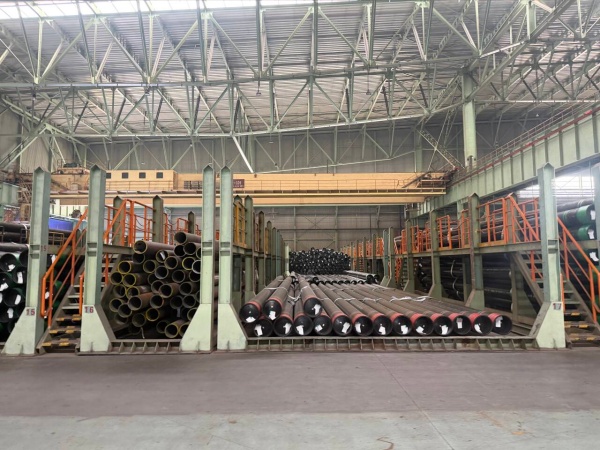
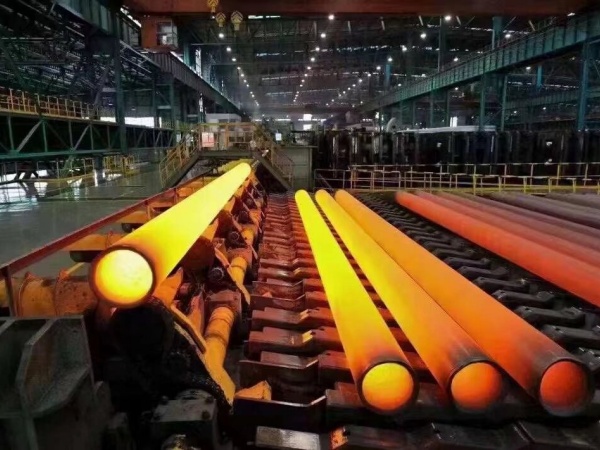
Carbon
steel pipes are widely used in oil and gas,
chemical, power, building structures, and water pipe systems. Welding quality
directly determines the strength, sealing, and service
life of the carbon steel pipes and pipeline systems. Welding methods
for carbon steel pipes include manual electric arc welding, submerged arc
welding, and gas welding. The appropriate welding method needs to be determined
based on the specific welding occasion and requirements, while also paying
attention to welding quality and safety.
Preparation Work Before Welding
1. Surface Cleaning of Carbon Steel Pipes
First, use methods such as grinding and
sandblasting to clean the surface of the pipe to remove oil, scale, and other
impurities to ensure smooth welding.
2. Confirmation of Pipe Size and Position
Based on drawings or actual requirements,
determine the pipe's diameter, wall thickness, length, and other parameters,
and confirm the pipe's position and angle.
3. Inspection of Welding Equipment
Inspect the welding equipment to ensure it
is functioning properly, including checking the power supply and grounding.
4. Preparation of Welding Materials
This includes preparing materials such as
welding wire, electrodes, and shielding gas, ensuring that the quality of these
materials meets standards.
Welding Tools for Carbon Steel Pipes
1. Welding Machine
Select a welding machine suitable for the
pipe quality and use a normal power supply.
2. Welding Electrode or Welding Wire
Select appropriate welding materials based
on parameters such as pipe diameter and wall thickness.
3. Gas Protection
Ensure that oxygen and moisture are
isolated from the welding area, ensuring a sufficient protective atmosphere
during welding.
4. Cutting Tools
Tools such as rulers, pliers, and
sharpening stones should be carefully inspected before welding carbon steel
pipes.
5. Safety Equipment
Select appropriate safety equipment for the
environment, including gloves, goggles, and earplugs.
Common Welding Methods for Carbon Steel
Pipes
1. Manual Arc Welding (SMAW)
Applicable Scenarios: Suitable for on-site
operations or small-batch production, especially suitable for pipes with
diameter ≤300mm and wall thickness 4-20mm.
Technical Parameters: Current range 80-200A
(refer to AWS D1.1 standard), electrode selection E6010 (root pass) or E7018
(fill/cap pass).
Advantages and disadvantages: Simple
equipment, low cost, but low efficiency, and requires high welder skills.
2. Tungsten Inert Gas Welding (GTAW/TIG)
Applicable scenarios: High-precision
thin-walled pipes (wall thickness ≤ 6mm) or
applications requiring no spatter, such as food-grade pipelines.
Technical parameters: Argon flow rate
8-15L/min, current 60-150A (DC positive polarity), welding wire ER70S-6.
Advantages: Beautiful weld, slag-free, but
slow speed and higher cost.
3. Gas Metal Arc Welding (GMAW/MIG)
Applicable scenarios: Automated welding of
medium-thick-walled pipes (wall thickness 5-50mm), such as long-distance
pipelines.
Technical parameters: CO₂ or mixed gas protection, current 200-400A, voltage 22-32V.
Efficiency comparison: 3-5 times more
efficient than manual welding.
4. Submerged Arc Welding (SAW)
Application Scenarios: Submerged arc
welding is an automated electric arc welding method suitable for the production
of large quantities of pipes.
Technical Parameters: Current 400~600A,
Voltage 30~36V (Refer to AWS D1.1).
Efficiency Comparison: Automated electric
arc welding uses an automatic feeder that automatically supplies the welding
core and current, increasing welding speed several times and improving
production efficiency.
Welding Electrodes for Carbon Steel
Pipes
1. Commonly used welding electrodes for
manual electric arc welding include AWS E6010 and AWS E7018.
AWS E6010 is a DC welding electrode
suitable for DC operation, especially for welding carbon steel and low alloy
steel in mildly corrosive or heavy alloy environments. AWS E7018 is suitable
for DC or AC welding, has good crack resistance and corrosion resistance, and
is commonly used for welding high-strength low alloy steel, high-hardness
steel, and cooling deformation stress. It is also used in the manufacture of
industrial equipment and large structures.
2. Commonly used welding electrodes for gas
shielded welding include AWS ER70S-6 and AWS ER80S-D2.
AWS ER70S-6 electrodes are suitable for
both carbon dioxide and inert gas shielded gases and can be used to weld all
carbon products, low-alloy steels, and corrosion-resistant steels.
AWS ER80S-D2 electrodes are suitable for
welding high-strength low-alloy steels such as low-temperature
carbon steel pipes and can be used at low temperatures.
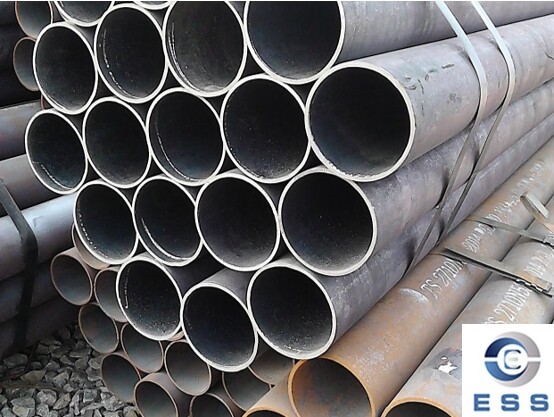
Carbon Steel Pipe Welding Process
1. Butt Joint
Align the two ends of the carbon steel pipe
using tools such as clamps and positioners for precise welding.
2. Joint Cut
Cut the pipe joint into a V-shape using a
cutting machine or blade, while removing all oil, scale, and other
contaminants.
3. Weld Filling
Select welding materials suitable for the
diameter and wall thickness, perform manual or semi-automatic welding, and fill
the weld seam.
4. Welding Completion
After welding, inspection and cleaning are
required, including cleaning the weld seam with anhydrous alcohol or organic
solvents to check for any defects or gaps.
Technical Requirements for Carbon Steel
Pipe Welding Process
1. Control of Welding Current and Voltage
During the welding of carbon steel pipes,
it is necessary to strictly control the welding current and voltage to ensure
the stability of the welding process and the quality of the weld. Excessive or
insufficient current and voltage will lead to a decrease in weld quality and
may even cause welding defects.
Manual Arc Welding (SMAW): Current range
80~200A (φ3.2mm electrode), voltage 22~28V.
Submerged Arc Welding (SAW): Current
400~600A, voltage 30~36V (refer to AWS D1.1).
2. Adjustment of Welding Speed
Welding speed is an important factor
affecting weld quality. When welding carbon steel pipes, the welding speed
should be reasonably adjusted according to factors such as material thickness,
welding method, and welding conditions to ensure the uniformity and density of
the weld.
Welding Speed: GTAW recommends 5-15 cm/min;
excessively high speeds can easily lead to incomplete fusion defects.
3. Control of Welding Deformation
Carbon steel pipes are prone to deformation
during welding. Therefore, a series of measures are needed to control welding
deformation, such as using fixtures, preheating, and slow cooling. These
measures help reduce stress and deformation during welding, improving weld
quality and project safety.
Technical Requirements for Carbon Steel
Pipe Welds
1. Weld Appearance Quality Requirements
Carbon steel pipe welds should have a
smooth, uniform appearance, free from obvious defects such as cracks, slag
inclusions, and porosity. The weld reinforcement and width should meet design
requirements to ensure weld strength and sealing.
2. Internal Weld Quality Requirements
The internal weld should be free from
defects such as incomplete fusion and incomplete penetration. The chemical
composition and mechanical properties of the weld metal should match those of
the base metal. To ensure the internal quality of the weld, non-destructive
testing methods can be used for flaw detection.
Key Control Points in Welding Process
1. Pre-welding Preparation
Groove Design: V-groove angle 60°±5° (for wall thickness > 6mm), blunt edge
1-2mm.
Cleanliness Requirements: Oil and rust must
be removed from both sides of the weld within 20mm to prevent porosity.
Preheating Requirements: When carbon
equivalent (Ceq) ≥ 0.4% or wall thickness > 25mm,
the preheating temperature must reach 100~200℃.
2. Welding Parameter Selection
|
Pipe Diameter (mm)
|
Wall Thickness (mm)
|
Recommended Method
|
Current (A)
|
Voltage (V)
|
|
≤100
|
2-5
|
TIG
|
60-120
|
10-15
|
|
100-300
|
5-15
|
SMAW/MIG
|
120-250
|
20-28
|
|
>300
|
>15
|
SAW
|
300-600
|
30-40
|
3. Post-Weld Inspection
Visual Inspection: Weld reinforcement ≤3mm, undercut depth <0.5mm (GB 50236-2011).
Non-destructive Testing: X-ray inspection
conforms to ASME B31.3; Class I welds allowable defects ≤2mm.
Hardness Testing: Heat-affected zone
hardness must be ≤248HV (to avoid cold cracking).
Pressure Testing: Hydrostatic test pressure
is 1.5 times the design pressure, holding time ≥10
minutes (ASME B31.1).
Why Do Carbon Steel Pipes Fail to Weld
Properly?
There are generally three main reasons why
carbon steel pipes fail to weld properly:
1. Surface Oxide Layer
Rust and oil on the pipe surface act as a
barrier, hindering metal fusion.
2. Temperature Imbalance
Excessive current leads to burn-through,
while insufficient current fails to penetrate.
3. Improper Operation
Deviations in the welding torch angle or
unstable movement speed will affect weld formation.
4. Welding Quality Requirements
When selecting welding rods, the post-weld
quality requirements must be considered, such as better vibration damping or
higher corrosion resistance.
FAQ
1. Does carbon steel pipe welding require
preheating?
Not always, but preheating is mandatory in
the following situations:
Wall thickness > 25mm
Carbon equivalent Ceq ≥ 0.40%
Low-temperature working environment
Recommended preheating temperature: 100–200℃, which effectively prevents cold
cracking and post-weld cracking.
2. Why do carbon steel pipes crack after
welding?
Common causes include: using high-hydrogen
welding rods that were not dried; insufficient preheating of thick-walled or high-carbon
steel pipes; excessively rapid post-weld cooling; and excessive
residual welding stress.
Solutions: Use low-hydrogen welding rods
(E7018), control the cooling rate, and perform post-weld heat treatment (PWHT)
if necessary.
3. What international standards are
commonly used for carbon steel pipe welding?
Common authoritative standards include:
ASME B31.1 / B31.3 (Pressure piping)
AWS D1.1 (Welding of structural steel)
ISO 15614 / ISO 9606
EN 1011 (European Welding Standard) Export
projects typically require WPS / PQR / WPQ documentation.
Summary
In conclusion, welding carbon steel pipes
is a complex and meticulous process that requires welders with professional
skills and experience. By selecting appropriate welding processes, conducting
thorough pre-weld preparation, and performing post-weld quality inspections, it
is possible to ensure that the weld quality of carbon steel pipes meets
standard requirements, thereby improving the overall quality and service life
of the project.



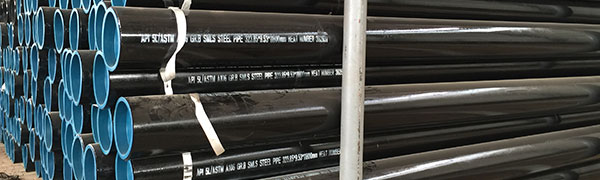
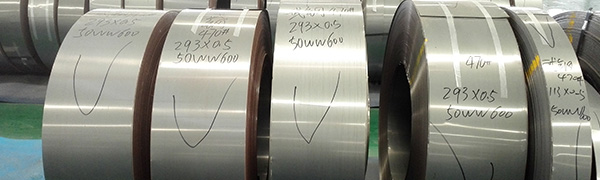
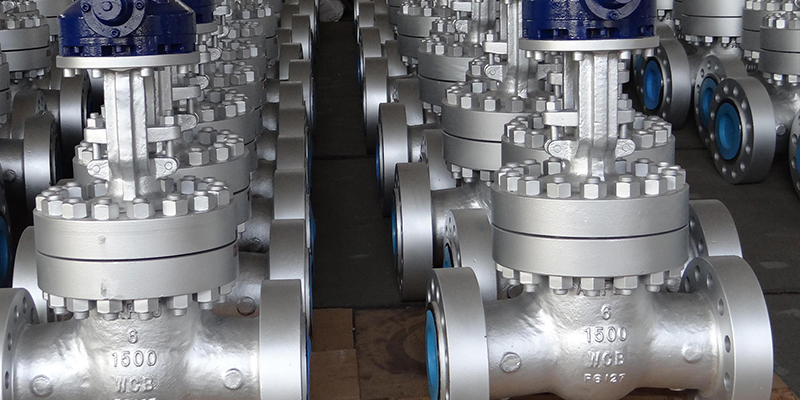
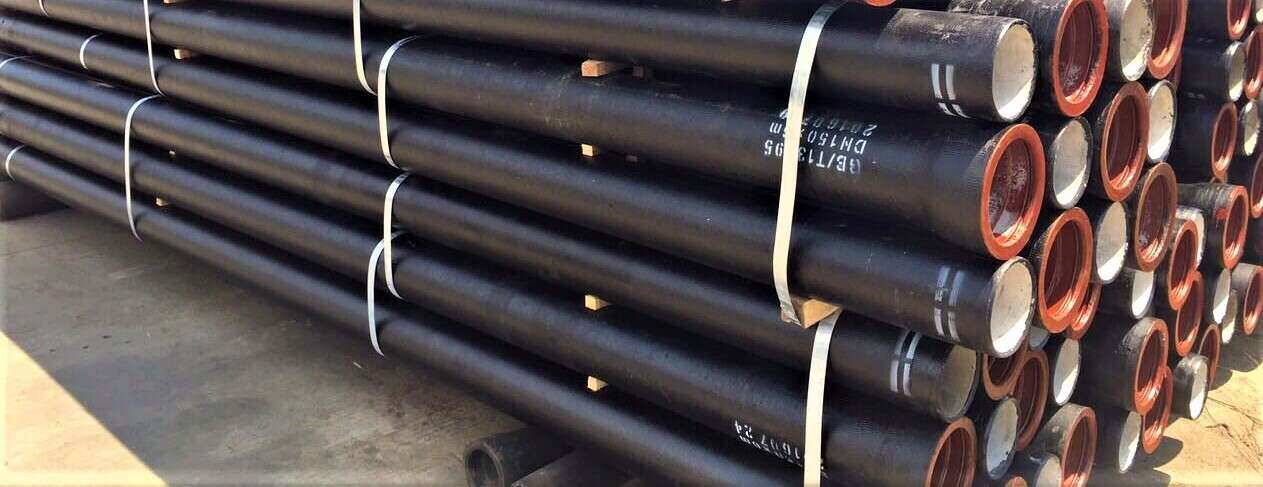


 Eastern Steel Manufacturing Co.,Ltd not only improve product production and sales services, but also provide additional value-added services. As long as you need, we can complete your specific needs together.