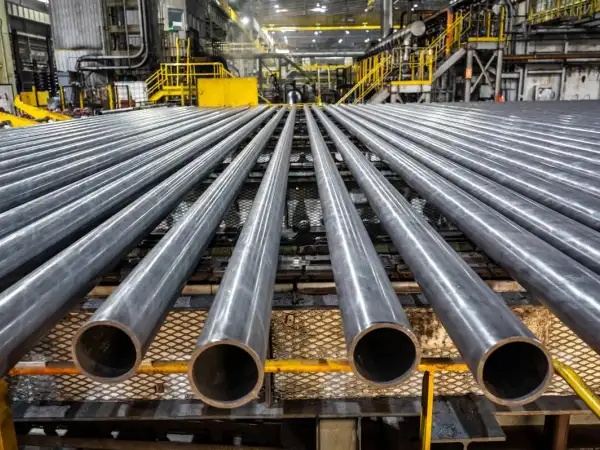
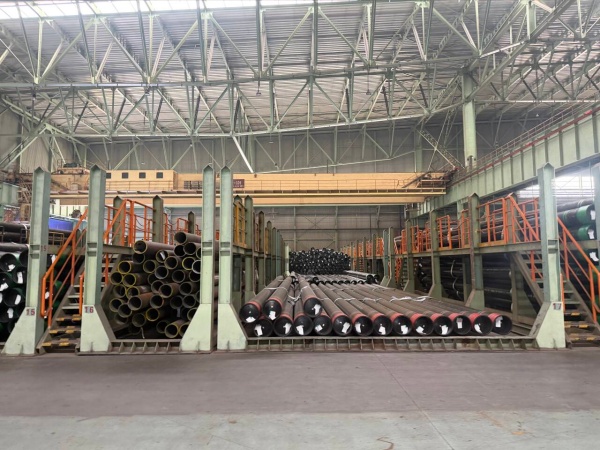
ASTM A106 Gr B is a carbon steel pipe commonly used in high-temperature and high-pressure piping systems such as oil, gas, chemical, and power plants.
Common in continuous-duty steam and process lines under sustained temperature and pressure.
It is not intended for cryogenic or low-temperature service due to reduced impact toughness.
This article outlines the key properties, size ranges, and differences between ASTM A106 Gr B and other common pipe standards to support practical material selection.
1. What is ASTM A106 Gr B?
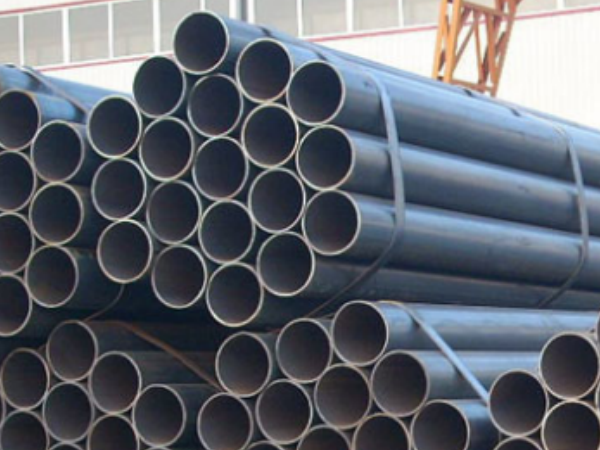
ASTM A106 Gr B is a seamless carbon steel pipe specified for high-temperature service. It is manufactured without a welded seam, typically by hot rolling or cold drawing, which gives it better structural uniformity under pressure.
In industrial applications, it is mainly used to transport fluids such as water, oil, gas, or steam, especially in systems where both temperature and pressure are higher than standard line pipe conditions.
The “Gr B” grade represents a balanced combination of strength, ductility, and cost, making it the most widely used grade within the ASTM A106 specification.
2. Key Properties of ASTM A106 Gr B
Before going into detailed specifications, the key performance characteristics can be understood from three practical aspects:
|
Property
|
Performance
|
What It Means in Practice
|
|
Strength
|
Yield ≥ 205 MPa
Tensile: 415–550 MPa
|
Can withstand relatively high internal pressure and mechanical stress
|
|
Temperature Resistance
|
Suitable for medium to high temperature service
|
Commonly used in boilers, heat exchangers, and process lines
|
|
Corrosion Resistance
|
Limited (carbon steel)
|
Requires coating or protection in humid or corrosive environments
|
In actual projects, ASTM A106 Gr B is rarely chosen for a single standout property. More often, it is selected because it performs reliably across typical operating ranges of pressure and temperature, without introducing complexity in fabrication or sourcing.
That balance is why it is often used in long-term systems where consistency and availability matter.
3. ASTM A106 Gr B Size Chart and Dimensions
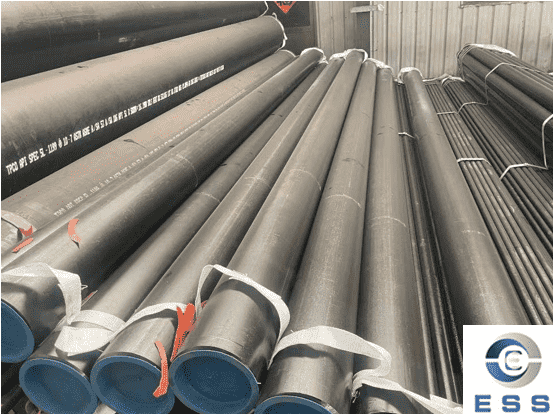
In most projects, selection is based on nominal pipe size (NPS), wall thickness (Schedule), and required pressure rating.
Typical size range includes:
- Nominal Size: NPS 1/8 to NPS 48
- Outer Diameter: 10.3 mm to 1219 mm
- Wall Thickness: SCH 10 to SCH XXS
Wall thickness (Schedule) directly affects pressure capacity, while diameter determines flow rate. In most cases, both are defined together as part of the system design.
Full size range from NPS 1/8 to NPS 48, including all schedules and detailed weight data, can be found in the complete ASTM A106 pipe size chart.
ASTM A106 Gr B Pipe Size Chart (Common Sizes)
|
Pipe Size (NPS)
|
OD (mm)
|
SCH 40 WT (mm)
|
SCH 80 WT (mm)
|
SCH 40 Weight (kg/m)
|
SCH 80 Weight (kg/m)
|
|
1/2"
|
21.3
|
2.77
|
3.73
|
1.27
|
1.62
|
|
3/4"
|
26.7
|
2.87
|
3.91
|
1.69
|
2.20
|
|
1"
|
33.4
|
3.38
|
4.55
|
2.50
|
3.24
|
|
1 1/2"
|
48.3
|
3.68
|
5.08
|
4.05
|
5.41
|
|
2"
|
60.3
|
3.91
|
5.54
|
5.44
|
7.48
|
|
3"
|
88.9
|
5.49
|
7.62
|
11.29
|
15.27
|
|
4"
|
114.3
|
6.02
|
8.56
|
16.07
|
22.32
|
|
6"
|
168.3
|
7.11
|
10.97
|
28.26
|
42.56
|
|
8"
|
219.1
|
8.18
|
12.70
|
42.55
|
64.63
|
|
10"
|
273.0
|
9.27
|
15.09
|
60.31
|
96.36
|
|
12"
|
323.9
|
9.53
|
17.48
|
73.76
|
133.41
|
Note:
- NPS = Nominal Pipe Size
- SCH = Pipe Schedule (affects wall thickness and pressure capacity)
- Weight values are theoretical and may vary slightly depending on manufacturing tolerances
ASTM A106 pipe dimensions and schedule data are available in the Seamless Steel Pipe Size Chart.
4. ASTM A106 Gr B vs Other Pipe Standards
In practical engineering work, ASTM A106 Gr B is rarely considered on its own. It usually comes up alongside other common specifications, particularly when the service conditions fall somewhere between standard pipeline transport and high-temperature process systems.
4.1 A106 Gr B vs API 5L
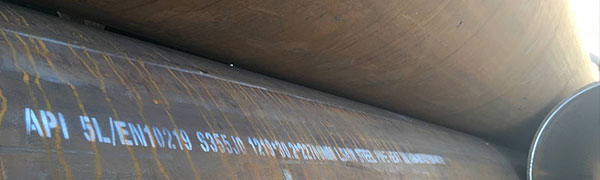
API 5L is commonly used for line pipe, especially in long-distance oil and gas transmission. These systems focus more on transport efficiency and maintaining pipeline integrity over distance, rather than operating under extreme conditions.
ASTM A106 Gr B is more often found inside facilities. It’s typically used in process piping such as steam lines, refinery units, and power plant systems, where temperatures and internal pressure are higher and material stability matters more in daily operation.
In most cases: API 5L is associated with transmission pipelines, while A106 Gr B is associated with process and high-temperature service.
When temperature becomes a continuous operating factor rather than an occasional condition, A106 Gr B is usually preferred.
4.2 A106 Gr B vs ASTM A53
A similar comparison applies when looking at ASTM A53. That specification is widely used in structural and general-purpose piping, where the operating demands are lower and temperature is not a primary concern.
A106 Gr B does not necessarily replace A53, but it is typically selected when the service environment starts to move beyond what standard carbon steel pipes are expected to handle in terms of heat and pressure.
For projects where temperature is not a driving factor, A53 is often sufficient.
5. Applications of ASTM A106 Gr B
ASTM A106 Gr B is used primarily in process environments rather than long-distance pipeline systems. It appears more often inside plants, where operating temperature and pressure are sustained rather than occasional.
In oil and gas facilities, it is typically used in refinery piping—heater outlets, transfer lines, and other sections where hydrocarbons are processed at elevated temperatures. Seamless construction reduces leakage risk in systems that run continuously.
In power generation, it is commonly used in steam circuits, including main steam lines and boiler-connected piping, where repeated heating and cooling cycles place continuous stress on the material.
In chemical plants, usage is more selective. It is applied where temperature resistance is required, but corrosion exposure is limited or controlled through coatings.
It is also used in general industrial piping when service conditions exceed standard carbon steel limits, but do not require alloy materials.
6. Processing and Manufacturing
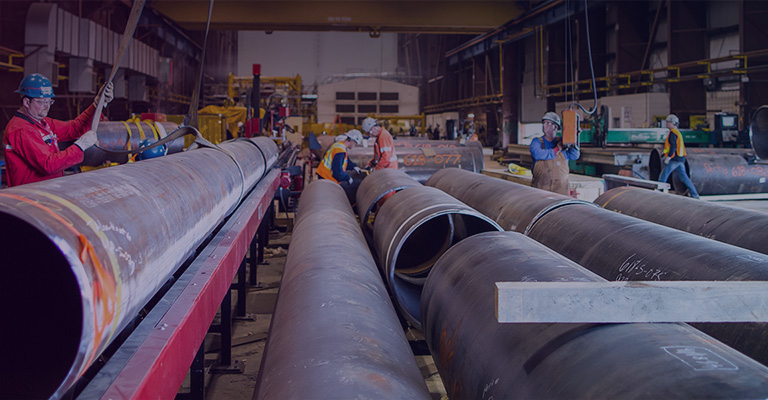
ASTM A106 Gr B seamless pipes are typically produced by hot rolling or cold drawing, depending on the required size range and dimensional accuracy.
Hot-rolled steel pipes are more common for larger diameters and thicker walls. The process involves heating the billet, piercing it into a hollow section, and then rolling it to the required dimensions. This method is widely applied in general industrial production.
Cold drawing is usually applied when tighter tolerances or smoother surface finishes are required. It involves additional processing steps at room temperature, which improves dimensional consistency but increases production cost.
In fabrication, A106 Gr B behaves like a typical carbon steel pipe. It can be cut, beveled, bent, and welded using standard methods.
For thicker sections or critical welds, preheating and post-weld heat treatment are sometimes applied to reduce residual stress and avoid cracking.
These processing characteristics also make A106 Gr B widely available and relatively stable in supply compared to more specialized materials.
7. FAQ
Q1. Is ASTM A106 Gr B suitable for low-temperature service?
Not recommended for cryogenic service. At low temperatures, impact toughness becomes a limiting factor.
Q2. What is the difference between ASTM A106 Gr B and API 5L Grade B?
A106 Gr B is generally used in high-temperature and pressure systems, while API 5L Grade B is more commonly used for pipeline transport at ambient or moderate temperatures.
Q3. Can ASTM A106 Gr B be used for structural applications?
It can be used, but it is not usually the first choice. Standards like ASTM A53 are more commonly specified for structural or low-pressure uses.
Q4. Does A106 Gr B require corrosion protection?
Yes. As a carbon steel material, it has limited corrosion resistance and typically requires coating, painting, or other protection depending on the environment.
Q5. What sizes are available for ASTM A106 Gr B pipes?
It is available from small diameters (NPS 1/8) up to large sizes (NPS 48), with various wall thickness options depending on schedule and application.
Q6. Is ASTM A106 Gr B seamless or welded?
ASTM A106 Gr B is a seamless pipe specification. It is manufactured without a welded seam, which improves structural consistency under pressure.
8. Conclusion
In actual projects, selecting ASTM A106 Gr B usually depends on a combination of temperature, pressure, and system design requirements. Standard specifications provide a baseline, but final decisions are often adjusted based on project conditions.
If you are working with a specific application or sizing requirement, it may be useful to review detailed data or discuss the selection in the context of the project.



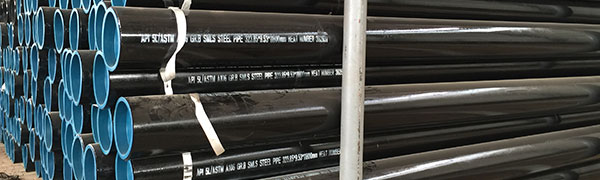


 Eastern Steel Manufacturing Co.,Ltd not only improve product production and sales services, but also provide additional value-added services. As long as you need, we can complete your specific needs together.