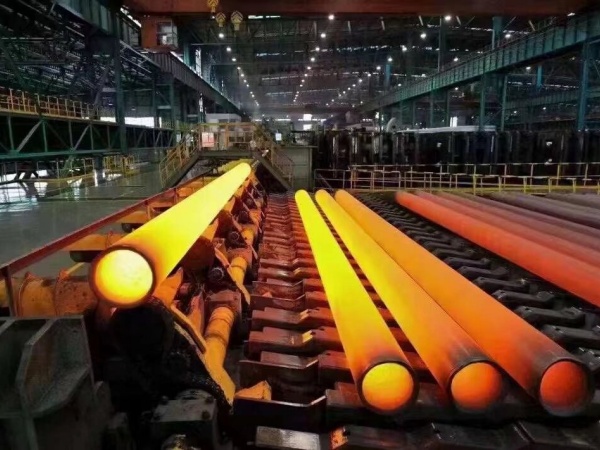
Carbon steel pipe is one of the most widely
used steel pipe types in industrial piping systems, especially in the oil and
gas, chemical, power, boiler, building structure, and machinery manufacturing
sectors, where it occupies a core position.
In international trade and engineering
applications, a correct understanding of the material grades, standard systems,
and performance differences of carbon steel pipes is crucial for selection,
pricing, and quality control.
Carbon Steel Pipe Material Code
Different countries and standards systems
use different methods to represent the material of carbon steel pipes, but they
all essentially revolve around mechanical properties, chemical composition, and
operating conditions. The carbon steel pipe material code typically includes
information on material type, strength grade, or chemical composition:
1. Letter + Number Combination (e.g.,
A106B)
Letters represent standards or applications
(A=ASTM, X=pipeline steel), and numbers represent strength or composition
codes.
A106 does not indicate a "corrosion
resistance grade," but rather a standard for seamless
carbon steel pipes for high-temperature.
In API 5L, X represents the minimum yield
strength (ksi).
2. Combinations of numbers and symbols
(e.g., Q345R)
Q represents yield strength, 345 is the
yield value (MPa), and R indicates it's for pressure vessels (GB 713-2014).
Q345R is specifically for pressure vessels
and boilers (GB 713), not ordinary structural steel.
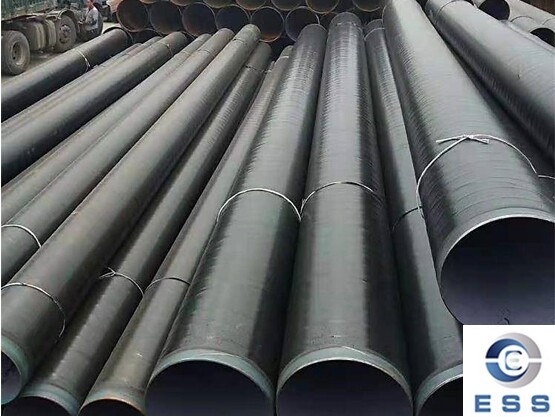
Carbon Steel Pipe Material Types
Mild steel pipes are mainly made of steel
with low carbon content, possessing lower strength and hardness, but better
toughness and weldability.
These carbon steel pipes are suitable for
applications where high strength requirements are not necessary, such as
transporting low-pressure fluids or serving as structural support.
2. Medium-Carbon Steel Pipe
Medium-carbon steel pipes have a moderate
carbon content, thus possessing moderate strength and hardness. These carbon
steel pipes maintain good toughness and weldability while withstanding certain
pressure.
Medium carbon steel pipes are widely used
in various industrial fields, such as petroleum, chemical, and power.
3. High Carbon Steel Pipe
High carbon steel pipes are made of steel
with a higher carbon content, thus possessing higher strength and hardness.
However, high carbon steel pipes have relatively poor toughness and
weldability.
These types of carbon steel pipes are
typically used in applications requiring high pressure or high wear, such as
oil drilling and mining.
Carbon Steel Pipe Material Standards
Carbon steel pipes are a commonly used
metal material, widely applied in petrochemical, power, construction, and
manufacturing fields. Therefore, carbon steel pipe standards are of great
importance. The following are relevant standards for carbon steel pipe
materials:
1. International Standards
International standards for steel pipes
include ISO, ASTM, DIN, etc., with ISO standards being the most commonly used.
ISO standards specify the dimensions, shape, quality, and other requirements
for seamless and welded carbon steel pipes, alloy seamless steel pipes, and
alloy welded steel pipes. These standards play an important role in
international trade and technical exchange.
2. American Standards
American steel pipe standards include ASTM
and API. ASTM standards refer to a series of steel standards specifying various
types and grades of steel pipe materials. API standards are mainly used for
steel pipes in the oil and gas industry, including API 5L and API 5CT, for
applications such as drill pipe and casing.
A106: Seamless carbon steel pipe for
high-temperature applications, divided into three grades: A, B, and C. For
example, A106B has a yield strength ≥240 MPa (ASTM
A106-19).
A53: Welded/seamless
steel pipe, divided into A (welded) and B (seamless) types. A53B has a
tensile strength ≥415 MPa.
3. Chinese Standards
Chinese national
standards integrate international and Chinese standards, formulating a series
of specific standardized specifications. Chinese steel pipe standards mainly
include GB/T, JB/T, SY/T, DL/T, etc. Among them, GB/T standards are the most
widely used, covering steel standards for various industries.
Q235: Ordinary carbon structural steel,
yield strength ≥235 MPa (GB/T 700-2006). 20# Steel:
High-quality carbon steel, tensile strength ≥410 MPa
(GB/T 8163-2018).
Carbon Steel Pipe Material Grades
Carbon steel exhibits different properties
under varying temperatures and pressures; therefore, steel pipe grades are
determined based on the material's mechanical properties and chemical
composition.
There are three main classification
standards for carbon steel pipe materials: American, European, and Chinese. The
United States uses the ASTM standard, Europe uses the EN standard, and China
uses the GB/T standard. The following are the grade classifications for each
standard:
1. ASTM Standards Classification of Carbon Steel Materials
ASTM standards classify carbon steel
materials into four grades: A, B, C, and D. Higher grades indicate better
strength and corrosion resistance. Certain ASTM-grade mild steel pipes are
widely used in fluid transportation, equipment structures, and hydraulic
systems.
2. EN Standard Classification of Carbon
Steel Materials
The EN standard classifies carbon steel
materials into six grades: P195TR1, P195TR2, P235TR1, P235TR2, P265TR1, and
P265TR2. Higher grades generally indicate better strength and corrosion
resistance.
3. GB/T Standard Classification of Carbon
Steel Materials
The GB/T standard classifies carbon steel
materials into ten grades: Q195, Q215A, Q215B, Q235A, Q235B, Q235C, Q235D,
Q275, Q345, and L245. Higher grades generally indicate better strength and
corrosion resistance.
4. Comparison Chart of Mainstream Carbon
Steel Pipe Material Grades
|
GB
|
ASTM
|
EN
|
Applications
|
|
Q235
|
A53 Gr.B
|
S235
|
S235 Structural, Low-Pressure Pipe
|
|
20#
|
A106 Gr.B
|
P235
|
Seamless Fluid Pipe
|
|
Q345
|
A572 Gr.50
|
S355
|
Structural Load-Bearing
|
|
L245
|
API
5L X42
|
L245
|
Pipeline Transportation
|
The Role of Carbon Steel Pipe Material
Grade
The grade of carbon steel pipe material
determines the environment and liquid (gas) medium it can be used for. For
specific environments and liquid (gas) media, the appropriate carbon steel pipe
material grade must be selected. At the same time, the grade of carbon steel
pipe material also determines the load-bearing capacity and service life of the
pipeline.
Carbon Steel Pipe Material Specification
Chart
The following is a table of carbon steel
pipe material specifications parameters, which summarizes the commonly used carbon
steel pipe material grades and their corresponding specifications parameters.
|
Grade
|
Ordinary steel pipe wall thickness
|
High frequency welded steel pipe wall
thickness
|
Cold drawn pipe wall thickness
|
|
A
|
2.11mm
|
2.11mm
|
2.11mm
|
|
B
|
2.77mm
|
2.77mm
|
2.77mm
|
|
C
|
3.40mm
|
3.40mm
|
3.40mm
|
|
D
|
3.96mm
|
3.96mm
|
3.96mm
|
|
P195TR1
|
1.80mm
|
2.60mm
|
2.60mm
|
|
P195TR2
|
1.80mm
|
2.60mm
|
2.60mm
|
|
P235TR1
|
2.00mm
|
2.90mm
|
2.90mm
|
|
P235TR2
|
2.00mm
|
2.90mm
|
2.90mm
|
|
P265TR1
|
2.20mm
|
3.20mm
|
3.20mm
|
|
P265TR2
|
2.20mm
|
3.20mm
|
3.20mm
|
|
Q195
|
1.0mm
|
1.5mm
|
1.25mm
|
|
Q215A
|
1.0mm
|
1.5mm
|
1.25mm
|
|
Q215B
|
1.0mm
|
1.5mm
|
1.25mm
|
|
Q235A
|
1.2mm
|
2.0mm
|
1.5mm
|
|
Q235B
|
1.2mm
|
2.0mm
|
1.5mm
|
|
Q235C
|
1.2mm
|
2.0mm
|
1.5mm
|
|
Q235D
|
1.2mm
|
2.0mm
|
1.5mm
|
|
Q275
|
1.5mm
|
2.5mm
|
1.75mm
|
|
Q345
|
2.0mm
|
3.0mm
|
2.5mm
|
|
L245
|
3.0mm
|
6.0mm
|
4.5mm
|
FAQ
1. Is there a difference in material grades
between carbon steel pipes and seamless carbon steel pipes?
There is no fundamental difference.
The material grade of carbon steel pipes is
determined by the material standard, not by the manufacturing process (seamless
or welded).
Seamless carbon steel pipes: Common
materials are ASTM A106 Gr.B, 20#, and API 5L X52.
Welded carbon steel pipes: Common materials
are ASTM A53 Gr.B and Q235. Whether to choose seamless pipes mainly depends on
pressure, temperature, and safety requirements.
2. What do A, B, and C represent in the
carbon steel pipe material grades?
In ASTM standards: A, B, and C represent
different performance grades under the same standard. Higher grades indicate
better strength and temperature resistance.
For example, in ASTM A106:
Gr.A: Low strength;
Gr.B: Most commonly used;
Gr.C: High strength (less commonly used).
3. How to choose the appropriate carbon
steel pipe material grade?
It is recommended to consider the following
five aspects: Design pressure and temperature; Transport medium (oil, gas,
water, steam); Whether seamless carbon steel pipes are required; Project
implementation standards (ASTM / EN / GB); Whether export or third-party
inspection is required (SGS / BV / TUV).
Summary
The material grade of carbon steel pipes is
not simply a distinction of "high or low strength," but a
comprehensive result of standard systems, chemical composition, mechanical
properties, and the usage environment.
In practical procurement and engineering
applications, the following factors should be considered: operating temperature
and pressure, conveying medium, and international or owner-specified standards.
Scientific selection of the material quality grade of carbon steel pipes or
seamless carbon steel pipes is crucial to ensuring project safety, compliance,
and optimal cost.
Read more: Types of seamless carbon steel pipes or Thermal conductivity of carbon steel pipe



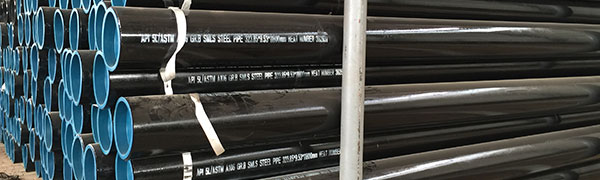
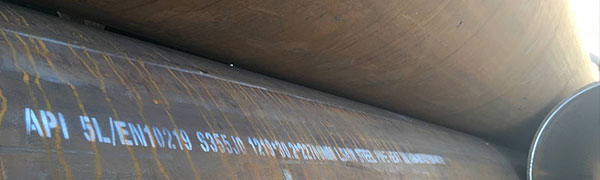


 Eastern Steel Manufacturing Co.,Ltd not only improve product production and sales services, but also provide additional value-added services. As long as you need, we can complete your specific needs together.