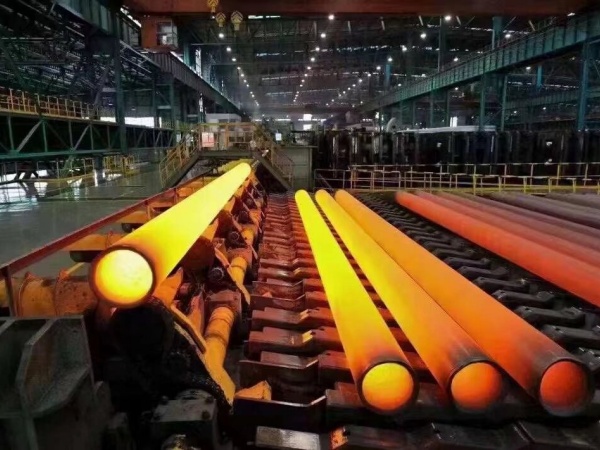
A drill pipe is a steel pipe with threads at one end. The 4” XT39 drill
pipe is a high-strength oil drill pipe conforming to API
5DP standards. Made of S-135 steel with an internally thickened (IU)
construction, it is suitable for medium-deep wells and high-torque drilling
conditions.
This drill pipe exhibits excellent
performance in tensile strength, internal pressure resistance, collapse
resistance, and connection torque safety margin, and is widely used in onshore
oil and gas wells and conventional directional drilling operations.
Advantages of the 4” XT39 Drill Pipe
1. High-strength S-135 pipe body, suitable
for high-load drilling.
2. XT39 high-performance tool joint with
strong torsional resistance.
3. Optimized inner diameter design for
improved mud circulation efficiency.
4. Meets API Premium testing standards.
4” XT39 Drill Pipe Body Specifications
|
Tube / Pipe Body
|
Nominal
|
|
Pipe Body OD
|
4.000 in
|
|
Pipe Body ID
|
3.340 in
|
|
Weight
|
14.40 lbs/ft
|
|
Adjusted Weight
|
16.24 lbs/ft
|
|
Wall Thickness
|
0.330 in
|
|
Grade
|
S-135
|
|
Type of Upset
|
IU
|
|
Maximum Upset OD
|
4.188 in
|
|
Range
|
2
|
IU internal thickening structure: Reduces
outer diameter changes while ensuring strength, improving wellbore
adaptability.
Range 2 length: Suitable for most standard
drilling conditions, balancing transportation and construction efficiency.
XT39 Tool Joint Specifications
|
Tool Joint Specifications
|
Nominal
|
|
Tool Joint Description
|
XT 39
|
|
Tool Joint OD
|
4.875 in
|
|
Tool Joint ID
|
2.688 in
|
|
Pin Tong Length
|
10 in
|
|
Box Tong Length
|
15 in
|
|
Tool Joint SMYS
|
120,000 psi
|
|
Drift Diameter
|
2.563 in
|
|
Tool Joint Torsional Capacity
|
35,302 ft-lbs
|
The XT39 connection is a medium-to-high
strength drill pipe connection type that provides stable torsional resistance
while maintaining a small outer diameter, making it ideal for use with S-135
steel grade 4-inch drill pipes.
4” XT39 Drill
Pipe Body Performance
|
Pipe Body Performance
|
Inspection Class
|
|
Nominal
|
API Premium 80%
|
|
Remaining Body Wall (RBW)
|
0.330
|
0.264 in
|
|
Burst Pressure
|
19,491
|
17,820 psi
|
|
Collapse Pressure
|
20,139
|
13,834 psi
|
|
Slip Crushing Capacity
|
386,269
|
306,385 lbs
|
|
Assumed Slip Length
|
|
16.5 in
|
|
Assumed Transverse Load Factor (K)
|
|
4.2
|
|
Adjusted Weight
|
|
16.24 lbs/ft
|
|
Fluid Displacement
|
|
0.0059 bbls/ft
|
|
Fluid Capacity
|
|
0.0102 bbls/ft
|
|
Tube Tensile
|
|
403,527 lbs
|
|
Tube Torsional
|
|
32,753 ft-lbs
|
Burst pressure is calculated based on API
standard 87.5% RBW; axial load and bending effects are not considered.
XT39 Connection Makeup Torque
Specifications
|
Makeup Torque Specifications
|
Thread Compound Friction Factor
|
|
1.00 FF
|
1.15 FF*
|
|
Maximum Makeup Torque
|
21,200 ft-lbs
|
24,380* ft-lbs
|
|
Minimum Makeup Torque
|
17,700 ft-lbs
|
20,355* ft-lbs
|
|
Tool Joint Torsional
|
35,302 ft-lbs
|
40,597 * ft-lbs
|
|
Connection Tensile (At Min Makeup Torque)
|
661,998 lbs
|
|
Connection Tensile (At Max Makeup Torque)
|
553,512 lbs
|
FF = 1.15 Based on copper-based thread
compound;
The increased coefficient of friction
improves the torsional resistance of the tool joint by approximately 15%;
It is recommended that the drilling torque
be ≤ 80% of the top thread torque to ensure a safe
connection.
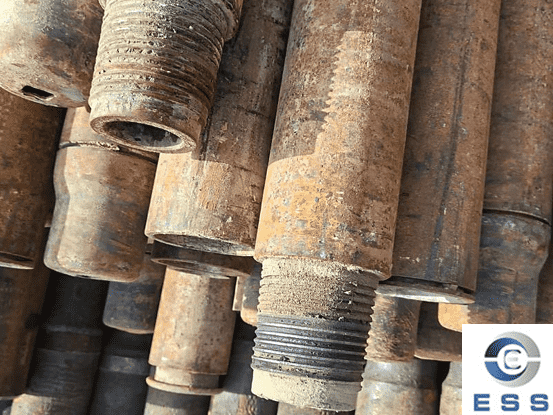
XT39 and NC38 are both commonly used in
4-inch drill pipes and are therefore frequently compared in actual projects.
However, it is important to clarify that XT39 is not an API standard connector,
while NC38 is a standard NC series connector in the API 5DP system. This
determines the fundamental difference in their versatility and
interchangeability.
1. Size Differences
XT39 is very similar to NC38 in terms of
outer diameter, inner diameter, and torque rating.
In 4" S-135 drill pipe applications,
both XT39 and NC38 are typically in the same torque rating range, and are
therefore often described in engineering as "functional equivalent."
2. Connection Structure Differences
In terms of connection structure, XT39 and
NC38 use completely different thread systems.
XT39 uses a dedicated thread for the XT
series, while NC38 uses the API-specified NC thread, with different thread
profiles, tapers, and pitches.
Therefore, XT39 connectors cannot be
directly screwed onto NC38 connectors. Forcing such a connection can easily
lead to seizing, abnormal thread wear, and even connection failure or breakage
under high torque conditions.
If both XT39 and NC38 are present in the
drilling system, the only safe and compliant solution is to use an XT39 × NC38 crossover sub. This crossover sub allows for a transition
between different connector systems while ensuring connection strength and
torque safety.
3. Application Differences
From an application perspective, NC38 is
more suitable for API standards. Projects requiring standard-mandated
specifications, such as drilling rigs operated by international oil companies
(IOCs), national oil companies (NOCs), or multiple suppliers, typically demand
a high degree of standardization and global compatibility.
XT39, on the other hand, is more often used
for customized projects without API mandates or in situations where existing XT
series drilling systems are available. While meeting engineering requirements,
it often offers greater flexibility in cost control and delivery time.
4” XT39 Drill Pipe Applications
1. Medium-deep oil and gas drilling;
2. Conventional directional drilling;
3. High-speed + medium-high torque
conditions;
4. Onshore oilfield drilling projects.
FAQ
1. What is the equivalent connection for the
XT39 connection?
There is no 100% officially equivalent API
standard connector for the XT39.
In practical applications, the XT39 is
generally considered closest to the NC38 (API NC38) in size and performance,
and therefore is considered functionally equivalent in some projects, but they
are not directly interchangeable.
2. Does XT39 comply with API 5DP?
Pipe Body: Fully compliant with API 5DP
(e.g., S-135);
Tool Joint: XT39 itself is not an API NC series connector;
However, its mechanical performance
calculation methods and testing standards can refer to API 5DP / API RP 7G.
Read more: Drill Pipe Weight Chart and Calculation or Is Drill Pipe Weldable?






 Eastern Steel Manufacturing Co.,Ltd not only improve product production and sales services, but also provide additional value-added services. As long as you need, we can complete your specific needs together.