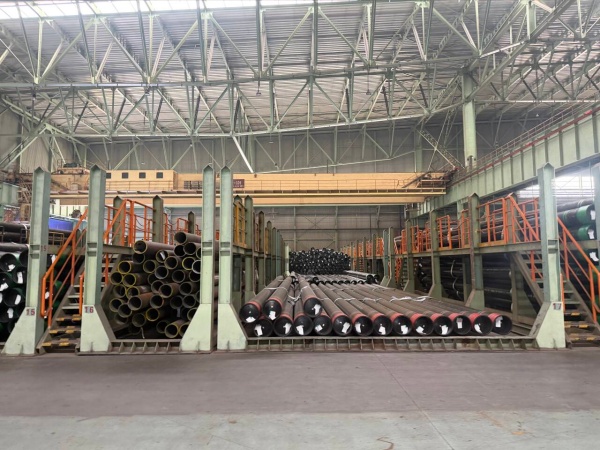
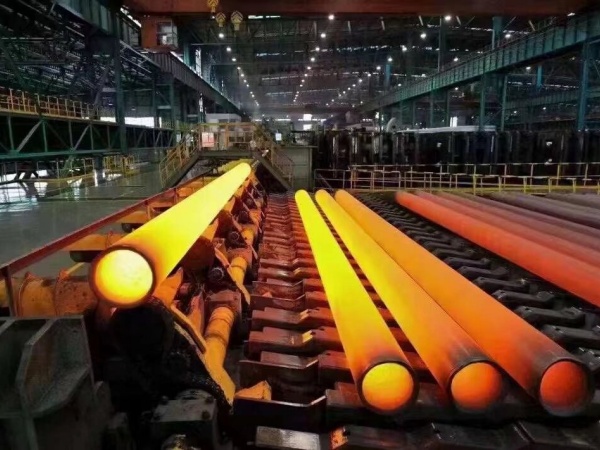
The seamless
pipe is widely used in many fields, and their bending and forming
processes are crucial for meeting diverse engineering needs. The following will
introduce several common seamless pipe bending and forming processes.
What is Pipe Bending
Pipe bending refers to the process of
shaping metal pipes (such as steel pipes) into desired curved shapes (such as
arcs, circles, U-shapes, etc.) through mechanical or thermal action. It is
widely used in construction, power, petroleum, chemical, shipbuilding, bridge
construction, and other fields for manufacturing pipe elbows, irregularly
shaped components, etc.
Specification of Pipe Bends
|
Dimensions
|
Standards
|
|
Outside Diameter
|
Seamless Pipe Bends(1/2 - 24),
ERW/Fabricated/Welded Pipe Bends(2 - 36)
|
|
Bending Radius
|
3D, 5D, 10D or Custom
|
|
Product Angle
|
1.5d Pipe Bends to 180 degree
|
|
Wall Thickness
|
3mm - 40mm/ SCH5, SCH10, SCH20, SCH30,
SCH40, STD, XS, SCH60, SCH80, SCH120, SCH140, SCH160, XXS
|
|
Materials
|
Stainless Steel, Carbon Steel,
Low-Temperature Carbon Steel, Alloy Steel, Duplex, and Super Steel and Nickel
Alloys
|
Seamless Pipe Bending Process
1. Cold Bending Process
Cold bending is a process of bending seamless
pipes at room temperature. This process has many advantages. First, it better
maintains the surface quality of the seamless pipe because, without the
influence of high temperatures, defects such as oxide scale will not appear on
the steel tube surface. Second, the cold bending process allows for precise
control of the bending angle and radius, meeting high-precision engineering requirements.
Common cold bending methods include:
- Roll Bending
Roll bending uses three rollers to bend the
seamless pipe. Two are driving rollers, and one is a driven roller. The steel
tube moves forward under the rotation of the rollers, while the driven roller
applies pressure to bend the tube.
This method is suitable for seamless pipes
with large bending radii, enabling continuous bending and offering high
production efficiency.
- Press Bending
Pressure bending uses a press and a die to
bend the seamless steel pipe. The steel tube is placed in the die, and pressure is
applied by the press, causing the tube to bend under the action of the die.
Press bending can achieve various shapes of
bending, such as U-shapes and V-shapes, but it can only bend one angle at a
time, resulting in relatively low production efficiency and suitability for
small-batch production.
- Stretch Bending
Stretch bending is the bending of seamless steel pipes under the combined action of tension and bending moment. One end of the
steel pipe is fixed, tension is applied to the other end, and a bending moment
is applied to the middle of the pipe, causing it to bend.
Stretch bending effectively reduces
springback during bending, improving bending accuracy, and is suitable for
applications requiring high bending precision.
2. Hot Bending
Hot bending is a process of bending
seamless pipes after heating them to a certain temperature. The purpose of
heating is to reduce the hardness of the steel pipe, increase its plasticity,
and make it easier to bend. Hot bending is suitable for seamless pipes with
small bending radii and large wall thicknesses.
Common hot bending methods include:
- Medium Frequency Induction Heating
Bending
Medium frequency induction heating bending
utilizes the induced magnetic field generated by medium frequency current to
locally heat the steel pipe.
A steel pipe is passed through an induction
coil. When current passes through the coil, an induced current is generated
inside the pipe, rapidly heating it to the desired temperature. The heated pipe
is then bent using a mechanical device.
This method offers fast heating,
concentrated heating, precise control of heating temperature and bending angle,
and high bending quality.
- Flame Heating Bending
Flame heating bending utilizes a flame to
heat the steel pipe. Typically, a flame generated by the combustion of a
mixture of gases such as oxygen and acetylene is used. After reaching a certain
temperature, the pipe is bent manually or mechanically.
Flame heating bending equipment is simple
and inexpensive, but the heating speed is slow, heating is uneven, and bending
quality is relatively poor. It is suitable for applications where high bending
quality is not required.
3. Other Bending Forming Processes
- Hydraulic Bending
Hydraulic bending uses pressure provided by
a hydraulic system to bend seamless pipes. A hydraulic cylinder pushes a
bending die, causing the steel pipe to bend under the action of the die.
Hydraulic bending features high bending
force and high bending precision, making it suitable for bending
large-diameter, thick-walled seamless pipes.
- CNC Pipe Bending
CNC pipe bending utilizes a computer
control system to precisely control the pipe bending process. By inputting
bending parameters, the computer controls various actions of the bending
equipment to achieve automated bending.
CNC pipe bending improves bending accuracy
and production efficiency, and is suitable for mass production and bending of
complex shapes.
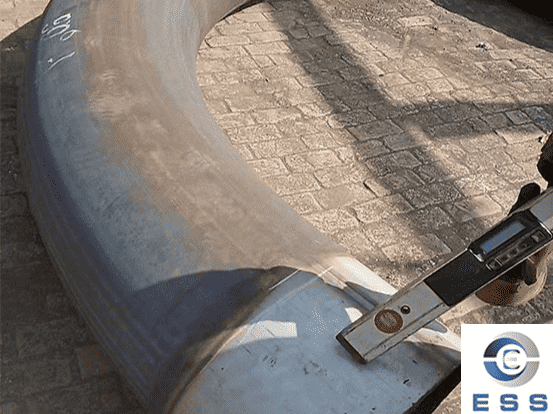
Bending Radius of Seamless Pipes
The bending radius of seamless steel pipes needs
to be determined based on the pipe material, wall thickness, pipe diameter, and
bending process. It directly affects the bending quality and performance.
Generally, the principle of "safe bending radius" is followed to
avoid cracks and deformation during bending.
1. Minimum Bending Radius Coefficient
First, determine the minimum bending radius
coefficient based on the material (1.5-2.5 for carbon steel, 2.0-3.0 for
stainless steel, and 2.5-3.5 for alloy steel).
Minimum Bending Radius = Bending Radius
Coefficient × Pipe Diameter
For example, for a φ50mm carbon
steel seamless pipe, the minimum bending radius = 2.0 × 50 = 100mm. The actual bending radius must be ≥ the minimum bending radius to avoid excessive stretching on the
outer side of the pipe, which could lead to cracks.
For seamless pipes with thinner walls (≤5mm) or larger diameters (≥200mm), the
bending radius coefficient needs to be appropriately increased (by 0.5-1.0) to
prevent collapse during bending.
The bending radius for cold bending should
be greater than that for hot bending (the cold bending coefficient should be
0.3-0.5 greater than the hot bending coefficient) because the metal has lower
plasticity during cold bending, making it prone to springback.
2. The Influence of Bending Radius
An excessively small bending radius will
lead to thinning of the outer wall thickness of the pipe (thinning ≤10% is acceptable), exceeding which will affect pressure resistance;
it may also cause internal wrinkles, affecting fluid transport efficiency. An
excessively large bending radius will increase the space occupied by the pipe,
making installation in confined areas difficult, and may also increase the
deviation of the straight section of the pipe after bending, affecting assembly
accuracy.
In practical applications, the bending
radius needs to be determined comprehensively based on the installation space
and operating pressure. The bending radius of important pipelines (such as
high-pressure pipes) needs to be verified through bending tests to ensure that
there are no defects after bending and that the requirements for use are met.
Factors Affecting the Bending Degree of
Seamless Pipes
1. Material
The material
of the seamless pipe directly affects its bending degree. Different
materials have different strengths and toughnesses; therefore, when selecting
and bending seamless pipes, it is necessary to choose the appropriate material
based on specific industry requirements.
2. Diameter
The larger the diameter of the seamless steel pipe, the greater the force required for bending, and the larger the bending
radius will be. Therefore, diameter is one of the important factors affecting
the bending degree of seamless pipes.
3. Wall Thickness
The thinner the seamless
pipe thickness, the easier it is to deform during bending, and
therefore its bending degree is relatively larger. However, excessively thin
walls may also lead to problems such as cracking or uneven deformation during
the bending process.
Seamless Pipe Bending Processing
Skills
1. Choosing an Appropriate Bending Radius
Generally speaking, the larger the bending
radius, the easier it is to bend the steel pipe and the lower the internal
stress; the smaller the bending radius, the more difficult it is to bend the
steel pipe and the more prone it is to defects such as cracks.
When choosing the bending radius, it is
necessary to comprehensively consider factors such as the actual engineering
requirements, the material of the steel pipe, its diameter, and its wall
thickness.
2. Proper Lubrication
During the bending process, proper
lubrication of the steel pipe and die can reduce friction, minimize surface
damage, and improve bending quality.
Common lubricants include graphite
lubricant and machine oil. When applying lubricant, it should be evenly applied
to the contact surfaces of the steel pipe and die.
3. Controlling Bending Speed
Bending speed significantly affects the
bending quality of seamless pipes. Excessive bending speed can lead to defects
such as cracks and wrinkles; insufficient bending speed reduces production
efficiency.
In practice, the bending speed should be
rationally controlled based on factors such as the steel pipe's material,
diameter, wall thickness, and bending radius.
4. Stress Relief Treatment
Whether hot or cold bending, seamless pipes
will generate internal stress after bending. This stress affects the service
life and performance of the steel pipe. Therefore, stress relief treatment is
necessary after bending.
Common stress relief methods include heat
treatment and mechanical vibration. Heat treatment involves heating the steel
pipe to a certain temperature, holding it at that temperature for a period of
time, and then slowly cooling it. Mechanical vibration involves vibrating the
steel pipe with a vibrating device to release internal stress.
Key Points for Seamless Pipe Bending
1. Material Selection
Before bending seamless steel pipes, it is
necessary to select a suitable steel pipe material based on the specific
application requirements.
Different steel pipe materials have
different mechanical and processing properties. For example, carbon steel
seamless pipes have high strength and toughness, suitable for general
industrial applications; stainless steel seamless pipes have good corrosion
resistance, suitable for chemical, food, and other industries.
In addition, the wall thickness and outer
diameter of the steel pipe must be considered to ensure they meet the
requirements of bending processing.
2. Bending Radius Control
The bending radius is an important
parameter in seamless steel pipe bending. A bending radius that is too small will
result in thinning of the outer wall and thickening of the inner wall, and may
even lead to defects such as wrinkles and cracks; a bending radius that is too
large will increase the pipe's footprint and cost.
Therefore, when determining the bending
radius, it is necessary to comprehensively consider factors such as the steel
pipe's material, wall thickness, and application requirements. Generally, the
bending radius should be no less than 3-5 times the outer diameter of the steel
pipe.
3. Die Design and Manufacturing
The die is a key tool in the bending
process of seamless pipes. The design and manufacturing quality of the die
directly affect the accuracy and quality of the bending process. The die
dimensions should match the outer diameter and bending radius of the steel
pipe, and the surface should be smooth, free of burrs and scratches.
When manufacturing the die, suitable
materials should be selected, and advanced processing technology should be
adopted to ensure the strength and wear resistance of the die.
4. Quality Inspection
After the seamless pipe bending process is
completed, strict quality inspection is required. Inspection includes bending
angle, bending radius, pipe wall thickness variation, surface quality, etc.
Common inspection methods include measuring
tools and non-destructive testing. Through quality inspection, problems that
occur during the bending process can be identified in a timely manner, and
corresponding measures can be taken for rectification to ensure that the
quality of the seamless steel pipe meets the usage requirements.
Summary
Different seamless pipe bending processes
have their own characteristics and applicable scopes. In actual production, it
is necessary to select a suitable bending process based on parameters such as
the material, diameter, wall thickness, and bending radius of the seamless
pipe, as well as factors such as processing cost and production efficiency, to
ensure that the quality and performance of the bent pipe meet the usage
requirements.



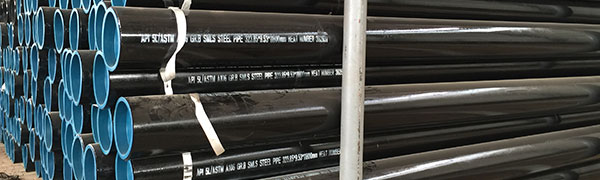
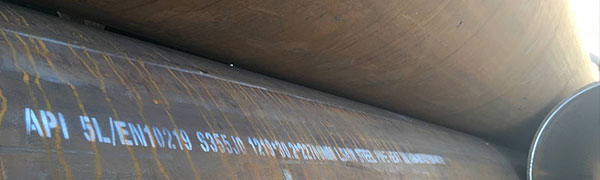
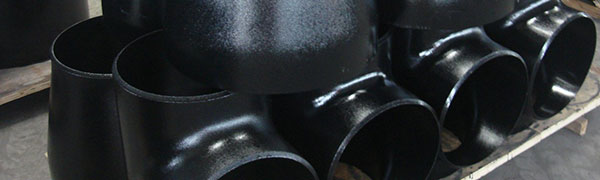
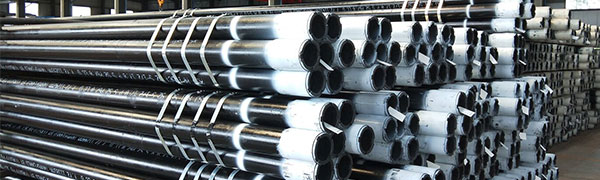
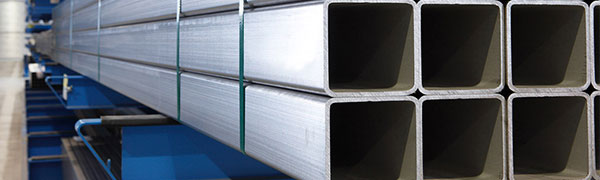


 Eastern Steel Manufacturing Co.,Ltd not only improve product production and sales services, but also provide additional value-added services. As long as you need, we can complete your specific needs together.