In the petroleum, chemical, power,
construction, and high-end manufacturing industries, the choice of steel pipe
type directly affects system safety, service life, and overall cost. Among the
many types of steel pipes, seamless
pipe and electric fusion welded pipe (EFW pipe full form) are the two
most frequently compared.
This article will provide a systematic
comparative analysis of the two from the perspectives of definition,
manufacturing process, mechanical properties, corrosion resistance, standards,
application scenarios, and cost to help you make a more reasonable selection.
What is Seamless Pipe?
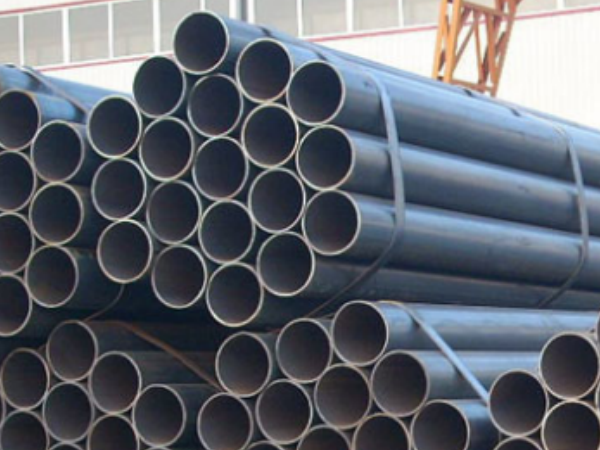
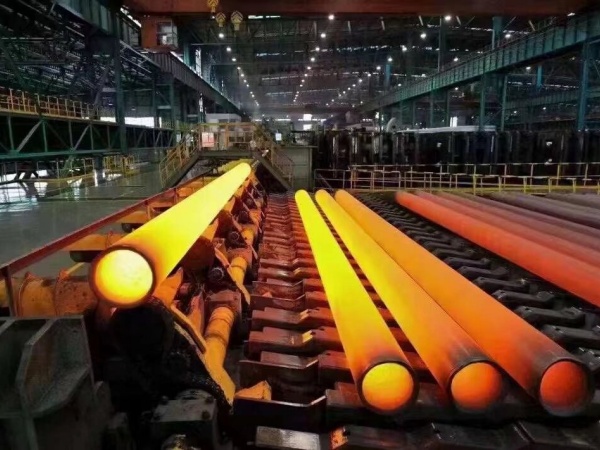
Seamless pipe is made from a single piece of metal. The metal is heated and formed into a pipe. Seamless steel pipes are stronger than arc-welded steel pipes and can withstand higher pressures. Seamless steel pipes are available in various sizes, but cannot be customized like arc-welded steel pipes.
1. Characteristics of Seamless Pipes
No weld seams, continuous structure;
High pressure resistance; dense structure, uniform mechanical properties;
More suitable for high-pressure, high-temperature, and high-risk working conditions.
2. Common Seamless Pipe Standards
ASTM A106 / ASTM A53 / A179 / A192
ASTM A312 (Stainless Steel)
EN 10216
GB/T 8162 / 8163
What is EFW in Pipe?
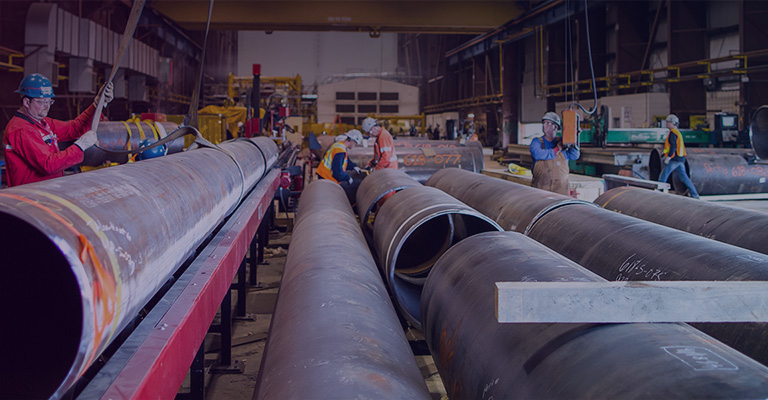
EFW (Electric Fusion Welded) pipe is made
of welded steel plate. The steel plate is rolled and then welded. As a type of
seam pipe, it is typically used to transport high-pressure fluids or gases. EFW
pipes are available in various sizes and can be customized according to
customer needs.
1. Characteristics of EFW Pipe
Made from steel plate/strip;
Welding method: electrofusion welding
(non-resistance welding);
Commonly found in medium to large diameter,
stainless steel or alloy steel pipes;
Welds require non-destructive testing such
as RT/UT/PT.
2. EFW ≠ ERW
ERW: Resistance welding, does not melt
metal
EFW: Electrofusion welding, weld metal is
completely fused (common in stainless steel)
3. Common EFW Standards
ASTM A358 (Austenitic stainless steel EFW)
ASTM A672 / A691 (Carbon steel / Alloy
steel EFW)
EN 10217 / EN 10216 (partial European
system)
1. Seamless Pipe Symbols
Seamless steel pipes refer to steel pipes
produced without welds through rolling, extrusion, or forging. Their symbols
generally consist of the following parts:
Pipe Cross-Sectional Shape Symbol
Round: Φ
Square: ◇
Rectangular: []
Seamless
Pipe Material Symbol
Carbon steel: A
Carbon-manganese steel: B
Carbon-chromium steel: C
Chromium-molybdenum steel: D
Chromium-chromium-molybdenum steel: E
Stainless steel: F
Manufacturing Process Symbol
Hot-rolled: R
Cold-drawn: B
Hot-drawn: S
For example: Φ89×6mm A R indicates a seamless pipe with a diameter of 89mm and a wall
thickness of 6mm, hot-rolled from carbon steel.
2. Seam Pipe Symbols
Seam pipes are pipes manufactured by
welding. Their symbols generally consist of the following parts:
Pipe Cross-Section Shape Symbols
Circular: Φ
Square: □
Rectangular: []
Seam Pipe Material Symbols (same as above)
Manufacturing Process Symbols
Resistance welding: ERW
Arc welding: EFW
Electrofusion welding: EFW
For example: Φ89×6mm A ERW indicates a welded pipe with a diameter of 89mm and a wall
thickness of 6mm, made of carbon steel by resistance welding.
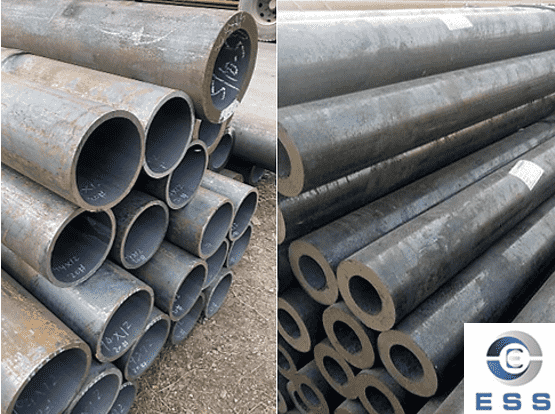
Seamless Pipe VS. EFW Pipe
1. Manufacturing Process
Seamless Pipe: Formed in one piece without
weld joints, resulting in more even stress distribution and higher reliability.
EFW Pipe: Welded from steel plates, the
microstructure of the weld area differs from the base material. Under high
stress or extreme conditions, the weld may become a potential weak point.
2. Strength and Durability
Seamless Pipe: Seamless steel pipes have
high strength and good durability because they have no weld seams. Their design
allows them to withstand higher pressures and temperatures, making them ideal
for harsh applications.
For example, seamless pipes are often the
preferred choice in high-temperature steam pipelines and chemical reaction
units.
EFW Pipes: EFW pipes also exhibit good
mechanical properties in low- and medium-pressure systems, especially when
using low-carbon or low-sulfur, low-phosphorus stainless steel materials (such
as 304L and 316L), where their overall performance meets most industrial
requirements.
3. Corrosion Resistance
Seamless Pipes: Due to the absence of
welds, seamless pipes have a more uniform surface, generally exhibiting
superior corrosion resistance in harsh environments.
For example, 304L stainless steel seamless
pipes are ideal for environments with extremely high corrosion resistance
requirements, such as chemical plants or marine environments.
EFW Pipes: While EFW pipes possess a
certain degree of corrosion resistance, the weld seams can be more susceptible
to localized corrosion if not properly treated.
The weld area of EFW pipes
is more prone to localized corrosion in extremely corrosive environments, but
with post-weld heat treatment and rigorous weld inspection, its service life
can still meet the requirements of most industrial applications.
4. Cost
Seamless
Pipe Price: Due to its complex manufacturing
process, seamless pipe is more expensive. Although the cost per ton is higher,
its reliability and service life in high-risk, high-load conditions often
reduce long-term maintenance costs.
EFW Pipe Price: Due to its simpler
manufacturing process, EFW pipe is less expensive than seamless pipe. This
makes it an ideal choice for industries where cost considerations are important
and requirements are not stringent.
5. Size Flexibility
EFW pipe has a significant advantage in
terms of size and customization capabilities. The welding process allows for
greater flexibility in large diameters, non-standard sizes, and standard
lengths, and also makes it easier to control delivery cycles.
In contrast, the production of seamless
steel pipe is limited by billet specifications and equipment capabilities,
resulting in a relatively standardized size range, but it has advantages in
thick-walled and high-performance requirements.
6. Welded Joints
Seamless Pipe: Seamless pipe requires no
welding during manufacturing, therefore it has no welded joints or seams along
its length. This characteristic improves reliability and strength, and reduces
the risk of leaks or failures at joints.
EFW Pipe: EFW pipes have welded joints
along their length because they are made by fusing two separate sheets or coils
of material. These welded joints may have slightly different properties than
the base material and are prone to potential defects or corrosion.
7. Wall Thickness
Seamless
Pipe Thickness: Seamless pipes typically have
thicker walls, making them suitable for high-pressure applications requiring
extremely high strength and durability. Due to their uniform structure,
seamless pipes can withstand higher internal pressures.
EFW Pipe Thickness: EFW pipes can be
manufactured in various wall thicknesses. However, they are generally used in
applications where pressure ratings are not as high as for seamless pipes.
8. Typical Applications
Preferred Applications for Seamless Pipes:
High-pressure steam lines, oil and gas transportation, chemical plants, boiler
and heat exchanger systems.
Preferred Applications for EFW Pipes:
Building structures, water supply and drainage systems, medium and low-pressure
fluid transportation, large-diameter stainless steel piping projects.
FAQ
1. Are EFW pipes and ERW pipes the same?
No.
ERW stands for resistance welding, while
EFW stands for electrofusion welding. Both are commonly used for stainless
steel and thick-plate welded pipes.
2. Are seamless pipes always better than
welded pipes?
No.
Seamless pipes offer superior performance
but are more expensive. The choice should be made based on the specific
operating conditions.



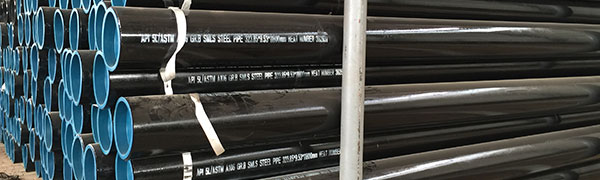


 Eastern Steel Manufacturing Co.,Ltd not only improve product production and sales services, but also provide additional value-added services. As long as you need, we can complete your specific needs together.