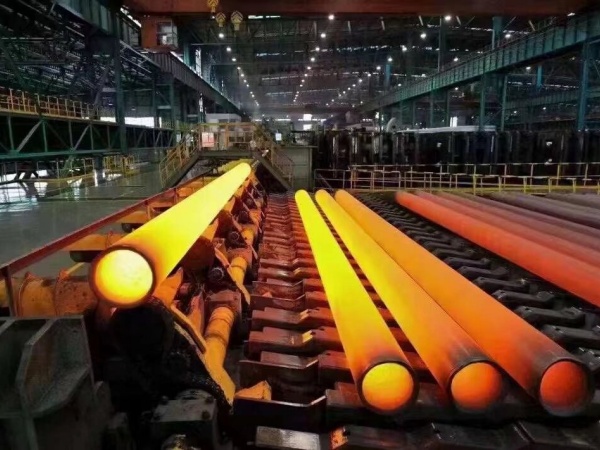
Seamless
pipes are pipes formed integrally through
piercing and rolling processes, without welds. Due to their significant
advantages in pressure resistance, structural uniformity, and reliability, they
are widely used in petroleum, chemical, power, machinery manufacturing,
automotive, boiler, and engineering structures.
The core performance of seamless pipes is
highly dependent on their material selection. Different material systems
determine the differences in strength, corrosion resistance, temperature
resistance, processing performance, and service life of seamless pipes.
The following will introduce the types of
seamless pipe materials, common ASTM/EN materials, applications of different
materials, and key points for material selection.
Seamless Pipe Materials
Seamless pipes are made of various
materials, with common ones including carbon steel, alloy steel, and stainless
steel.
1. Carbon Steel
Carbon
steel seamless pipes are mainly composed of
carbon and iron. Based on the carbon content, they can be divided into mild
steel, medium-carbon steel, and high-carbon steel.
Mild steel (such as ASTM A106 Gr.A) has
good weldability and toughness, suitable for general structural applications;
Medium-carbon steel has high strength and
hardness, suitable for manufacturing machine parts;
High-carbon steel (≥0.6%C), due to its high hardness and wear resistance, is often used
to manufacture cutting tools and molds.
2. Alloy Steel
Alloy steel seamless pipes are made by
adding small amounts of alloying elements, such as chromium, nickel, and
molybdenum, to carbon steel to improve its mechanical properties and corrosion
resistance.
For example, 16Mn steel is a low-alloy
high-strength steel with good comprehensive mechanical properties, widely used
in the petroleum, chemical, and shipbuilding industries. 40Cr steel, due to its
high strength and good hardenability, is often used to manufacture shafts,
gears, and other machine parts.
3. Stainless Steel
Stainless steel seamless pipes are known
for their excellent corrosion resistance and are mainly composed of elements
such as chromium and nickel. Based on their chromium and nickel content,
stainless steel can be classified into austenitic stainless steel (such as 304
and 316L), ferritic stainless steel (such as 430), and martensitic stainless
steel (such as 410 and 420).
Austenitic stainless steel possesses
excellent corrosion resistance, toughness, and weldability, and is widely used
in the food, medical, and chemical industries. Ferritic and martensitic
stainless steels, due to their higher strength and hardness, are often used to
manufacture cutting tools, bearings, and other components.
4. Non-ferrous Metal
Seamless non-ferrous metal pipes are
seamless pipes made of non-ferrous metal materials such as copper, aluminum,
and titanium.
Copper pipes: Excellent thermal and
electrical conductivity;
Aluminum pipes: Lightweight and
corrosion-resistant;
Titanium pipes: Strong corrosion resistance
and high-temperature resistance.
Seamless non-ferrous metal pipes feature
low density, good electrical conductivity, and corrosion resistance, making
them suitable for applications in power, communications, aviation, and
aerospace industries.
Common Seamless Pipe ASTM / EN Materials
|
Carbon Steel Seamless Pipe
|
ASTM
|
EN
|
|
ASTM A106 Gr.B
|
EN 10216-2 P235GH
|
|
ASTM A53 Gr.B
|
EN 10216-1 P195TR2
|
|
ASTM A572 Gr.50
|
EN 10210 S355J2H
|
|
ASTM A106 Gr.A
|
-
|
|
Alloy Steel Seamless Pipe
|
ASTM A333 Gr.6
|
EN 10216 P355NL1
|
|
ASTM A335 P11
|
EN 10216 13CrMo4-5
|
|
ASTM A335 P12
|
EN 10CrMo9-10
|
|
ASTM A519 4140
|
EN 42CrMo4
|
|
Stainless Steel Seamless Pipe
|
ASTM A312 TP304
|
EN 1.4301
|
|
ASTM A312 TP316L
|
EN 1.4404
|
|
ASTM A312 TP321
|
EN 1.4541
|
|
ASTM A268 TP410
|
EN 1.4006
|
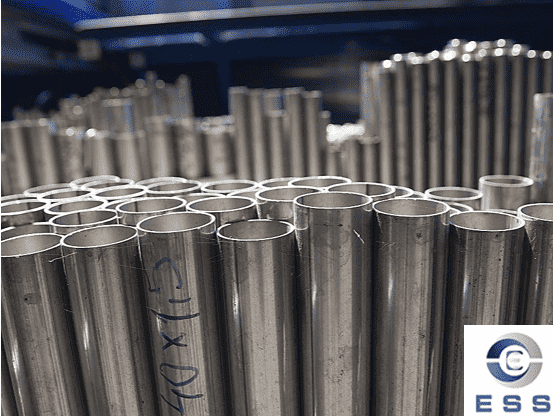
Seamless Pipe Material Selection for
Different Applications
Seamless pipes play a vital role in many
industries due to their unique properties and diverse material options.
1. Petrochemical Industry
In the petrochemical industry, seamless
pipes are mainly used in equipment such as pipelines, drilling pipes, and heat
exchangers.
These devices need to withstand high
pressure, high temperature, and corrosive media, thus requiring seamless pipes
to possess high strength, good toughness, and corrosion resistance.
Carbon steel and alloy steel seamless pipes
are widely used due to their excellent comprehensive mechanical properties;
stainless steel seamless pipes, on the other hand, are the preferred material
in chemical equipment due to their superior corrosion resistance.
Common Materials:
Carbon Steel: ASTM A106 Gr.B
Alloy Steel: A335 P11 / P22
Stainless Steel: 304 / 316L
2. Machinery Manufacturing Industry
In the machinery manufacturing industry,
seamless pipes are mainly used to manufacture shafts, cylinders, and other
components in mechanical structures and hydraulic equipment. These components
require high precision, high strength, and good wear resistance.
Cold-drawn or cold-rolled precision
seamless pipes are widely used in this field due to their high precision and
high surface quality. By selecting appropriate materials and heat treatment
processes, the mechanical properties and wear resistance of seamless pipes can
be further improved.
Common Materials:
Cold-drawn precision carbon steel pipe
Alloy steels such as 40Cr and 20MnV
3. Construction Industry
In the construction industry, seamless pipes
are mainly used for structural supports and temporary facilities such as
scaffolding. These facilities require good weldability and mechanical
properties to ensure structural safety and stability.
Carbon steel seamless pipes are widely used
due to their low cost and moderate strength; seamless alloy steel pipes, on the
other hand, are suitable for structural support in some special environments
due to their higher strength and corrosion resistance.
4. Automotive Manufacturing Industry
In the automotive manufacturing industry,
seamless pipes are mainly used to manufacture components such as drive shafts
and exhaust systems. These components require high strength, high temperature
resistance, and good corrosion resistance.
Cold-drawn or cold-rolled seamless pipes
are suitable for this field due to their high precision and high surface
quality. Using seamless pipes made from corrosion-resistant materials such as
stainless steel can further improve the service life and safety of automotive
components.
5. Other Industries
In addition, seamless pipes are also widely
used in geological drilling, shipbuilding, and boiler manufacturing.
In geological drilling, seamless pipes, as
key components such as drill pipes and core pipes, need to withstand
significant impact and friction forces.
In shipbuilding, seamless pipes are used to
manufacture pressure piping systems and boilers to ensure the safe operation of
ships.
In boiler manufacturing, seamless pipes are
used to manufacture components such as superheated steam pipes and boiling
water pipes to withstand high-temperature and high-pressure environments.
Precautions for Selecting Seamless Pipes
1. Operating Environment and Media
Requirements
Select the appropriate material based on
the operating environment and media requirements of the seamless steel pipe.
For example, in corrosive media, stainless
steel or alloy steel, or other corrosion-resistant materials, should be
selected; in high-temperature and high-pressure environments, materials with
high strength and good heat resistance should be selected.
2. Dimensional and Precision Requirements
Select the appropriate seamless steel pipe
size and precision grade based on specific application requirements.
The outer diameter, inner diameter, and
wall thickness of the seamless steel pipe should be precisely controlled to
meet the sealing and connection accuracy requirements of the piping system.
Simultaneously, select the appropriate length and tolerance grade based on
processing and installation requirements.
3. Cost and Performance Balance
A balance between cost and performance must
also be considered when selecting seamless steel pipes.
The prices
of seamless steel pipes vary significantly depending on the material
and specifications; selection should be based on specific application
requirements and budget. Minimize costs as much as possible while ensuring
performance meets requirements.
4. Manufacturer Reputation and After-Sales
Service
Choosing a seamless steel pipe manufacturer
with a good reputation and after-sales service ensures quality.
When selecting a seamless
steel pipe manufacturer, factors such as production scale,
technological strength, quality management system, and after-sales service
should be considered.
Summary
In conclusion, seamless steel pipes, as an
important industrial material, play an irreplaceable role in many industries.
By understanding their material classifications, applications of different
materials, and considerations when selecting them, we can better utilize this
material to serve industrial production.



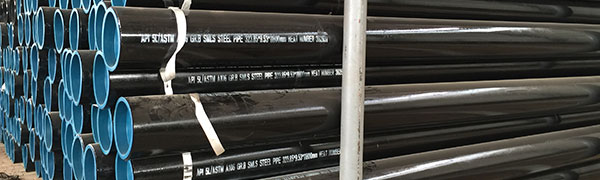
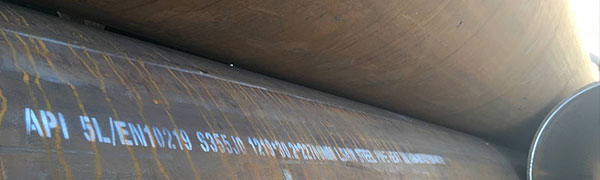
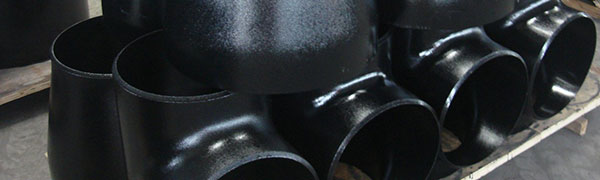
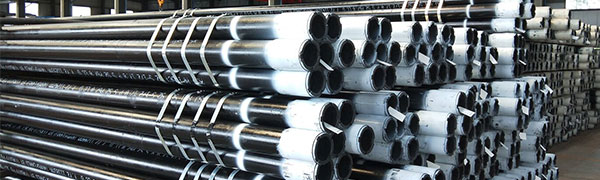
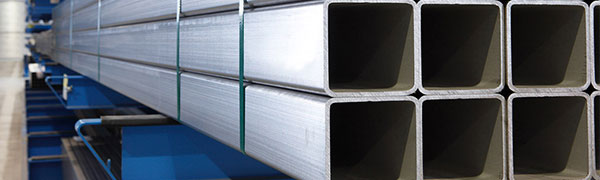
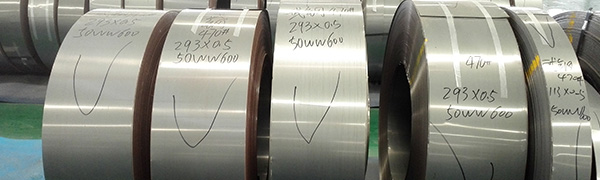


 Eastern Steel Manufacturing Co.,Ltd not only improve product production and sales services, but also provide additional value-added services. As long as you need, we can complete your specific needs together.