1. Understanding Drill Pipe Weight Per Foot
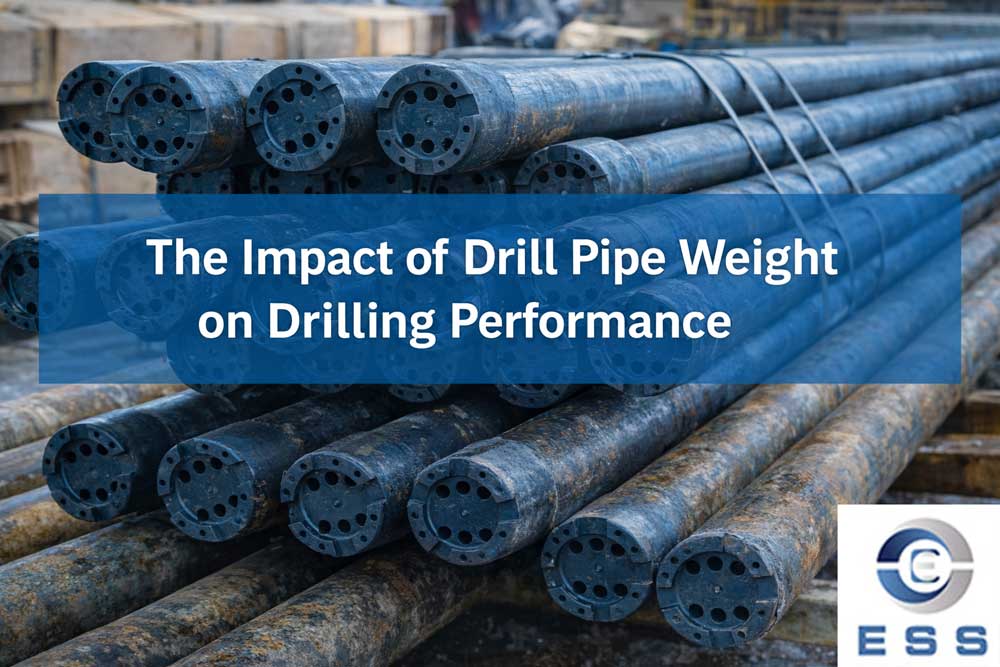
The weight per unit length of a drill pipe describes the mass of the pipe over a given length and serves as a fundamental parameter for drill string design, load calculations, and equipment selection.
Determining Factors:
Outer Diameter (OD): The external diameter of the drill pipe body.
Wall Thickness (WT): The thickness of the pipe wall, which affects tensile strength and resistance to buckling.
Material Density: Typically alloy steel.
Tool Joint Weight: The thickened connections at both ends of the pipe.
The nominal weight per foot, commonly used in engineering, includes the average weight of both the pipe body and tool joints. It can be used for quick estimation of the total drill string weight, hook load, weight on bit (WOB), and torque & drag.
2. Common Drill Pipe Weight Classes
Drill pipes are typically available in multiple weight classes, mainly achieved by varying the pipe wall thickness to meet the strength and load requirements of different drilling conditions. Common weight class examples include:
13.3 lb/ft
16.6 lb/ft
19.5 lb/ft
25.6 lb/ft
Key Difference: Thicker walls result in higher weight per unit length, which increases tensile strength and resistance to buckling.
Typical Drill Pipe Specifications and Weight Classes (including steel grade and recommended depth):
|
Outer Diameter (OD, in)
|
Wall Thickness (WT, in)
|
Weight Class (lb/ft)
|
Steel Grade
|
Weight per Meter (kg/m)
|
Tool Joint Type / Weight (kg)
|
Maximum Tensile Strength (kN)
|
Recommended Depth / Application
|
|
2 3/8
|
0.28–0.40
|
13.3–19.5
|
E-75 / G-105
|
7.2–9.9
|
API Reg / 1.5
|
400–600
|
Shallow / Vertical Wells
|
|
2 7/8
|
0.28–0.50
|
16.6–25.6
|
G-105 / S-135
|
9.5–15.5
|
API Reg / 2.0
|
600–900
|
Medium / Directional Wells
|
|
3 1/2
|
0.31–0.56
|
19.5–30.0
|
G-105 / S-135
|
14–23
|
API Reg / 2.5
|
900–1200
|
Deep / Horizontal Wells
|
|
4
|
0.33–0.63
|
24–37
|
S-135
|
17–25
|
API Reg / 3.0
|
1200–1500
|
Ultra-deep / High-pressure Wells
|
3. The Role of Drill Pipe Weight in Drilling Operations
The drill pipe is a critical component of the drill string load system, directly affecting the string’s stability and axial load distribution. Selecting the appropriate weight class and pipe combination allows engineers to balance strength, safety, and drilling efficiency.
3.1 Weight on Bit (WOB)
Weight on Bit (WOB) is the axial load applied to the drill bit to break the formation and is a key factor influencing the mechanical rate of penetration (ROP).
During actual drilling, the majority of the downward force comes from:
① Drill Collar Weight
② The Total Drill String Weight
Although the drill pipe itself is not the primary source of WOB, in deep wells or long horizontal sections, its cumulative weight contributes to the overall load distribution along the drill string. As the string length increases, the drill pipe weight affects how the axial load is transmitted, the compressive state of the drill string, and the stability of the bit load.
If the drill pipe is too light, insufficient WOB may reduce rock-breaking efficiency. Selecting a higher weight class drill pipe can increase the axial stiffness of the string, ensuring that WOB is transmitted to the bit more consistently.
3.2 Drill String Stability
The drill string is subjected to axial loads, torque, and lateral forces within the wellbore. Improper design can lead to:
① Buckling
② Vibration
③ Deviation from the planned well trajectory
Drill pipe weight directly influences string stability by adjusting stiffness and mass distribution. Heavier weight class drill pipes improve bending stiffness, buckling resistance, and fatigue performance.
In deep, directional, or horizontal wells, as string length increases and wellbore friction rises, insufficient drill pipe strength can result in bending or fatigue damage. To mitigate this, it is common practice to install heavy weight drill pipe in the lower section of the drill string as a transition section, optimizing stiffness distribution.
3.3 Torque and Drag
Torque and drag significantly affect both drilling efficiency and drill string safety. In long well sections, horizontal wells, or high-angle wells, the contact area between the drill string and the wellbore increases, leading to higher frictional resistance.
Drill pipe weight influences torque and drag in two ways:
Heavier drill pipes increase the contact force between the drill string and the wellbore, which can raise friction levels.
Higher weight class drill pipes have greater torsional strength, allowing them to withstand higher rotational torque.
When designing the drill string, engineers must carefully balance drill pipe weight with frictional resistance to optimize both drilling performance and mechanical safety.
3.4 Hook Load
The hook load is calculated as:
Hook Load = Drill String Static Weight – Buoyancy Correction + Downhole Tool Weight + Dynamic Additional Loads
The static weight of the drill string is the sum of the weights of all components, including drill pipes, HWDP, drill collars, the drill bit, and other downhole tools. Buoyancy from the drilling fluid is accounted for based on the drill string displacement and subtracted from the total weight.
As well depth increases, the cumulative weight of the drill pipe becomes the primary contributor to the hook load. During the design process, engineers should:
Calculate the maximum static hook load during preliminary well design and compare it with the rig’s rated hoisting capacity, leaving a recommended safety margin of 15–25%.
Consider additional loads during tripping operations (stuck pipe, pack-off, impact) and verify the strength of hoisting gear and blocks.
Select drill pipe specifications that balance weight reduction (using mixed weight strings or minimizing ineffective length) with the need to maintain axial and torsional strength.
4. Relationship Between Drill Pipe Weight and Drilling Depth
Drilling depth is a key factor in selecting the appropriate drill pipe weight class. As well depth increases, both the drill string length and axial load rise rapidly, posing three main challenges for deep and ultra-deep wells:
① Increased Axial Tension – The self-weight of the drill string grows, requiring higher tensile strength from the drill pipe.
② Higher Fatigue Risk – Long drill strings are prone to cyclic bending during rotation, increasing the probability of fatigue damage.
③ Increased Friction – In long well sections or horizontal wells, the contact area between the drill string and wellbore rises, significantly increasing frictional resistance.
To address these challenges, deep well drilling typically employs the following design strategies:
Select higher weight class drill pipes.
Install HWDP in the lower section of the drill string.
Use high-strength steel grades (e.g., G105, S135) to ensure structural integrity and maintain drilling efficiency.
5. How to Select the Appropriate Drill Pipe Weight
Choosing the correct drill pipe weight is a critical step in drill string design. The following factors should be considered:
5.1 Well Depth
The deeper the well, the greater the axial load on the drill string, which increases the required strength and weight class of the drill pipe.
5.2 Drilling Environment
Different well types place varying demands on drill pipe performance:
① Vertical Wells: The drill string structure is relatively simple; light to medium weight class drill pipes are generally sufficient.
② Directional Wells: Higher bending resistance is required; medium to high weight class drill pipes are recommended.
③ Horizontal Wells: High friction and fatigue risks are significant; high weight class drill pipes should be used, with heavy weight drill pipe installed in the lower section of the drill string.
5.3 Rig Capacity
The drill string must be designed so that its total weight does not exceed the rig’s rated hoisting capacity, while maintaining an adequate safety margin.
5.4 Drill String Design
A typical drill string consists of multiple components:
① Standard Drill Pipe
② Heavy Weight Drill Pipe
③ Drill Collars
④ Downhole Tools
According to API 5DP standards, the minimum tensile strength of G-105 steel is 105 ksi, while S-135 steel has a minimum of 135 ksi. The appropriate steel grade should be selected based on well depth and drill string length to ensure sufficient structural integrity.
6. Conclusion
The drill pipe weight governs the total mass of the drill string and has a direct impact on axial tension, buckling resistance, fatigue behavior, and torque and drag characteristics. Selecting the proper weight class and combining pipe types effectively is a key strategy to meet the engineering challenges posed by different well types and depths.
Read more: API 5DP Drill Pipe and Heavy Weight Drill Pipe vs. Drill Collar





 Eastern Steel Manufacturing Co.,Ltd not only improve product production and sales services, but also provide additional value-added services. As long as you need, we can complete your specific needs together.