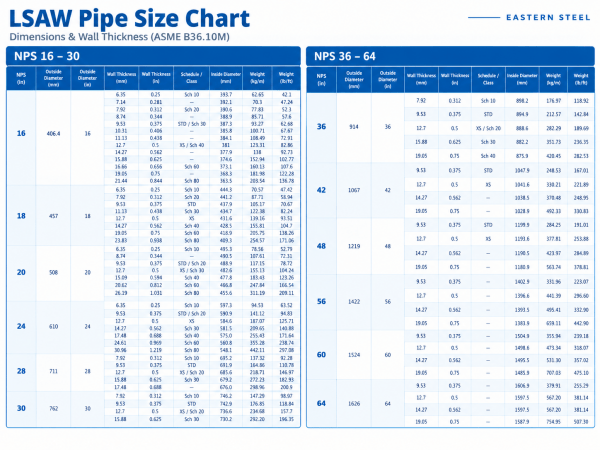
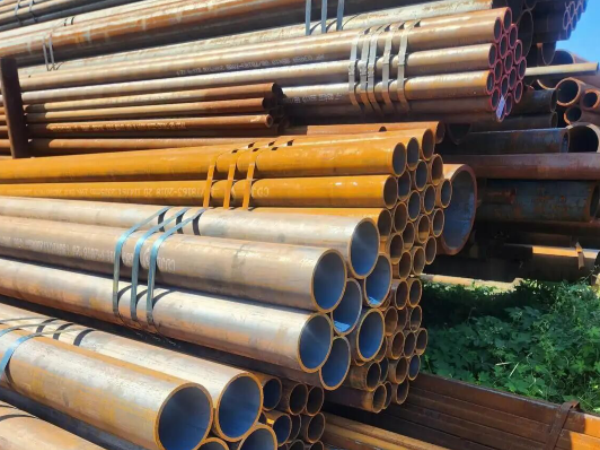
Drill pipes used in drilling operations come in a variety of sizes and specifications, with key parameters including outer diameter (OD), inner diameter (ID), wall thickness, weight per unit length, and length. In oil and gas drilling, commonly used drill pipe sizes range from 2-3/8 inches to 6-5/8 inches, depending on the well depth and load requirements.
Part 1: Standard Drill Pipe Sizes in Oil Rigs
Drill pipe sizes in oil and gas operations are typically defined by their outer diameter (OD) and conform to the API 5DP standards set by the American Petroleum Institute. These standardized sizes ensure compatibility among drill pipes, tool joints, and other drilling equipment used in the oil and gas industry.
In most drilling operations, drill pipe diameters range from 2-3/8 inches to 6-5/8 inches, depending on well depth, torque requirements, and the mechanical strength needed for the operation.
The following are the most commonly used API drill pipe diameters in oilfield applications:
2-3/8″ drill pipe — typically used for shallow wells and lighter drilling operations
2-7/8″ drill pipe — one of the most commonly used sizes for medium-depth wells
3-1/2″ drill pipe — frequently used in directional drilling and standard oilfield operations
4″ drill pipe — provides higher torque capacity for deeper wells
4-1/2″ drill pipe — commonly used in high-load drilling environments
5″ drill pipe — suitable for heavy-duty drilling operations
5-1/2″ drill pipe — used in deep wells requiring higher tensile strength
6-5/8″ drill pipe — large-diameter drill pipe designed for deep wells or high-torque drilling projects
Each size differs not only in OD but also in ID, wall thickness, weight per foot, and torque capacity, which determine its suitability for specific well conditions.
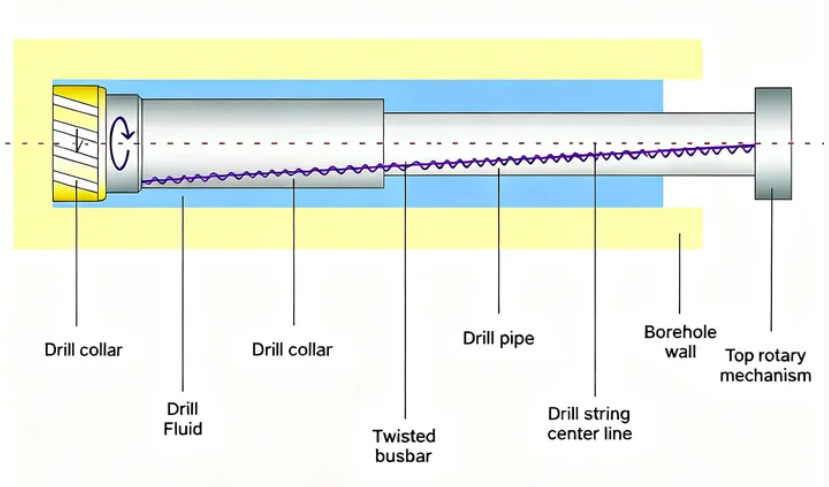
Part 2: Common Drill Pipe Sizes Used in Oil Rigs
Drill pipes can generally be classified into small, medium, and large diameters based on their outer diameter (OD). Different sizes vary in load-bearing capacity, torque transmission, and suitable well depth.
(1) Small Diameter Drill Pipe
Characteristics: Lightweight, easy to handle, suitable for lower-load operations.
Common Size: 2-3/8″ drill pipe
Grade: E-75
Typical Mechanical Parameters:
Torque capacity: ~15,000 ft-lb
Tensile strength: ~75,000 psi
(2) Medium Diameter Drill Pipe
Characteristics: Balanced strength and weight; the most commonly used size in oilfields.
Common Sizes:
2-7/8″ drill pipe
3-1/2″ drill pipe
Grade: G-105
Typical Mechanical Parameters:
Torque capacity: ~30,000–50,000 ft-lb
Tensile strength: ~105,000 psi
(3)Large Diameter Drill Pipe
Characteristics: Higher load-bearing and torque capacity; suitable for deep wells or high-load operations.
Common Sizes:
4-1/2″ drill pipe
5-1/2″ drill pipe
6-5/8″ drill pipe
Grade: S-135
Typical Mechanical Parameters:
Torque capacity: ~70,000–120,000 ft-lb
Tensile strength: ~135,000 psi
The table below provides an overview of drill pipe size categories, allowing for a quick reference of typical parameters for small, medium, and large diameter pipes.
|
Size Category
|
Common OD
|
Typical Grade
|
Typical Weight (lb/ft)
|
Torque Capacity
|
Typical Well Depth
|
Features
|
|
Small Drill Pipe
|
2-3/8″
|
E-75
|
6.65
|
~15,000 ft-lb
|
Shallow wells
|
Lightweight and flexible
|
|
Medium Drill Pipe
|
2-7/8″ – 3-1/2″
|
G-105
|
10.4 – 13.3
|
30,000 – 50,000 ft-lb
|
Medium depth wells
|
Most widely used size
|
|
Large Drill Pipe
|
4-1/2″ – 6-5/8″
|
S-135
|
16.6 – 25.2
|
70,000 – 120,000 ft-lb
|
Deep wells
|
High torque and load capacity
|
Part 3: Key Factors Affecting Drill Pipe Size Oil Rigs
The key factors influencing the selection of drill pipe sizes include well depth, pressure, temperature, and specific drilling conditions.
Well Depth: Deeper wells typically require larger-diameter and higher-grade drill pipes to withstand greater torque and tensile loads.
Pressure: High-pressure zones demand drill pipes with sufficient wall thickness and material strength to resist both internal and external pressures.
Temperature: High-temperature formations require pipes made of special steels that maintain their mechanical properties under elevated temperatures.
Drilling Conditions: Directional, deviated, or high-torque drilling operations require drill pipes designed with enhanced fatigue resistance and torque capacity.
If more precise data is required for engineering reference, the following table provides detailed technical specifications for each drill pipe size, including inner diameter (ID), wall thickness, upset type, torque capacity, and tensile strength:
|
OD (in)
|
ID (in)
|
Wall (in)
|
Weight (lb/ft)
|
Grade
|
Upset
|
Torque (ft-lb)
|
Tensile (psi)
|
|
2-3/8
|
1.815
|
0.217
|
6.65
|
E-75
|
EU
|
15,000
|
75,000
|
|
2-7/8
|
2.151
|
0.276
|
10.4
|
G-105
|
EU
|
30,000
|
105,000
|
|
3-1/2
|
2.764
|
0.3
|
13.3
|
S-135
|
EU
|
50,000
|
135,000
|
|
4
|
3.34
|
0.33
|
14
|
G-105
|
IU
|
60,000
|
140,000
|
|
5
|
4.276
|
0.362
|
19.5
|
G-105
|
IEU
|
90,000
|
165,000
|
|
5-1/2
|
4.778
|
0.361
|
21.9
|
S-135
|
IEU
|
110,000
|
180,000
|
Part 4: Matching Drill Pipe Sizes with Connection Types
Drill pipes are connected using threaded tool joints to ensure reliable torque transmission and secure mechanical coupling during drilling operations. Drill pipe sizes are defined by their outer diameter (OD), and each size is typically matched with a specific thread type to maintain mechanical compatibility and operational safety.
The connection standard is selected based on pipe diameter, torque requirements, and drilling conditions. Common drill pipe connection types include:
|
Thread Type
|
Full Name
|
OD Range
|
Typical Application
|
Features
|
|
IF
|
Internal Flush
|
Small diameter (2-3/8″–2-7/8″)
|
Shallow wells, directional drilling
|
Straight internal thread, good flow, medium torque capacity
|
|
REG
|
Regular
|
Medium OD
|
Standard wells, deep wells
|
External thread protrudes, easy make-up and break-out, higher load capacity
|
|
EU
|
External Upset
|
Small to medium OD
|
Shallow wells or specific oilfield applications
|
Reinforced joint, suitable for repeated make-up and break-out
|
|
API IF
|
API Internal Flush
|
2-7/8″–3-1/2″
|
Directional wells, high-torque
|
Compliant with API standards, moderate load capacity
|
Part 5. Conclusion
This article is intended to help oil and gas drilling engineers quickly understand and select the appropriate drill pipe sizes and types, thereby improving drilling safety and operational efficiency.
Read More: Steel grade and classification method of drill pipe





 Eastern Steel Manufacturing Co.,Ltd not only improve product production and sales services, but also provide additional value-added services. As long as you need, we can complete your specific needs together.