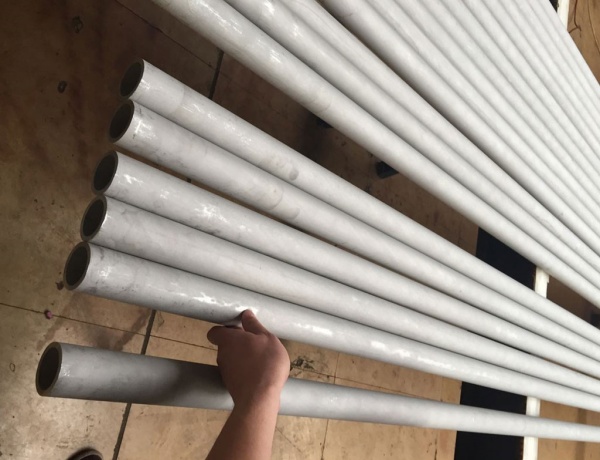
The thickness of seamless
pipe is one of their key parameters, directly affecting their pressure
resistance, weight, cost, and ultimate application. In industries such as oil
and gas, boilers, power, chemicals, and machinery manufacturing, seamless pipes
are often the preferred material for demanding conditions due to their lack of
welds, dense structure, and consistent performance. Thickness is a crucial
variable in engineering design and procurement decisions.
Thickness Meaning
The thickness of a seamless pipe is
typically defined as half the difference between its outer diameter (OD) and
inner diameter (ID), i.e., the pipe wall thickness (t).
The basic relationship is: t = (OD − ID) ÷ 2
It has clear measurement standards in
production and inspection. Unlike welded pipes, which are formed by rolling and
welding sheet metal, seamless pipes are made from solid steel billets through
processes such as piercing, rolling, or stretching, without welds. The
uniformity and consistency of its thickness are important indicators of
quality.
Methods for Measuring Seamless Pipe
Thickness
1. Ultrasonic Thickness Measurement
This is the most commonly used and
non-destructive testing method. Utilizing the propagation time of ultrasonic
waves within the pipe wall allows for rapid detection of wall thickness at
various points, particularly suitable for assessing thickness uniformity.
2. Caliper and Micrometer Measurement
For pipe ends or sampling areas, direct
measurement with precision measuring instruments is possible, but this method
relies on sampling inspection.
3. Weighing Calculation
Given the seamless
pipe's length, outer diameter, and steel density, accurate weighing
allows for the calculation of the average wall thickness, providing an
effective auxiliary verification method.
Seamless Pipe Thickness Chart
|
Nominal Diameter (DN)
|
Outer Diameter (mm)
|
Standard Wall Thickness (mm)
|
Wall Thickness Tolerance (mm)
|
|
15
|
21.3
|
2.8
|
±0.4
|
|
20
|
26.9
|
2.8
|
±0.4
|
|
25
|
33.7
|
3.2
|
±0.4
|
|
32
|
42.4
|
3.5
|
±0.5
|
|
40
|
48.3
|
3.5
|
±0.5
|
|
50
|
60.3
|
3.8
|
±0.5
|
|
65
|
76.1
|
4.0
|
±0.6
|
|
80
|
88.9
|
4.0
|
±0.6
|
|
100
|
114.3
|
4.5
|
±0.7
|
|
125
|
139.7
|
4.5
|
±0.7
|
|
150
|
168.3
|
5.0
|
±0.8
|
|
200
|
219.1
|
6.0
|
±1.0
|
|
250
|
273.0
|
7.0
|
±1.1
|
|
300
|
323.9
|
8.0
|
±1.2
|
Actual tolerances are subject to specific
standards (ASTM A106 / EN 10216 / GB 8162, etc.).
Seamless Pipe Thicknesses by Different Processes
Outer diameter range: ≥ 32 mm
Wall thickness range: Approximately 2.5 mm
~ 75 mm
Hot rolling, through plastic deformation at
high temperatures, gives the steel pipe high dimensional stability and good
mechanical properties, suitable for applications requiring thicker walls and
bearing high pressure.
Compared to hot-rolled steel pipes,
cold-rolled seamless pipes can have smaller outer diameters.
Minimum outer diameter: Up to 6 mm (or even
smaller)
Minimum wall thickness: Approximately 0.25
mm
Due to the lower processing temperature,
cold rolling produces seamless pipes with higher dimensional accuracy and
better surface quality, suitable for applications requiring high dimensional
accuracy and surface quality.
Thickness Tolerance of Seamless Pipe
Seamless pipe thickness tolerance refers to
the permissible deviation of the actual wall thickness of a manufactured steel
pipe from its nominal wall thickness. It is a crucial criterion for determining
the quality of a steel pipe.
For example, a steel pipe with a nominal
wall thickness of 10mm may have an allowable deviation of ±10% or ±0.5mm (depending on the precision
grade and product standard). This means that a qualified steel pipe may have an
actual wall thickness between 9mm and 11mm.
ASTM / EN / GB Seamless Pipe Thickness and
Tolerance Standards:
ASTM A106: ±12.5%
ASTM A53: ±12.5%
ASTM A179: ±10%
ASTM A192: ±12.5%
EN 10216-2: ±10%
EN 10297-1: ±10% /
Agreement
GB/T 8162: ±12.5%
GB/T 8163: ±12.5%
GB 5310: ±10% or
more stringent
Thickness Comparison with Other Pipe
Materials
Uniformity: High-quality seamless steel
pipes generally have better wall thickness uniformity than seam pipes. Seam
pipes may exhibit microstructure variations and slight thickness differences in
the weld area, especially during bending or machining, where the weld area can
become a weak point. Seamless pipes do not have this concern; their
circumferential properties are consistent.
Thickness Range: Seamless pipes can be
produced in a wide range of sizes, from extremely thin (e.g., capillary tubes)
to extremely thick (e.g., thick-walled pipes hundreds of millimeters thick). Seam
pipes, limited by the thickness of the sheet metal and the welding process, may
be restricted in extremely thick and thin applications, especially in
ultra-thick cases, where reliability challenges are greater.
High Pressure Applications: For ultra-high
pressure, high temperature, or corrosive harsh environments, even with the same
thickness, seamless pipes, due to the absence of weld seams, are often
preferred for their safety, reliability, and fatigue resistance.
2. Cast Pipes vs. Seamless Pipes
Density and Strength: Cast pipes (such as
some cast iron and cast steel pipes) are formed by casting, and their metal
structure density is generally lower than that of seamless pipes that are
rolled or forged.
To achieve the same pressure resistance,
cast pipes often require thicker walls, resulting in greater weight. Seamless
pipes have higher material utilization and can achieve lighter weight while
maintaining the same strength.
Precision and Surface Finish: Seamless
pipes have high dimensional accuracy, smooth inner walls, and low resistance to
fluid flow. Cast pipes typically have a rougher inner wall and lower
dimensional accuracy.
3. Solid Bars vs. Seamless Pipes
Weight and Material Efficiency: This is the
most direct comparison. When subjected to the same bending or torsional moment,
seamless pipes of appropriate thickness save significantly more material and
weight than solid round steel. This demonstrates the efficiency advantage of
"hollow structures."
Thickness is a key variable in optimizing
the design. Engineers calculate the ideal wall thickness that meets strength
and stiffness requirements while minimizing material consumption.
4. Plastic Pipes, Composite Pipes vs. Seamless
Pipes
Strength and Stiffness: Plastic pipes or
fiber-reinforced composite pipes have advantages such as corrosion resistance
and light weight, but their elastic modulus and strength are generally much
lower than steel.
In high-pressure, high-temperature, or
high-structural-stiffness applications, plastic pipes may require very thick
walls to barely meet the requirements, or may not be a viable alternative. Seamless
pipes can achieve extremely high pressure resistance and support capacity with
relatively thin walls.
Temperature and Fire Resistance: Seamless
pipes are heat-resistant, non-combustible, and their performance is relatively
stable at high temperatures. Many non-metallic pipes have upper temperature
limits; their strength drops sharply at high temperatures, restricting their
application in boilers, superheated steam pipelines, and other fields.
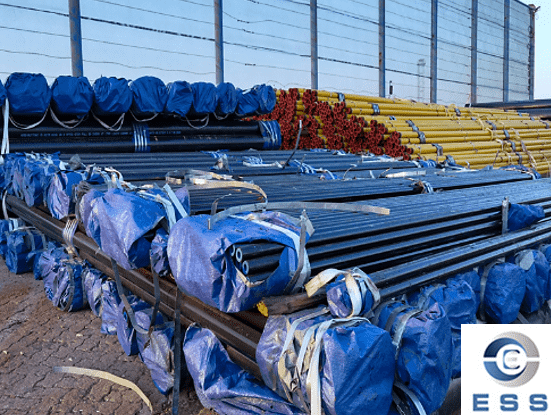
The Impact of Thickness on Seamless
Pipes
1. Pressure Bearing Capacity
This is the most direct impact of
thickness. With the same material and outer diameter, a thicker wall allows the
pipe to withstand higher internal or external pressures.
2. Structural Strength and Stability
Increasing wall thickness significantly
increases the moment of inertia of the cross-section, thereby enhancing the
steel pipe's resistance to bending and deformation, making it suitable for
mechanical structures such as columns and drive shafts.
3. Weight and Material Cost
Increased thickness means the use of more
raw materials, directly leading to increased weight and material costs per
pipe.
4. Fluid Flowability
For pipelines transporting fluids, with a
fixed outer diameter, increased wall thickness leads to a smaller inner
diameter, potentially increasing flow resistance. Pipeline design needs to
strike a balance between pressure and flow requirements.
5. Process and Manufacturing Limitations
Hot-rolled seamless pipes can generally be
produced with thicker walls, while cold-drawn or cold-rolled processes are
better suited for producing high-precision, thin-walled seamless pipes.
However, excessively thin or thick walls may exceed the processing capacity of
a specific unit.
Applications of Different Thicknesses Seamless Pipes
1. Thin-walled Seamless Pipe (Smaller Wall
Thickness/Outer Diameter Ratio)
Commonly used in applications where weight
is critical, pressure requirements are not extreme, but high precision is
required.
Examples: Hydraulic brake lines and fuel
lines in automobiles and motorcycles; pneumatic and hydraulic connection pipes
in precision instruments; structural tubes in furniture; drive shaft sleeves in
certain light machinery.
2. Medium-thick-walled Seamless Pipe
This is the most widely used category. It
includes: general pressure vessel shells; surface gathering and transportation
pipelines for oil and natural gas; hydraulic cylinder barrels for engineering
machinery; and piping and structural pipes in shipbuilding.
3. Thick-walled and Ultra-thick-walled
Seamless Pipe
Mainly used in extreme working conditions.
For example: high-temperature and high-pressure steam pipelines in power plant
boilers; high-pressure hydrogenation reactors and heat exchanger tubes in the
petrochemical industry; drill pipes and casings for deep-sea drilling; and
load-bearing spindles and large bearing sleeves for heavy machinery.
FAQ
1. How to quickly determine if the
thickness of a seamless pipe is up to standard?
Common methods include:
Ultrasonic thickness measurement
(preferred);
Micrometer measurement at the pipe end;
Theoretical weight verification;
Third-party testing reports (SGS/BV/TUV).
2. What sizes do seamless pipes come in?
Seamless
steel pipe sizes include: outer diameter, thickness
and length.
Outer diameter: 1/2 inch - 36 inch
(21.3mm-914.4mm)
Thickness: 2.11mm-60mm ( SCH10, SCH20,
SCH40, SCH80, STD, SCH120, SCH160, XXS)
Length: Common sizes are 5.8 m, 6 m, 11.8
m, and 12 m, but custom lengths are also available.
3. Are thick-walled seamless pipes always
safer than welded pipes?
Thick-walled seamless pipes are
significantly safer in the following situations: high pressure, high
temperature, strong corrosion, and cyclic fatigue loads.





 Eastern Steel Manufacturing Co.,Ltd not only improve product production and sales services, but also provide additional value-added services. As long as you need, we can complete your specific needs together.