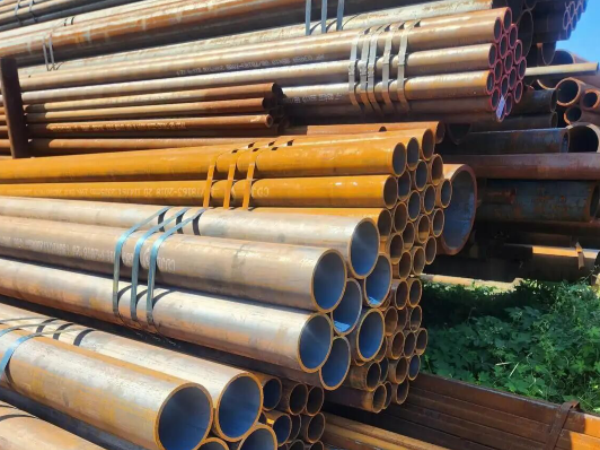
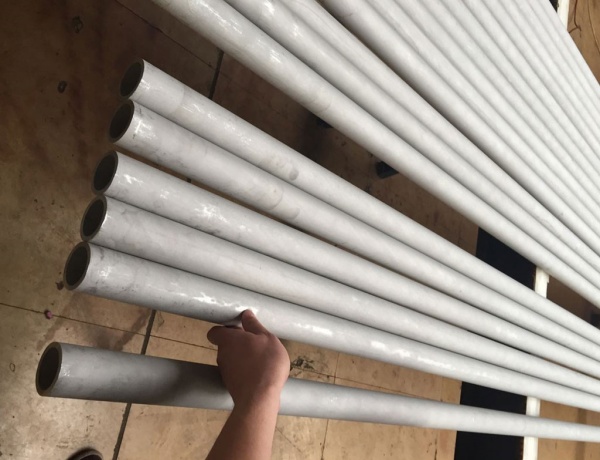
Cold drawn
seamless steel pipes are widely used in
machinery manufacturing, hydraulic systems, automotive parts, boiler equipment,
and precision structural components due to their high dimensional accuracy,
good surface quality, and stable mechanical properties. However, during production
or use, defects such as longitudinal cracks, transverse cracks, or surface
cracks sometimes occur. This not only affects product quality but may also lead
to equipment failure or even safety accidents.
This article will analyze the causes of
cracking in cold drawn seamless steel pipes, providing a reference for
preventing and handling similar problems.
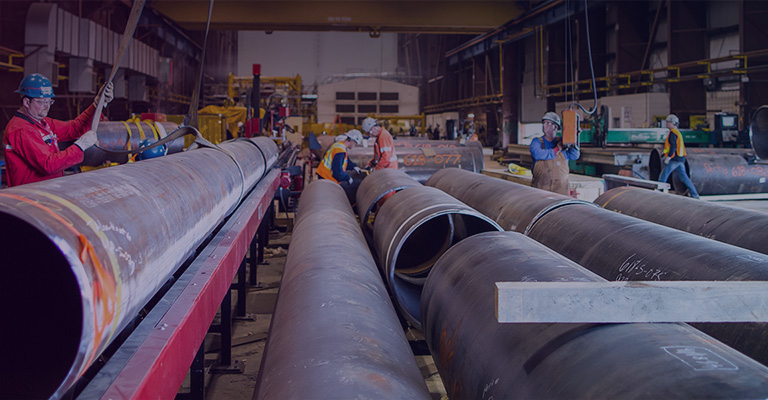
Cold drawn seamless steel pipes are
generally produced using a cold drawing process. During manufacturing, hot rolled
strip pipes or seamless steel pipes are first pickled to remove rust and then
phosphated. They are then cold drawn on a drawing machine, undergoing multiple
drawing processes to finally form a seamless steel pipe of a specified diameter
and wall thickness. After annealing, they are ready for shipment.
The manufacturing process requires strict
control of processing temperature and speed, as well as parameters such as
tensile force and cooling water temperature during the drawing process, to
ensure the quality of the finished product. During cold drawing, steel pipes
undergo 20%–40% plastic deformation. If the process is
not properly controlled, work hardening and residual stress accumulation can
easily occur, leading to cracks.
Common Cracking Types in Cold Drawn
Seamless Steel Pipes
In production practice, steel pipe cracks
can generally be classified into the following types:
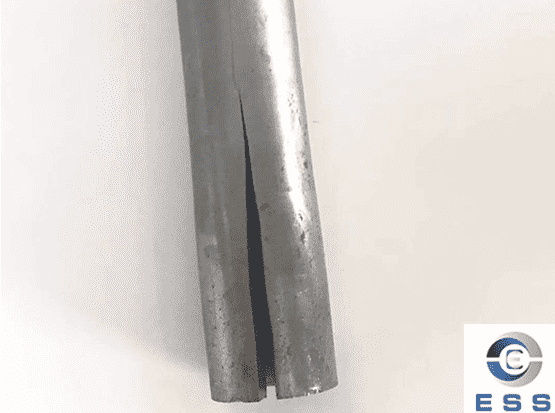
1. Longitudinal Cracks
These extend along the axial direction of
the steel pipe and are often caused by raw material defects or excessive
drawing stress.
2. Transverse Cracks
These are perpendicular to the pipe axis
and are often caused by excessive cold working or high material brittleness.
3. Surface Cracks
These are fine surface cracks and are often
caused by excessive cold deformation.
4. Internal Wall Cracks
These are cracks on the inner surface of
the pipe and are often caused by defects on the original inner surface.
5. Stress Cracks
These occur during use and are often caused
by residual stress or corrosive environments.
Causes of Cracking in Cold Drawn
Seamless Steel Pipes
1. Material Issues
The following problems may exist in the
materials used to make cold drawn seamless steel pipes, leading to cracking:
Material Issues: Substandard raw material
quality, or the selection of unsuitable materials whose hardness, strength,
toughness, and other properties fail to meet usage requirements.
Inclusion Issues: The presence of oxides,
sulfides, and silicate inclusions in the steel disrupts its continuity. During
cold drawing, these inclusions become stress concentration points, causing
crack propagation.
Typical Requirements:
|
Indicators
|
Requirement
|
|
Non-metallic Inclusion Grade
|
≤ Grade 2
|
|
Sulfur Content
|
≤ 0.025%
|
|
Phosphorus Content
|
≤ 0.025%
|
Bubble Issues: Bubbles are formed during
the manufacturing process. Their presence reduces the material's strength and
stiffness, leading to cracking.
2. Manufacturing Process Issues
The following problems may occur during the
manufacturing process of cold drawn seamless steel pipes, leading to cracking:
Over-drawing Issues: Over-drawing can cause
cracking of the steel pipe because it creates excessive internal stress,
resulting in cracking.
Improper Control During Steel Pipe
Stretching: Inadequate control during the steel pipe stretching process can
lead to stress concentration, resulting in cracks.
Production Process Issues: Inappropriate
production processes, such as using traditional methods like mold curing, can
also cause steel pipe cracking. Without proper intermediate annealing, the
material's plasticity decreases, making it prone to cracking.
Common annealing temperatures:
|
Steel type
|
Annealing temperature
|
|
Low carbon steel
|
650–700°C
|
|
Alloy steel
|
680–720°C
|
3. Environmental Issues
The following problems may lead to cracking
during the use of cold drawn seamless steel pipes:
Temperature Issues: Some cold drawn
seamless steel pipes need to be used in low-temperature environments (e.g.,
below -20°C). Exceeding their tolerance temperature
range can cause cracking.
Scratches Issues: Scratches on the steel
pipe surface can cause surface cracking, accelerating crack propagation and
leading to cracking.
Spare Parts Installation Issues: Improper
installation of spare parts can cause stress concentration, inducing cracks and
leading to steel pipe cracking.
Preventive Measures for Cracking in Cold
Drawn Seamless Steel Pipes
1. Use High-Quality Raw Materials
To avoid cracking due to material quality
issues, it is recommended to select high-quality, high-toughness, and easily
weldable scrap steel and new steel as raw materials during production. This can
effectively reduce the incidence of carbonization, oxidation, and carburization
problems.
2. Rational Selection of Cold Drawn
Seamless Steel Pipe Manufacturing Equipment
Rational equipment selection is key to
successful manufacturing. Equipment that improves production efficiency should
be selected, and stable production processes should be used to eliminate
vibration, wear, and other problems during equipment operation. This will
prevent adverse production conditions.
Crucial stages in seamless steel pipe
manufacturing require strict control of process parameters to ensure the
stability and quality of the production environment. Problems such as
excessively low temperatures, excessively high speeds, and excessively high
pressures should be avoided during production to prevent defects.
3. Sensitive Monitoring of the Cold Drawn
Seamless Steel Pipe Manufacturing Process
During production, timely monitoring is
essential to detect problems in the processing promptly. This facilitates
preventative and corrective measures. Once problems are detected, they should
be addressed immediately, the process adjusted promptly, production parameters
rationally controlled, and performance upgrade solutions sought.
4. Improve Workers' Manual Skills
Regardless of the equipment used, excellent
manual skills and technical handling capabilities are required from employees.
Therefore, enterprises should emphasize employee technical training, improve
mechanical skills and handling capabilities, and provide solid process and
technical support for steel pipe production.
Conclusion
Cracking is a common problem in the
manufacturing process of cold drawn seamless steel pipes. To prevent cracking,
high-quality raw materials must be used, equipment must be selected
appropriately, the process must be monitored in a timely manner, and workers'
manual skills must be improved.



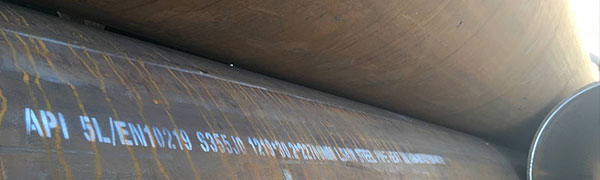
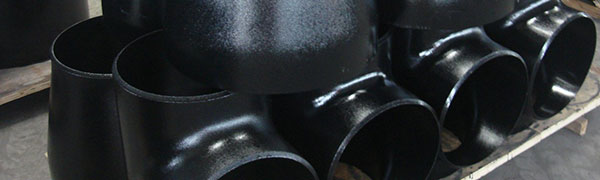
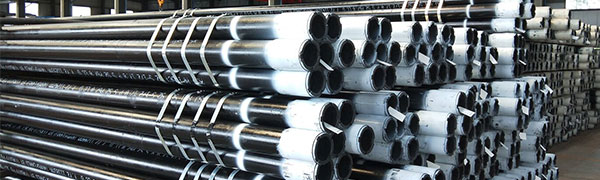
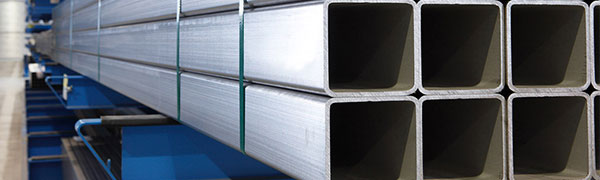


 Eastern Steel Manufacturing Co.,Ltd not only improve product production and sales services, but also provide additional value-added services. As long as you need, we can complete your specific needs together.