1. Quick Answer
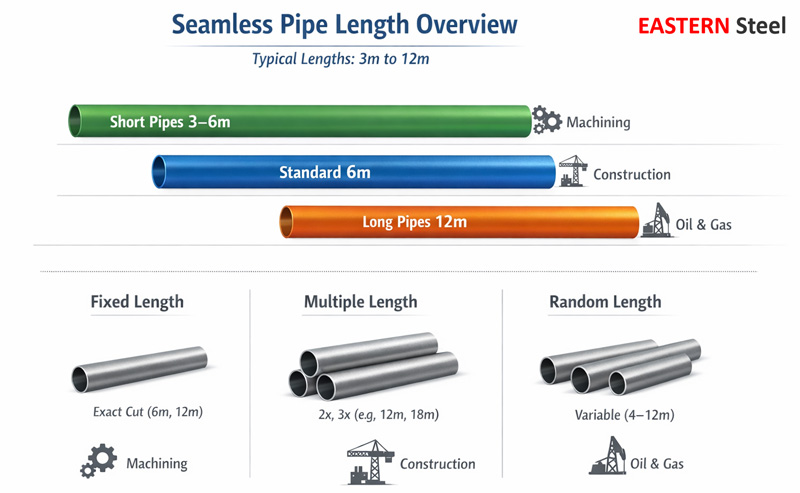
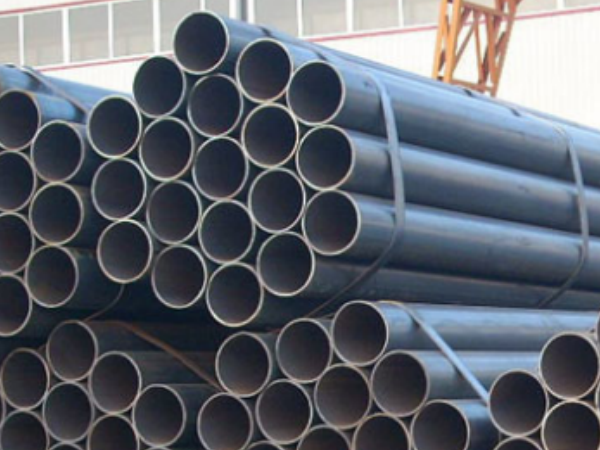
In practical engineering and procurement, seamless pipes are typically supplied in lengths ranging from 3m to 12m. This range is largely determined by industry standards and manufacturing capabilities.
The two most common standard lengths are:
– 6 meters (20 ft): widely used for general industrial applications
– 12 meters (40 ft): preferred for oil and gas pipelines to reduce welding joints
For example, common materials such as 304 seamless pipe are usually supplied in these standard lengths. Seamless pipes are generally delivered in three forms:
– Fixed length
– Multiple length
– Random length (typically 4–12m)
2. Length Classification
From a usage perspective, seamless steel pipes can generally be classified into three main types. In practice, most projects choose pipes based on these categories.
2.1 Fixed Length
Fixed length pipes are cut to a specified size, such as 6 m, 8 m, or 12 m.
They usually come with a certain tolerance (e.g., ±10 mm), but the overall length is controlled.
This type is the most commonly used in engineering, especially for pipeline installation and pressure lines, where precise joint alignment is important. Having uniform lengths makes on-site handling much easier.
2.2 Multiple Length
Multiple length pipes are essentially multiples of a fixed length, such as 2× or 3× the base length.
Common examples include 12 m or 18 m, often derived from a 6 m base length.
This type is more often used for structural components or secondary cutting operations. The main advantage is reduced material waste. However, during procurement, extra attention must be paid to cutting allowances and tolerances.
2.3 Random Length
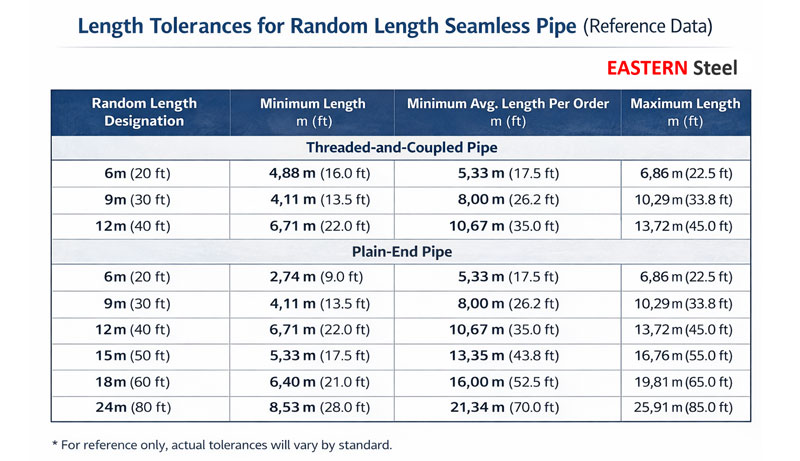
Random length pipes are basically supplied in the steel mill’s natural output lengths, usually ranging from 4 m to 12 m, with thick-walled pipes sometimes being shorter.
They are usually more cost-effective, but lengths are inconsistent. This makes them more suitable for projects where dimensional precision is less critical, such as general structural applications or inventory stock.
3. Length Standard Table
The differences in “length” across various standards are not so much about the range itself, but rather about the default delivery practices and tolerance control. In practice, many issues arise because drawings specify a length but do not clarify which standard system should be followed.
The table below can serve as a quick reference:
|
Standard
|
Common Delivery Length
|
Typical Range
|
Notes
|
|
ASTM A106
|
6 m / 12 m (20 ft / 40 ft)
|
3–12 m
|
The most common length combinations in the US standard system. Usually delivered as fixed or multiple lengths, with relatively large cutting tolerances allowed.
|
|
EN 10216
|
Default 6 m
|
4–14 m (negotiable)
|
The European standard emphasizes negotiability; project lengths are often adjusted according to requirements.
|
|
GB/T 8163
|
6 m / 9 m / 12 m
|
3–12 m
|
Chinese standard, with relatively fixed length specifications. Common stock lengths are 6 m and 12 m.
|
|
API 5L
|
6 m / 12 m
|
6–12 m
|
Common standard for pipeline steel; prefers longer lengths to minimize the number of welds.
|
In most projects, 6 m and 12 m remain the preferred choices, despite the wider tolerance ranges offered by different standards.
From Experience
6 m is generally considered a “universal length” that fits all standard systems.
12 m is more of an engineering-driven choice, especially in oil & gas projects, as it can significantly reduce the number of welds.
The European standard system is relatively flexible, but this also means procurement must be confirmed in advance to avoid misunderstandings.
For general structural use or non-critical applications, length differences are not significant. However, when it comes to long-distance pipelines or complete equipment installations, the length standard must be locked in beforehand.
4. Length Selection for Different Applications
Choosing the appropriate pipe length is often not dictated strictly by standards, but rather influenced by construction methods and practical usage habits. The following table summarizes common real-world practices:
|
Application Area
|
Typical Length
|
Usage Characteristics
|
|
Oil / Gas Pipelines
|
12 m
|
Minimizes welds, improves overall sealing and construction efficiency.
|
|
Building Structures
|
6 m
|
Convenient for lifting and transportation; allows flexible on-site processing.
|
|
Mechanical Processing
|
3–6 m
|
Easy to cut and machine, reducing equipment adaptation issues.
|
|
Boilers / Heat Exchange Equipment
|
4–12 m
|
Adjusted according to equipment dimensions; usually no single fixed length.
|
In actual projects, there are also some “implicit rules”:
(1) Longer lengths increase transportation sensitivity: 12 m pipes generally require specialized vehicles and impose specific requirements on logistics and on-site conditions.
(2) Shorter lengths offer processing flexibility but raise welding costs: In pressure systems, more welds increase both risk and inspection costs.
(3) Some projects deliberately choose “non-standard lengths”: This is usually done to reduce on-site cutting, which is common in equipment manufacturing.
In short, pipe length selection is rarely determined by a single factor. It is usually a trade-off between design, construction, and transportation considerations.
5. Practical Factors
When selecting the length of seamless steel pipes, referring to standard tables alone is not sufficient. In real projects, several practical factors cannot be overlooked:
5.1 Production Process Limitations
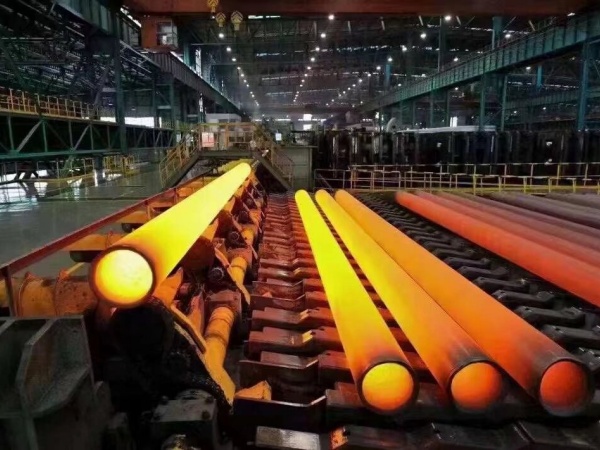
Hot-rolled seamless pipes typically range from 4 m to 12 m, with some production lines capable of exceeding 16 m, but this must be confirmed in advance.
Cold-drawn / cold-rolled pipes are generally limited to ≤6 m due to process constraints; longer lengths require welding or switching to hot-rolled pipes.
Recommendation: If the design length exceeds 6 m and cold-drawn precision is required, confirm feasibility with the supplier beforehand.
5.2 Transportation and Handling Costs
Long pipes (e.g., 12 m) require specialized vehicles and lifting equipment for transport. This is particularly critical in urban construction sites or port terminals, where handling difficulty and costs increase significantly.
By contrast, 6 m or shorter pipes are more flexible for logistics, but the increased number of on-site welds raises construction time and welding costs.
5.3 On-Site Usage Requirements
Long-distince oil and gas pipelines generally prefer 12 m pipes to reduce welds and minimize potential leak risks.
Pipes for mechanical processing or equipment manufacturing, on the other hand, tend to be shorter for easier cutting, welding, and assembly.
Ultimately, pipe length selection is a balance between production capabilities, logistical constraints, and on-site construction needs.
6. Conclusion
Standard tables provide a reference for international, US, and domestic pipe lengths, but in practice, project requirements usually determine the final choice.
Different pipe lengths have clear impacts on transportation, installation, and welding costs: Long pipes are advantageous for oil and gas pipelines. Short pipes offer more flexibility in machining and equipment fabrication.
Selecting the right seamless steel pipe length requires a holistic evaluation of project purpose, construction conditions, and supplier capabilities.
Looking for a reliable seamless pipe supplier? Contact us now for customized lengths (3 m–12 m), materials (A106, 304), and a fast quotation within 24 hours.
Read more: Seamless Steel Pipe Size Chart – OD, Wall Thickness & Schedule and Seamless pipe weight calculation formula





 Eastern Steel Manufacturing Co.,Ltd not only improve product production and sales services, but also provide additional value-added services. As long as you need, we can complete your specific needs together.