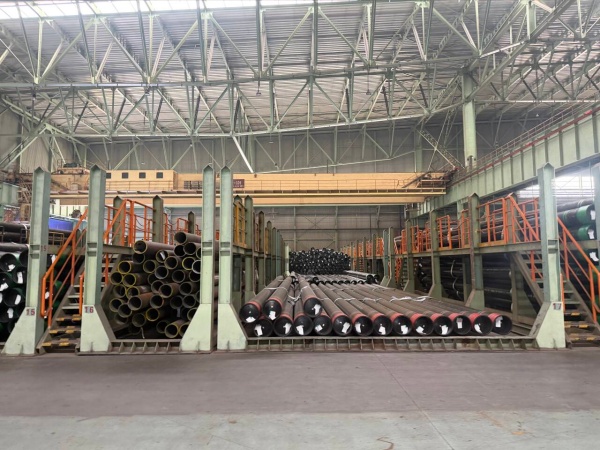
The density of carbon
steel pipe is typically 7.85 g/cm³. Carbon
steel is mainly composed of iron (Fe) and carbon (C), and its density is close
to that of pure iron (7.87 g/cm³), but it fluctuates
slightly due to differences in carbon content and other trace elements. This
article will provide an authoritative and engineering-based analysis of the
density of carbon steel pipe based on internationally accepted engineering
experience and mainstream standards (ASTM / API / EN / GB).
What is the Standard Density of Carbon
Steel Pipe?
The general engineering density of carbon
steel pipe is 7.85 g/cm³ (i.e., 7850 kg/m³).
This value is widely used in engineering
calculations and designs worldwide. It is not derived from a single standard
clause, but rather is a summary value based on the physical properties of the
iron-carbon alloy system. It is used by default in the following international
and industry standards:
ASTM A36 / ASTM
A106 / ASTM A53
API 5L / API 5CT
EN 10216 / EN 10219
GB/T 8162 / GB/T 3091
Density Differences Between Different Carbon
Steel Grades
Carbon steel is mainly composed of iron
(Fe) and carbon (C), with a carbon content typically ranging from 0.05% to 1.0%
(engineering steel). The crystal structure of iron (body-centered cubic or
face-centered cubic) and interstitial solid solution of carbon atoms are key
factors determining density.
The density differences in carbon steel
mainly stem from its composition and heat treatment processes, but the
variation range is extremely small. In engineering calculations, a uniform
value of 7.85 g/cm³ is typically used.
|
Carbon Steel Type
|
Typical Grade
|
Density (g/cm³)
|
Engineering Description
|
|
Mild Steel
|
Q235 / ASTM A36
|
≈ 7.85
|
Most commonly used, uniform value used in
engineering
|
|
Medium Carbon Steel
|
45# / C45
|
≈ 7.84–7.85
|
Theoretically slightly lower, practically
negligible
|
|
Pipeline Steel
|
API 5L X52–X70
|
≈ 7.85
|
Different strengths, consistent density
|
Density is a key parameter in material
selection, directly affecting weight calculations, transportation costs, and
structural design. For example, in building frames, density, combined with pipe
diameter and wall thickness, can accurately estimate material usage.
Does the Type of Carbon Steel Pipe
Affect Density
Manufactured through hot rolling or cold
drawing processes, with uniform density, commonly used in high-pressure
environments (such as oil pipelines).
2. Welded Steel Pipe
Made from rolled and welded steel plates,
the density in the weld area may be slightly lower (approximately 7.8 g/cm³), but the overall density is still close to the standard value.
3. Galvanized Steel Pipe
The galvanized layer adds weight, but the
base material density remains unchanged. The coating weight needs to be
calculated separately (zinc density is 7.14 g/cm³).
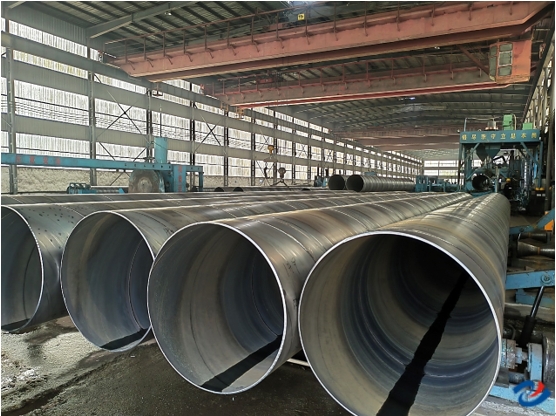
Factors Affecting the Density of Carbon
Steel Pipes
The density of carbon steel decreases with
increasing temperature. For example, the density is 7.85 g/cm³ at room temperature (20℃), but may drop to
7.80 g/cm³ when heated to 500℃.
2. Manufacturing Process
The manufacturing process also has a
certain impact on the density of carbon steel pipes. For example, different
processing methods such as cold drawing and hot rolling may lead to changes in
the internal structure and density of the pipe.
3. Steel Grade
The density of carbon steel pipes is also
related to the steel grade. For example, low-carbon steel, medium-carbon steel,
and high-carbon steel have different densities. Generally, the higher the
carbon content of the steel grade, the lower its density may be.
How to Measure the Density of Carbon
Steel Pipes
Density Calculation Formula (kg/m): Outer
Diameter (mm) - Wall Thickness (mm) × Wall Thickness
(mm) × 0.0248
For example: (88.9 mm - 3.05 mm) × 3.05 mm × 0.0248 = 6.49 kg/m.
Why is Density Important for Carbon
Steel Pipes?
1. Weight Calculation
Density is a key parameter for estimating
pipe weight.
For example, the weight of a carbon steel
pipe with an outer diameter of 114 mm, a wall thickness of 6 mm, and a length
of 6 meters can be calculated using the formula (outer diameter - wall
thickness) × wall thickness × length × density × π.
2. Pressure Design
High-density materials generally have
better mechanical strength, but this needs to be evaluated in conjunction with
parameters such as yield strength.
For example, different grades of pipeline
steel in the API 5L standard have similar densities, but their tensile
strengths differ significantly.
3. Cost Control
Density directly affects transportation and
installation costs; for example, pipelines are often charged by weight in
maritime transport.
Comparison of Carbon Steel Density with
Other Materials
|
Material Type
|
Density (g/cm³)
|
Properties
|
|
Carbon Steel (Q235)
|
7.85
|
Economical and durable, widely used in
low-pressure pipelines
|
|
Stainless Steel (304)
|
7.93
|
Corrosion resistant, but more expensive
|
|
Aluminum Alloy (6061)
|
2.70
|
Lightweight, suitable for aviation or
mobile equipment
|
|
PVC Plastic
|
1.38
|
Insulating and corrosion resistant, but
poor temperature resistance
|
Application Considerations
1. Temperature Influence
In high-temperature conditions (such as
boiler pipelines), it is necessary to refer to standards such as ASME B31.1 to
consider the indirect impact of thermal expansion on density.
2. Standard Differences
Different national/industry standards may
have slight requirements for the composition of carbon steel, but the density
values are usually consistent. For example, the Japanese standard JIS G3101
SS400 has the same density as the Chinese standard Q235.
FAQ
1. Does the density of carbon steel pipes
vary with specifications?
No.
Density is an inherent property of the
material and is independent of the size of the carbon steel pipe. However,
different wall thicknesses or outer diameters will affect the total weight.
2. How to verify the accuracy of density
data?
Verification can be done through: Material
Certificate (MTC); International Standard References (ASTM/EN/GB); Engineering
manuals or steel mill technical data.
3. Are the densities of carbon steel pipes
of different steel grades the same?
They are basically the same.
Whether it is Q235, ASTM A36, ASTM A106, or
API 5L X42–X70, their density is treated as 7.85 g/cm³ in engineering calculations.
The main differences between different
steel grades lie in yield strength, tensile strength, and chemical composition
control, not density.
4. Does the density of carbon steel pipes
need to be corrected for high-temperature environments?
In conventional piping and structural
applications, no correction is required.
However, in boilers, high-temperature
steam, or thermal systems, design standards such as ASME and EN should be
consulted, taking into account thermal expansion and strength reduction
factors, rather than just density changes.
Read more: Carbon Steel Pipe Material Grade or Roughness of Carbon Steel Pipe



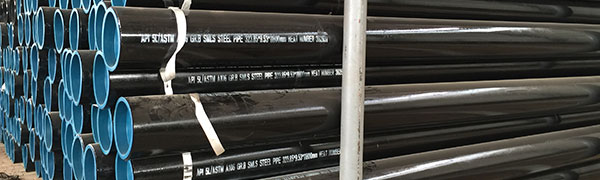
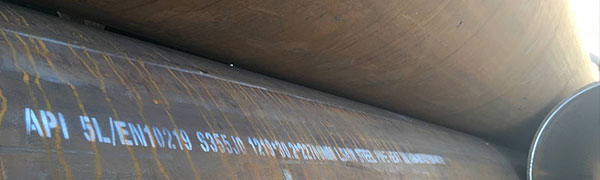


 Eastern Steel Manufacturing Co.,Ltd not only improve product production and sales services, but also provide additional value-added services. As long as you need, we can complete your specific needs together.