1. MS Pipe, GI Pipe and GP Pipe Full Forms
|
Pipe Type
|
Full Form
|
Description
|
|
MS Pipe
|
Mild Steel Pipe
|
Uncoated low-carbon steel pipe with excellent weldability and formability.
|
|
GI Pipe
|
Galvanized Iron Pipe
|
Hot-dip galvanized steel pipe with a thick zinc coating for corrosion protection.
|
|
GP Pipe
|
Pre-Galvanized Pipe
|
Steel pipe made from pre-galvanized steel strip with a smooth zinc-coated surface.
|
MS, GI and GP are common abbreviations used in engineering drawings, procurement documents and material specifications. Although all three are steel pipes, they differ in surface treatment, corrosion resistance and typical applications.
2. MS Pipe Full Form
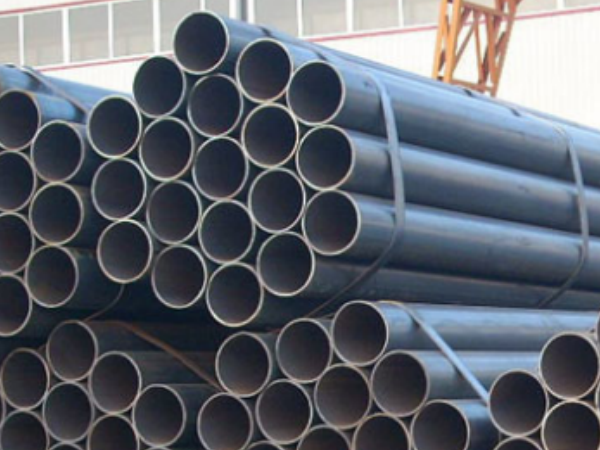
MS pipe stands for Mild Steel Pipe. It is manufactured from low-carbon steel, typically containing approximately 0.05%–0.25% carbon. Compared with higher-carbon steel, mild steel offers better ductility, weldability, and formability, making it suitable for structural fabrication, piping, and general engineering applications.
2.1 Manufacturing Process
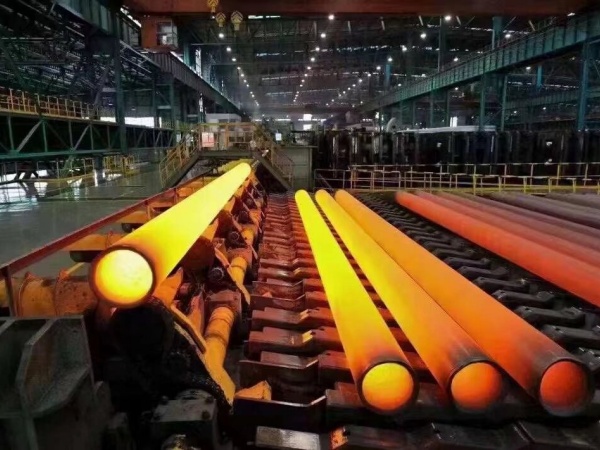
Mild steel pipes are typically manufactured from hot-rolled steel strip or coil, which is formed into round, square, or rectangular sections before welding.
2.2 Properties
Good Strength-to-Cost Ratio: Provides robust performance for structural and mechanical applications.
Excellent Weldability and Formability: Ideal for manufacturing and construction.
Cost-Effective: Lower initial cost compared to galvanized pipe.
Versatile Applications: Suitable for industrial and general engineering projects.
2.3 Applications
Building Framing: Used for columns, beams, and trusses.
Furniture Manufacturing: Commonly used for tables, shelves, and support frames.
Scaffolding Structures: Widely used for temporary construction platforms.
Industrial Support Systems: Ideal for machinery support and framing.
Pipe Fences: Used to build durable, easy-to-install barriers.
3. GI Pipe Full Form
GI pipe stands for Galvanized Iron Pipe. It is typically manufactured from mild steel and protected by a hot-dip galvanized zinc coating. The zinc layer improves corrosion resistance by acting as both a physical barrier and a sacrificial protective layer, making GI pipe suitable for water supply, outdoor structures, and other corrosive environments.
3.1 Manufacturing Process
Hot-dip galvanizing involves immersing fabricated mild steel pipes in molten zinc to form a metallurgically bonded zinc coating. This coating provides both barrier protection and sacrificial corrosion protection, allowing the zinc layer to corrode before the underlying steel.
3.2 Properties
Excellent Corrosion Resistance: Suitable for water, moisture, and outdoor environments.
Longer Service Life: The galvanized coating helps extend service life and reduce maintenance requirements.
High Structural Strength: Retains the strength of mild steel while providing additional corrosion protection.
Suitable for Water Distribution Systems: Commonly used for water supply and general fluid transportation.
3.3 Applications
- Water supply and drainage piping
- Outdoor structures
- Scaffolding systems
- Agricultural irrigation systems
4. GP Pipe Full Form
GP pipe commonly refers to Pre-Galvanized Pipe. It is manufactured from pre-galvanized steel strip, which is formed into pipe and welded during production. Compared with hot-dip galvanized (GI) pipe, GP pipe has a thinner zinc coating and a smoother, brighter surface, making it suitable for indoor and light structural applications.
4.1 Manufacturing Process
GP pipes are typically manufactured from pre-galvanized steel strip or coil. The zinc-coated steel is roll-formed into pipe sections and welded to the required dimensions. Because the steel is galvanized before pipe forming, GP pipe has a relatively thin and uniform zinc coating that provides moderate corrosion resistance and a clean surface finish.
4.2 Properties
- Smooth Surface Finish: Bright and uniform appearance suitable for visible structures.
- Moderate Corrosion Resistance: Provides protection in indoor and mildly corrosive environments.
- Easy to Fabricate: Suitable for cutting, bending, welding, and general fabrication.
- Cost-Effective: Offers an economical balance between appearance and corrosion protection.
4.3 Applications
- Furniture and storage systems
- Display racks and shelving
- Light structural frames
- Indoor construction and general fabrication
5. MS Pipe vs. GI Pipe vs. GP Pipe
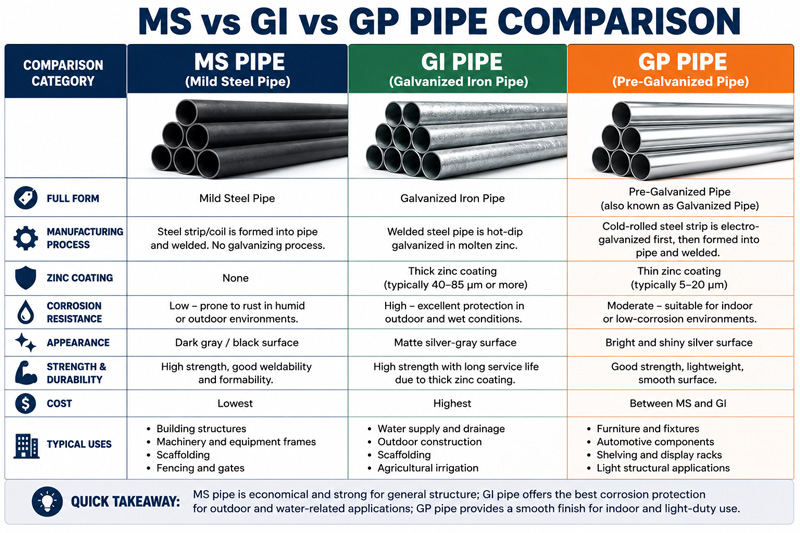
Although MS pipe, GI pipe, and GP pipe are all manufactured from carbon steel, they differ significantly in zinc coating, corrosion resistance, service life, appearance, cost, and recommended applications. The comparison below summarizes the key differences to help engineers, contractors, and buyers select the most suitable pipe for their projects.
|
Feature
|
MS Pipe
|
GI Pipe
|
GP Pipe
|
|
Full Form
|
Mild Steel Pipe
|
Galvanized Iron Pipe
|
Pre-Galvanized Pipe
|
|
Base Material
|
Mild steel
|
Mild steel
|
Mild steel
|
|
Manufacturing Method
|
Formed and welded without zinc coating
|
Hot-dip galvanized after pipe manufacturing
|
Manufactured from pre-galvanized steel strip
|
|
Surface Finish
|
Dark gray or black steel finish
|
Matte silver zinc finish
|
Smooth, bright silver finish
|
|
Zinc Coating
|
None
|
Thick hot-dip zinc coating
|
Thin pre-galvanized zinc coating
|
|
Typical Zinc Thickness
|
—
|
40–85 μm
|
5–20 μm
|
|
Corrosion Resistance
|
Low
|
Excellent
|
Moderate
|
|
Outdoor Durability
|
Requires painting or protective coating
|
Excellent for long-term outdoor service
|
Suitable for light outdoor or indoor use
|
|
Expected Service Life*
|
1–3 years (unprotected)
|
15–30 years
|
5–10 years
|
|
Strength
|
High structural strength
|
High structural strength with corrosion protection
|
High structural strength for light-duty applications
|
|
Fabrication
|
Excellent welding and forming
|
Good weldability after proper surface preparation
|
Easy forming and fabrication
|
|
Maintenance
|
Requires regular corrosion protection
|
Low maintenance
|
Moderate maintenance
|
|
Typical Standards
|
ASTM A500, EN 10219
|
ASTM A53, IS 1239, BS EN 10240
|
EN 10346 DX51D, JIS G3302
|
|
Typical Applications
|
Structural fabrication, scaffolding, machinery frames, fencing
|
Water supply, irrigation, outdoor structures, handrails
|
Furniture, shelving, display racks, indoor framing
|
|
Relative Cost
|
Lowest
|
Highest
|
Medium
|
*Service life varies depending on coating quality, installation conditions, and environmental exposure.
6. How to Choose the Right Steel Pipe for Your Project
In general, MS pipe is the preferred choice for structural fabrication and cost-sensitive projects, GI pipe is recommended for outdoor and water-related applications, while GP pipe is better suited to indoor fabrication where appearance and processing efficiency are priorities.
|
Project Requirement
|
Best Choice
|
Why
|
|
Lowest initial cost
|
MS Pipe
|
No zinc coating, resulting in the lowest material cost.
|
|
Outdoor or humid environment
|
GI Pipe
|
Thick hot-dip galvanized coating provides superior corrosion resistance.
|
|
Water supply and irrigation
|
GI Pipe
|
Offers a longer service life in wet environments.
|
|
Indoor furniture and shelving
|
GP Pipe
|
Smooth surface with moderate corrosion protection.
|
|
Structural fabrication
|
MS Pipe
|
Easy to weld, cut and fabricate.
|
|
Decorative applications
|
GP Pipe
|
Bright surface requires little or no finishing.
|
|
Long-term outdoor projects
|
GI Pipe
|
Provides better durability and requires less maintenance.
|
7. Common Misconceptions
Myth 1: GI Pipe Never Rusts
GI pipe is corrosion-resistant, not rust-proof. The hot-dip galvanized zinc coating protects the steel, but once the coating wears away, the underlying steel can still rust. For highly corrosive environments, consider thicker galvanizing or stainless steel.
Myth 2: GP Pipe Can Replace GI Pipe Outdoors
GP pipe and GI pipe are not interchangeable. GP pipe has a thinner zinc coating and is best suited for indoor or light-duty applications, while GI pipe is designed for long-term outdoor and water-related service.
Myth 3: MS Pipe Is Low-Quality Steel
MS pipe is not low-quality steel. It simply has no galvanized coating. With proper painting or other surface protection, MS pipe remains a reliable and cost-effective choice for structural and general engineering applications.
8. FAQs
Q1. Which pipe is more cost-effective: MS, GI or GP?
MS pipe is generally the most economical option. GP pipe typically costs more than MS pipe because of its galvanized coating, while GI pipe usually has the highest initial cost due to its thicker hot-dip galvanized zinc layer. The best value depends on the service environment and maintenance requirements.
Q2. Which pipe has the longest service life?
GI pipe generally offers the longest service life because its hot-dip galvanized coating provides excellent corrosion protection. GP pipe has moderate durability for indoor or light outdoor use, while MS pipe requires painting or other protective coatings to achieve a comparable service life.
Q3. Can mild steel pipe be used outdoors?
Yes, but surface protection is recommended. Mild steel pipe has no zinc coating and may rust when exposed to moisture or weather. Painting, powder coating, or galvanizing can significantly improve its outdoor durability.
Q4. Which pipe is best for water supply systems?
GI pipe is generally the preferred choice for water supply, irrigation, and other moisture-prone applications because of its corrosion-resistant zinc coating. Always ensure the pipe complies with local drinking water regulations if it will be used for potable water.
Q5. Which pipe is best for structural fabrication?
MS pipe is commonly selected for structural fabrication because it offers good strength, excellent weldability, and easy machining at a relatively low cost. For structures exposed to outdoor weather, GI pipe may be a better choice due to its improved corrosion resistance.
Read More
• Mild Steel Pipe: Types, Properties, Standards and Applications
• Galvanized Steel Pipe: Types, Uses and Benefits
• What Is Black Steel Pipe?
• Difference Between Mild Steel Pipe and Carbon Steel Pipe





 Eastern Steel Manufacturing Co.,Ltd not only improve product production and sales services, but also provide additional value-added services. As long as you need, we can complete your specific needs together.