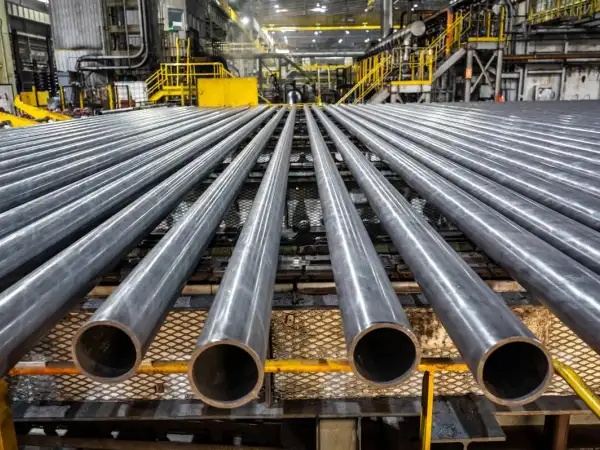
Drill pipes are key components in oil drilling, trenchless drilling (HDD), and
geological exploration, transmitting torque and axial force. Their material
directly determines their strength, wear resistance, fatigue life, and
operating costs.
Currently, high-strength alloy steel is the
most common material used for drill pipes in industry, while other materials
are mostly used for special working conditions. Below is a systematic analysis.
Common Drill Pipe Materials
1. Alloy Steel
Alloy steel drill pipes are made of alloy
steel and have higher strength, rigidity, and wear resistance, making them
suitable for various drilling operations.
Alloy steel drill pipes also have good
corrosion resistance and are typically used in high-pressure, high-temperature,
and harsh working conditions. The following are commonly used steel grades:
|
Steel Grade
|
Minimum Yield Strength (ksi)
|
|
E75
|
75
|
|
X95
|
95
|
|
G105
|
105
|
|
S135
|
135
|
Carbon steel drill pipes are mainly
composed of carbon steel and have high strength and rigidity, but poor
corrosion resistance.
Carbon steel drill pipe is suitable for
shallow formation drilling under low-pressure conditions and is generally a
more economical and practical choice.
3. Aluminum Alloy
Aluminum alloy drill pipe is mainly used
for weight reduction and extending drill string length in deep wells. Its
density is only about 1/3 that of steel, which can reduce the load on the
drilling rig and lower torque requirements.
However, it has poor wear resistance, high
cost, and the joints still need to be made of steel. It is commonly used in
ultra-deep wells, long horizontal wells, and special weight-reduction drill
strings.
4. Stainless Steel
Stainless steel drill pipe is made of
stainless steel and has good corrosion resistance, high-temperature strength,
dimensional stability, and low wear characteristics, making it suitable for
drilling work in special working environments.
Stainless steel drill pipe has a higher
manufacturing cost and is usually used in applications where high drill pipe
quality is required.
5. Other Materials
With the continuous development of the
drilling industry, other types of drill pipe have emerged, such as titanium
alloy drill pipe and ceramic drill pipe. The emergence of these new materials
has improved the level of development of the drilling industry, but it has also
increased production costs and the difficulty of use.
Drill Pipe Material Standards
To ensure the safety and efficiency of
drilling projects, various countries have established corresponding drill pipe
material standards.
1. Major International Standards
|
Standard
|
Content
|
|
API
Spec 5DP
|
Oil Drill Pipe Specification
|
|
API RP 7G
|
Drill String Design
|
|
ISO 11961
|
International Standard for Drill Pipe
|
|
SY/T 5561
|
China Petroleum Drill Pipe
|
2. Key Indicators Controlled by Standards
Material Composition: The standard
specifies the chemical composition and mechanical property requirements of
drill pipe materials to ensure sufficient strength and wear resistance.
Manufacturing Process: The standard
regulates the manufacturing
process of drill pipes, including heat treatment and surface treatment,
to improve the service life and safety of drill pipes.
Sizes and Specifications: Based on
different drilling needs, the standard specifies the specifications and sizes of
drill pipes made of different materials to meet the requirements of
various drilling scenarios.
Inspection Methods: The standard also
provides inspection methods for drill pipe materials, including chemical
composition analysis and mechanical property testing, to ensure that the
quality of drill pipes meets the requirements.
How to Choose the Right Drill Pipe
Material
When selecting trenchless drill pipe
materials, several factors need to be considered, including but not limited to
the working environment, geological conditions, mechanical properties,
corrosion resistance, and cost. Here are some specific methods for judgment:
1. Working Environment
Soil Hardness: For harder soil layers,
drill pipe materials with strong wear resistance and bending strength should be
selected, such as alloy steel drill pipes.
Working Height and Topography: For
high-altitude or complex terrain areas, lightweight drill pipe materials with
good bending resistance should be used, such as carbon fiber drill pipes.
Climatic Conditions: In areas with high
rainfall and humidity, drill pipe materials with good corrosion resistance
should be selected, such as stainless steel or specially coated drill pipes.
2. Geological Conditions
Soil Type and Rock Type: For hard rock and
other geological environments, alloy steel drill pipes are a better choice.
Groundwater Level and Formation Depth: In
areas with high water levels or the presence of groundwater, drill pipe
materials with good corrosion resistance should be selected. The deeper the
well, the higher the steel
grade of drill pipe should be, such as aluminum alloy or stainless
steel drill pipes.
Geological Features such as Faults and
Fissures: For areas with these special geological conditions, drill pipe
materials with good strength and toughness, such as carbon fiber or
high-strength alloy steel drill pipes, should be selected.
3. Mechanical Properties
Strength and Abrasion Resistance: Select
drill pipe materials with high strength and high abrasion resistance by
reviewing the material's mechanical property test reports.
Toughness and Bending Performance: For
drill pipes that require frequent bending and torsion, materials with good
toughness and bending performance should be selected.
4. Corrosion Resistance
Select drill pipe materials with
appropriate corrosion resistance based on the environmental conditions of the
project site (such as soil pH, groundwater quality, etc.).
5. Comprehensive Cost Factors
Compare the costs of different materials
while meeting performance requirements, and select the drill pipe material with
the best cost-performance ratio.
In addition, you can refer to the usage of
drill pipe materials in similar previous projects and consult experts or
suppliers in related fields for more specific advice. At the same time, ensure
that the selected drill pipe material complies with relevant standards and
specifications to guarantee project quality and safety.
FAQ
1. Is higher drill pipe strength always
better?
No. Drill pipe must be matched to well
depth and torque; otherwise, it is prone to brittle fracture.
2. Is S135 drill pipe always better than
G105?
Not necessarily. S135 has higher strength,
but it is not required in all working conditions.
G105 is more economical for shallow to
medium-depth wells; S135 is more suitable for deep wells or high torque.
3. What is the most commonly used material
for drill pipe?
Currently, the most commonly used material
in the industry is API high-strength alloy steel drill pipe (such as E75, X95,
G105, S135), accounting for more than 90% of the drill pipe used in oil and gas
drilling. This type of material has the best balance between strength, fatigue
resistance, and cost.
Summary
In summary, modern drill pipe materials are
mainly API high-strength alloy steel (E75–S135),
occupying the vast majority of the oil and gas and trenchless engineering
market. Stainless steel, aluminum alloys, etc., are only used in special
working conditions.





 Eastern Steel Manufacturing Co.,Ltd not only improve product production and sales services, but also provide additional value-added services. As long as you need, we can complete your specific needs together.