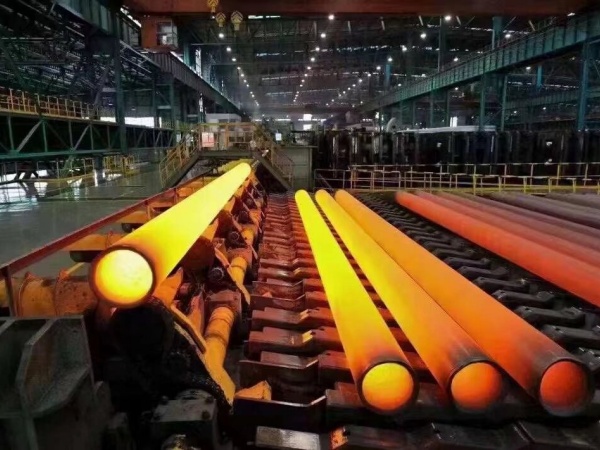
SCH 40 and SCH 80 pipe use the same outside diameter, but SCH 80 has a heavier pipe wall. This allows it to withstand higher operating pressure and more demanding service conditions.
SCH 40 pipe is widely used in water lines, HVAC systems, fire protection piping, and structural applications. You can view more detailed specifications in the SCH 40 Carbon Steel Pipe page.
SCH 80 pipe is more commonly used in higher-pressure service, steam systems, chemical processing, and industrial piping where additional wall thickness is required, as described in SCH 80 Carbon Steel Pipe specifications.
1. SCH 40 vs SCH 80 Quick Comparison
|
Comparison Factor
|
SCH 40 Pipe
|
SCH 80 Pipe
|
Engineering Consideration
|
|
Wall Thickness
|
Standard wall thickness
|
Thicker wall construction
|
Thicker walls improve mechanical strength and pressure resistance.
|
|
Pressure Capability
|
Suitable for general and moderate pressure service
|
Higher-pressure and heavy-duty service
|
SCH 80 is commonly selected where higher design pressure is required.
|
|
Pipe Weight
|
Lighter and easier to handle onsite
|
Heavier due to increased wall thickness
|
Heavier pipes increase installation load and support requirements.
|
|
Internal Diameter
|
Slightly larger internal flow area
|
Smaller internal diameter at the same NPS
|
Reduced ID increases flow resistance and pressure drop.
|
|
Fabrication & Welding
|
Easier cutting, threading, and installation
|
Requires more effort during fabrication and handling
|
Wall thickness directly affects fabrication time and welding workload.
|
|
Typical Applications
|
Water lines, HVAC, fire protection, structural piping
|
Steam service, chemical plants, industrial process piping
|
Application conditions largely determine schedule selection.
|
|
Material Cost
|
Lower overall project cost
|
Higher material and installation cost
|
Thicker wall sections increase steel consumption and labor cost.
|
|
Common Materials
|
Carbon steel, galvanized steel, stainless steel
|
Carbon steel, alloy steel, stainless steel
|
Material grade should match operating temperature and corrosion conditions.
|
|
Service Conditions
|
Low to medium pressure and temperature
|
Higher pressure and more demanding operating conditions
|
SCH 80 is preferred in systems with stricter mechanical and safety requirements.
|
2. Pipe Thickness Comparison
Wall thickness is the core difference between SCH 40 and SCH 80 pipe.
For the same nominal pipe size (NPS), both schedules use the same outside diameter, but SCH 80 uses a thicker pipe wall. Detailed dimensional data for different pipe sizes are available in the steel pipe dimensions chart.
2.1 SCH 40 vs SCH 80 Wall Thickness Chart
|
NPS
|
Outside Diameter
|
SCH 40 Thickness
|
SCH 80 Thickness
|
|
1/2"
|
21.3 mm
|
2.77 mm
|
3.73 mm
|
|
3/4"
|
26.7 mm
|
2.87 mm
|
3.91 mm
|
|
1"
|
33.4 mm
|
3.38 mm
|
4.55 mm
|
|
1-1/4"
|
42.2 mm
|
3.56 mm
|
4.85 mm
|
|
1-1/2"
|
48.3 mm
|
3.68 mm
|
5.08 mm
|
|
2"
|
60.3 mm
|
3.91 mm
|
5.54 mm
|
|
2-1/2"
|
73.0 mm
|
5.16 mm
|
7.01 mm
|
|
3"
|
88.9 mm
|
5.49 mm
|
7.62 mm
|
|
4"
|
114.3 mm
|
6.02 mm
|
8.56 mm
|
|
6"
|
168.3 mm
|
7.11 mm
|
10.97 mm
|
|
8"
|
219.1 mm
|
8.18 mm
|
12.70 mm
|
|
10"
|
273.0 mm
|
9.27 mm
|
15.09 mm
|
|
12"
|
323.8 mm
|
10.31 mm
|
17.48 mm
|
2.2 Engineering Considerations
At smaller pipe sizes, the difference in wall thickness between SCH 40 and SCH 80 may appear limited, but it becomes more significant as pipe size and operating pressure increase.
Increased wall thickness also adds pipe weight and slightly reduces the internal diameter at the same nominal pipe size.
For most building services and standard utility applications, SCH 40 pipe is typically sufficient. SCH 80 is more commonly used in systems requiring higher pressure resistance or more demanding industrial service conditions, especially where additional wall thickness is needed for long-term reliability.
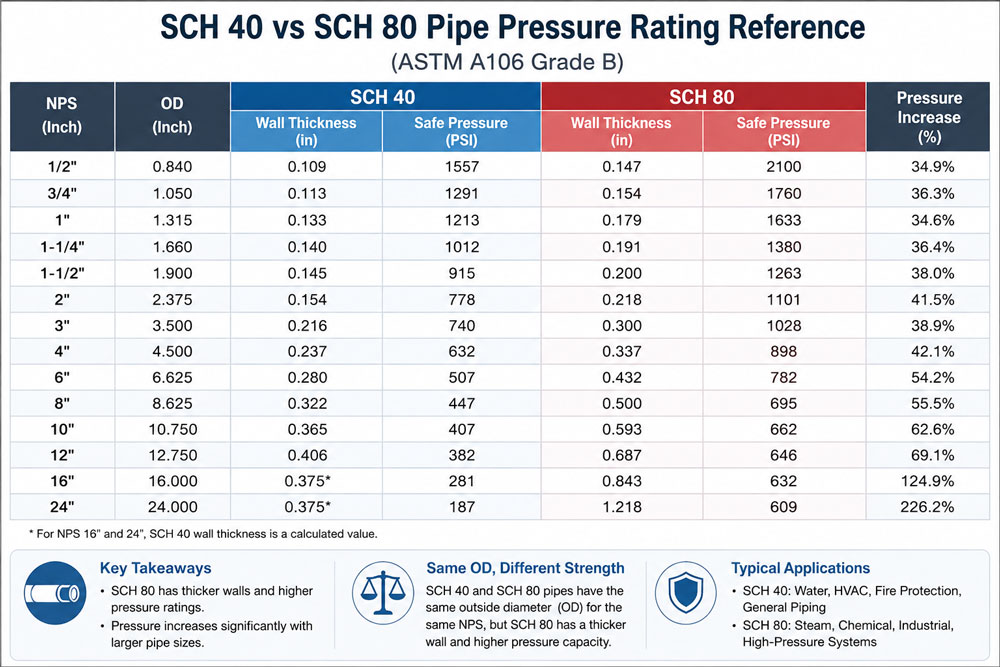
3. SCH 40 vs SCH 80 Pressure Rating Reference (ASTM A106 Grade B)
|
NPS (Inch)
|
OD (Inch)
|
SCH 40 Wall (in)
|
SCH 40 Safe PSI
|
SCH 80 Wall (in)
|
SCH 80 Safe PSI
|
|
1/2"
|
0.840
|
0.109
|
1557
|
0.147
|
2100
|
|
3/4"
|
1.050
|
0.113
|
1291
|
0.154
|
1760
|
|
1"
|
1.315
|
0.133
|
1213
|
0.179
|
1633
|
|
1-1/4"
|
1.660
|
0.140
|
1012
|
0.191
|
1380
|
|
1-1/2"
|
1.900
|
0.145
|
915
|
0.200
|
1263
|
|
2"
|
2.375
|
0.154
|
778
|
0.218
|
1101
|
|
3"
|
3.500
|
0.216
|
740
|
0.300
|
1028
|
|
4"
|
4.500
|
0.237
|
632
|
0.337
|
898
|
|
6"
|
6.625
|
0.280
|
507
|
0.432
|
782
|
|
8"
|
8.625
|
0.322
|
447
|
0.500
|
695
|
|
10"
|
10.750
|
0.365
|
407
|
0.593
|
662
|
|
12"
|
12.750
|
0.406
|
382
|
0.687
|
646
|
|
16"
|
16.000
|
0.375*
|
281
|
0.843
|
632
|
|
24"
|
24.000
|
0.375*
|
187
|
1.218
|
609
|
4. Common Applications of SCH 40 and SCH 80 Pipe
4.1 Common Applications for SCH 40 Pipe
SCH 40 pipe is commonly used in systems requiring moderate pressure performance with lower pipe weight and easier installation.
Typical SCH 40 applications include:
- Water supply piping
- HVAC and chilled water systems
- Fire sprinkler systems
- Compressed air lines
- Structural and mechanical piping
- Low- to medium-pressure industrial utility systems
In many commercial building and utility projects, SCH 40 pipe provides an economical balance between pressure capability, installation efficiency, and overall project cost.
4.2 Common Applications for SCH 80 Pipe
SCH 80 pipe is commonly used in systems exposed to higher pressure, temperature variation, or heavier industrial service conditions.
Typical SCH 80 applications include:
- Steam and condensate systems
- Chemical processing plants
- High-pressure industrial piping
- Oil and gas facilities
- Process piping systems
- Industrial compressed air systems
- Corrosive or heavy-duty service environments
Although SCH 80 pipe increases material weight and fabrication cost, it is often preferred in applications where long-term reliability and pressure safety are critical.
5. Which One Should You Choose?
In many industrial piping projects, schedule selection can also influence fabrication workload, support design, maintenance planning, and long-term operating reliability.
Typical Project Situations and Recommended Pipe Schedule
|
Typical Project Situation
|
Recommended Pipe Schedule
|
|
The piping system operates under stable and predictable service conditions
|
SCH 40
|
|
Reducing pipe weight can improve installation efficiency or simplify support design
|
SCH 40
|
|
The project prioritizes faster fabrication and easier onsite handling
|
SCH 40
|
|
The system may experience pressure fluctuation or occasional surge conditions
|
SCH 80
|
|
Additional wall thickness is preferred for long-term industrial durability
|
SCH 80
|
|
Future operating upgrades or process expansion are possible
|
SCH 80
|
|
The piping system is exposed to more demanding industrial environments
|
SCH 80
|
|
Avoiding unnecessary material weight is more important than maximum pressure margin
|
SCH 40
|
|
Higher mechanical robustness is required during long-term service
|
SCH 80
|
|
The application does not justify heavier wall thickness or increased fabrication cost
|
SCH 40
|
6. FAQs
Q1. Is SCH 80 always better than SCH 40?
Not necessarily. SCH 80 provides thicker wall construction and pressure margin, but it also increases pipe weight, fabrication effort, and material cost. In many standard utility and building service applications, SCH 40 pipe is fully sufficient.
Q2. Can SCH 40 and SCH 80 pipe have the same outside diameter?
Yes. For the same nominal pipe size (NPS), SCH 40 and SCH 80 pipe use the same outside diameter. The main difference is wall thickness and internal diameter.
Q3. Does SCH 80 pipe reduce flow capacity?
Yes. Because SCH 80 pipe has a thicker wall, its internal diameter is slightly smaller than SCH 40 pipe of the same NPS, which can slightly reduce flow capacity.
Q4. Is SCH 80 pipe more difficult to weld?
Generally yes. The thicker wall of SCH 80 pipe usually requires more welding time, higher heat input, and additional fabrication effort, especially in larger pipe sizes.
Q5. Which pipe schedule is more commonly used in commercial buildings?
SCH 40 pipe is more commonly used in water supply, HVAC, fire protection, and general utility systems where extreme pressure resistance is not required.
7. Conclusion
SCH 40 is commonly used in standard utility and commercial piping systems where moderate pressure performance and lower installation weight are preferred. SCH 80 is more frequently selected for higher-pressure service, industrial process piping, and applications requiring greater mechanical strength and long-term durability.
In practical piping design, the appropriate pipe schedule depends on service conditions, fabrication requirements, pressure margin, and the overall operating environment of the system.
Read more:
Seamless steel pipe pressure rating
Seamless Steel Pipe Size Chart – OD, Wall Thickness
Schedule 40 Seamless Pipe Dimensions, Wall Thickness and Pressure Rating
Seamless Black Steel Pipe Schedule 40
SCH 40 Mild Steel Pipe: Specifications, Grades and Applications





 Eastern Steel Manufacturing Co.,Ltd not only improve product production and sales services, but also provide additional value-added services. As long as you need, we can complete your specific needs together.