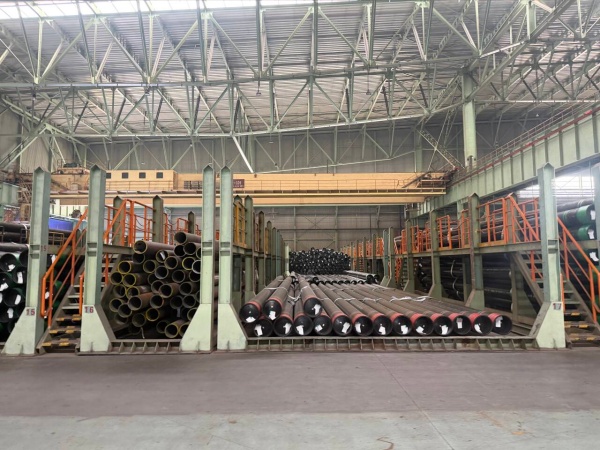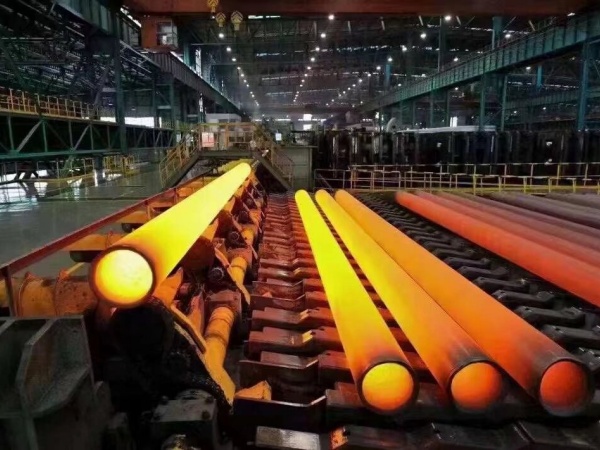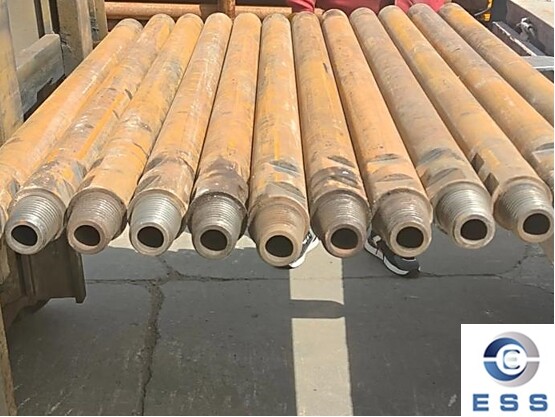
Drill pipe is a tool used in oil, gas and geological exploration projects. The rod body is
mostly made of medium-carbon alloy structural seamless
steel pipes, such as 36Mn2V, 35CrMo, 42MnMo7 and other types of steel,
which have high tensile strength and impact toughness. The joint part is made
of alloy structural steel, and the overall performance is improved through heat
treatment processes (such as hardenability treatment).
Drill pipe is an OCTG pipe. It is
a key material for connecting drill bits and drilling tools. With different
drilling depths and complexities, it requires drill pipes of different
materials and steel grades to meet drilling requirements.
Drill pipe steel grade classification
method
The steel grade classification of drill
pipe mainly adopts the API specification (American Petroleum Institute)
standard. The API specification stipulates the size, hardness, material
composition and other standards of drill pipe, so that the drilling team can
choose the appropriate drill pipe in different geological environments.
There are many drill pipe steel grades
defined in the API standard, mainly including but not limited to the following:
1. E-75
This is a drill pipe steel grade with a
minimum yield strength of 75,000 psi.
2. G-105
A drill pipe steel grade with a minimum
yield strength of 105,000 psi.
3. S-135
This is a high-strength steel grade with a
minimum yield strength of 135,000 psi.
4. V-150
This steel grade of drill pipe has a
minimum yield strength of 150,000 psi.
5. X-95
This steel grade of drill pipe has a
minimum yield strength of 95,000 psi.
6. Z-140
This steel grade of drill pipe has a
minimum yield strength of 140,000 psi.
This is a drill pipe steel grade with
special needs, usually used for medium to heavy load applications with
non-corrosive or effective corrosion inhibition.
8. HT Series
For example, HT55, this is a heat-treated
steel grade that provides extra strength and durability.
9. XT Series
For example, XT54 and XT57, these are
extra-strength steel grades used in more demanding applications.
10. GPDS series
For example, GPDS26 and GPDS46, these are
high-strength drill pipe steel grades used in specific applications.
11. IEU (Internal-External Upset) and IF
(External Upset)
These refer to the type of drill pipe
joints, IEU means internal and external upset, and IF means external upset,
which affect the strength and pressure-bearing capacity of the drill pipe.
Differences among the main steel grades
1. D-grade steel
D-grade steel has lower strength and is
often used for shallower drilling work. It is mainly composed of ordinary
carbon steel and can be used in most geological environments.
2. E-grade steel
E-grade steel is more durable than D-grade
and can withstand deeper well depths. Its main component is low alloy steel
containing manganese. Due to the high manganese content, the manufacturing cost
is relatively high.
3. X-grade steel
X-grade steel can withstand higher pressure
and friction and is suitable for deepwater or ultra-deepwater drilling. Its
main component is alloy steel containing nickel, chromium and molybdenum, which
has higher strength and corrosion resistance.
4. G-grade steel
G-grade steel, also known as high-strength
steel, can withstand greater tension and pressure and is suitable for drilling
in complex geological environments. Its main component is alloy steel
containing chromium, molybdenum and cobalt, which has higher strength and
corrosion resistance.
Commonly used drill pipe steel grades
Currently, the commonly used drill pipe
steel grades can be divided into the following five types:
1. E75 steel grade
E75 means strength grade 75 ksi (500MPa),
which is a relatively common drill pipe steel grade, mainly composed of carbon,
manganese, silicon, phosphorus, sulfur, chromium, molybdenum and other
elements, with high strength and toughness.
2. X95 steel grade
X95 means strength grade 95 ksi (655MPa),
which is a high-strength drill pipe steel grade, mainly composed of chromium,
molybdenum, titanium and other elements, with extremely high wear resistance
and corrosion resistance, suitable for deep and difficult drilling operations.
3. G105 steel grade
G105 means strength grade 105 ksi (724MPa),
which is a drill pipe steel grade with good wear resistance, mainly composed of
chromium, molybdenum, nickel and other elements, with high strength and
toughness, suitable for deep and ultra-deep wellbore wall drilling machinery.
4. S135 steel grade
S135 means strength grade 135 ksi (931MPa),
which is a high-strength, high-toughness, high-wear-resistant drill pipe steel
grade, mainly composed of carbon, molybdenum, chromium and other elements, can
adapt to extreme downhole environments, and can meet the requirements of
ultra-deep and high-strength wells.
5. V150 steel grade
V150 is a new steel grade composed of
vanadium, phosphorus, sulfur and other elements. It has high strength, high
rigidity and high wear resistance and is widely used in new and difficult
drilling fields.
Tips for judging drill pipe steel grade
1. Observe the drill pipe steel grade mark
to determine the grade and strength grade of the steel.
2. Infer the steel grade of the drill pipe
by testing and analyzing the chemical composition of the drill pipe. For
example, a drill pipe with high chromium, high molybdenum and high titanium
content may belong to the high-strength G-105 or S-135 grade.
3. Perform mechanical tests on the
mechanical properties of the drill pipe, such as tensile tests and impact
tests, to determine its strength grade and steel grade.
How to choose the right drill pipe steel
grade
When choosing a drill pipe steel grade, the
following points need to be considered:
1. Well depth and complexity
Choose the right drill pipe steel grade
based on factors such as drilling depth, wellbore size, inclination, and
formation state to meet the requirements of drilling construction.
2. Downhole environment
Choose drill pipe materials that can adapt
to the downhole environment, including the influence of ambient temperature,
pressure, corrosive agents, etc.
3. Cost factors
The performance and price of drill pipe
steel grade are positively correlated. Select the appropriate steel grade to
reduce costs as much as possible while ensuring safety and operating
efficiency.
Summary
The steel grade of drill pipe is one of the
key factors affecting drilling operations. Various steel grades have their own
characteristics. Choosing the right steel grade is of great significance to
drilling construction. When choosing, it is necessary to fully consider the
safety, efficiency, economy and other factors of drilling operations. Through
the reasonable selection of drill pipe steel grade, the effectiveness and
benefits of drilling construction can be improved.
Read more: API 5DP Drill Pipe or Drill Pipe Weight Chart and Calculation



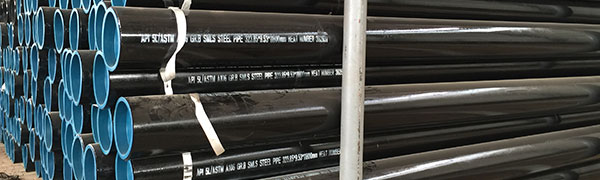


 Eastern Steel Manufacturing Co.,Ltd not only improve product production and sales services, but also provide additional value-added services. As long as you need, we can complete your specific needs together.