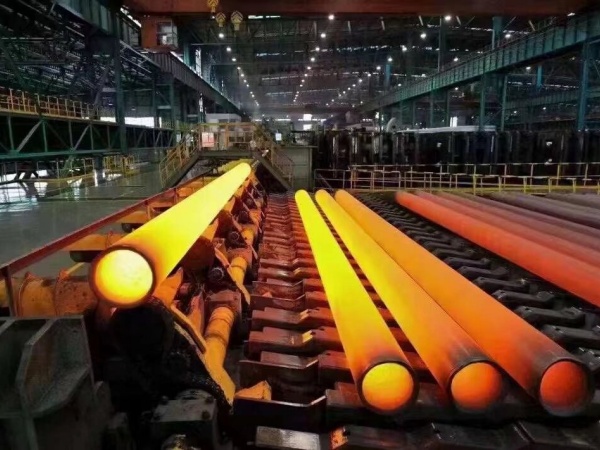
Carbon
steel pipes are mainly composed of iron and
carbon, with small amounts of silicon, manganese, phosphorus, sulfur, etc. Iron
is the primary component, providing the basic mechanical properties of the
steel pipe; while carbon is the key factor affecting its performance.
Chemical Composition of Carbon Steel
Pipes
1. Iron (Fe)
Iron is the true main component of steel.
Whether it's carbon steel pipes or other types of steel pipes, the iron content
is usually above 98%. Low-carbon steel can even have an iron content as high as
99.2%. Iron forms the structural framework of carbon steel pipes.
2. Carbon (C)
Carbon is the most important element in
carbon steel pipes, with its content typically between 0.06% and 0.8%. The
carbon content affects the overall performance of the steel pipe. High carbon
content increases the strength and hardness of the steel pipe, but reduces its
plasticity, toughness, and processing performance.
3. Manganese (Mn)
The manganese content is typically between
0.3% and 1.0%, but levels between 0.8% and 1.0% are less common. The typical
range is 0.3% to 0.8%. As a strengthening and deoxidizing element, manganese
improves the strength and hardness of pipes while reducing hot brittleness.
4. Phosphorus (P)
Phosphorus is a harmful element. Small
amounts of phosphorus can enhance the strength and corrosion resistance of
pipes, but significantly reduce their plasticity and toughness. Therefore, the
phosphorus content must be strictly controlled, typically ≤ 0.040%.
5. Sulfur (S)
Sulfur is also a harmful impurity and
requires strict control. It forms manganese sulfide inclusions, thereby
reducing the ductility, toughness, fatigue strength, weldability, and corrosion
resistance of pipes. Therefore, the sulfur content is typically required to be ≤ 0.050%.
6. Silicon (Si)
The main function of silicon is
deoxidation. While residual silicon slightly reduces toughness and plasticity,
it can improve strength and hardness. Its content is typically between 0.10%
and 0.35%.
7. Other Elements
Nickel (Ni), molybdenum (Mo), vanadium (V),
chromium (Cr), etc., are called residual elements. Their sources are raw
materials such as scrap steel and ore. Standards specify upper limits for the
total content or specific contents.
The Influence of Carbon Content on Steel
Pipe Performance
Carbon content is an important parameter
for the performance of carbon steel pipes.
Generally, steel pipes with a carbon
content between 0.2% and 2.1% are called mild
steel pipes. These pipes have good toughness and weldability, but
relatively low strength.
Steel pipes with a carbon content between
0.25% and 0.6% are called medium-carbon steel pipes. They have higher strength
and hardness and are suitable for medium-load applications.
Steel pipes with a carbon content exceeding
0.6% are called high-carbon steel pipes. These pipes have very high hardness
and wear resistance, but poor toughness.
Chemical Composition Test of Carbon
Steel
The chemical composition analysis of carbon
steel can be divided into traditional chemical analysis methods and modern
instrumental analysis methods, as compared below:
1. Traditional Chemical Analysis Methods
(Major Elements, High Precision)
Based on quantitative analysis of chemical
reactions, this method is suitable for the detection of major elements (content ≥ 0.1%) such as carbon, sulfur, silicon, and manganese.
It is a classic laboratory method.
Carbon Detection: Commonly used is the
"combustion-gas volumetric method"—the sample is burned in a
high-temperature furnace, converting carbon into CO₂. The carbon content is calculated by measuring the volume of CO₂.
Sulfur Detection: Commonly used is the
"combustion-iodometric method"—combustion produces SO₂, which is titrated with a standard iodine solution. The sulfur
content is calculated based on the amount consumed.
Silicon and Manganese Detection:
"Titration analysis" or "gravimetric method" is used—chemical reagents react with the elements to form precipitates or
colored compounds, which are then quantitatively calculated.
Advantages: Low cost, high precision
(relative error ≤ 0.5%), suitable for calibration with
standard substances.
Disadvantages: The process is cumbersome
and time-consuming (1-4 hours per sample), and relies heavily on manual
operation experience.
2. Modern Instrumental Analysis (Rapid,
Simultaneous Multi-Element Detection)
This method relies on the analysis of
elemental characteristic spectral/ray responses using instruments, and is the
mainstream choice for efficient detection in industrial production.
|
Detection Methods
|
Principles
|
Applicable Elements
|
Advantages
|
Disadvantages
|
|
Atomic Emission Spectrometry (AES)
|
Samples are excited by an electric
arc/spark, emitting characteristic spectra. Quantification is achieved
through spectral intensity.
|
Suitable for multiple elements such as C,
Si, Mn, S, and P.
|
Fast (1-3 minutes/sample), simultaneous
detection of multiple elements, no chemical pretreatment required.
|
Limited accuracy for low-content elements
(<0.01%), high equipment cost.
|
|
Atomic Absorption Spectrometry (AAS)
|
Element atoms absorb light at specific
wavelengths. Quantification is achieved through absorbance.
|
Suitable for low-content detection of
single elements such as manganese and silicon.
|
Extremely high accuracy (detection limit
down to ppm level), good selectivity.
|
Only one element is measured at a time,
relatively low efficiency.
|
|
X-ray Fluorescence Spectrometry (XRF)
|
Samples are excited by X-rays, producing
characteristic fluorescence. Quantification is achieved through fluorescence
intensity.
|
Suitable for most elements except C and
S.
|
Non-destructive testing (direct
measurement of solid samples), fast, non-destructive.
|
Low sensitivity for light elements (C,
S), requires standard calibration.
|
|
Carbon and Sulfur Analyzer
|
Dedicated instrument combining combustion
and infrared absorption methods.
|
Accurate measurement of C and S.
|
High accuracy for C and S (detection
limit down to ppm level). 0.0001%, fast speed (30 seconds/sample)
|
Only measures C and S; other elements
cannot be detected.
|
Applications of Carbon Steel Pipes
Carbon steel pipes are widely used in
various fields due to their excellent performance characteristics. They possess
good strength, toughness, wear resistance, and corrosion resistance, and can
withstand significant pressure and impact. Simultaneously, carbon steel pipes
also have good processing and welding properties, facilitating the processing
and connection of various shapes.
Carbon steel pipes have wide applications
in petroleum, chemical, power, and construction industries. In the petroleum
and chemical industries, carbon steel pipes are used to transport various
corrosive media; in the power industry, they are used to manufacture key
equipment such as boilers and steam pipelines; in the construction industry,
they are used to construct structural supports and piping systems.
Furthermore, carbon steel pipes can also be
used to manufacture various mechanical parts and components, such as bearings,
gears, and flanges. Due to their excellent performance characteristics, carbon
steel pipes also play an important role in the machinery manufacturing field.
Summary
In summary, the chemical composition of
carbon steel pipes has a significant impact on the steel's properties.
Therefore, it is necessary to precisely control the chemical composition during
the manufacturing process to ensure the quality of the final product.



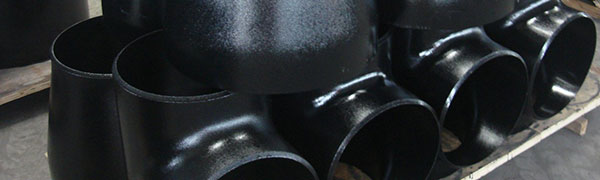
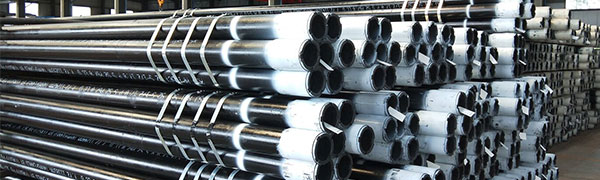
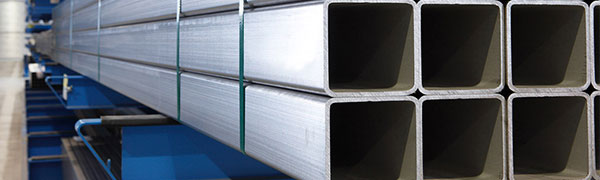
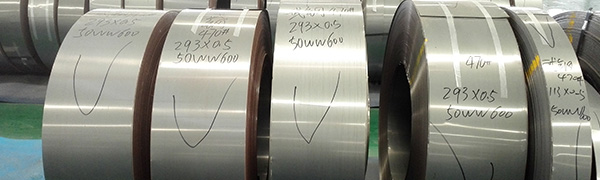


 Eastern Steel Manufacturing Co.,Ltd not only improve product production and sales services, but also provide additional value-added services. As long as you need, we can complete your specific needs together.