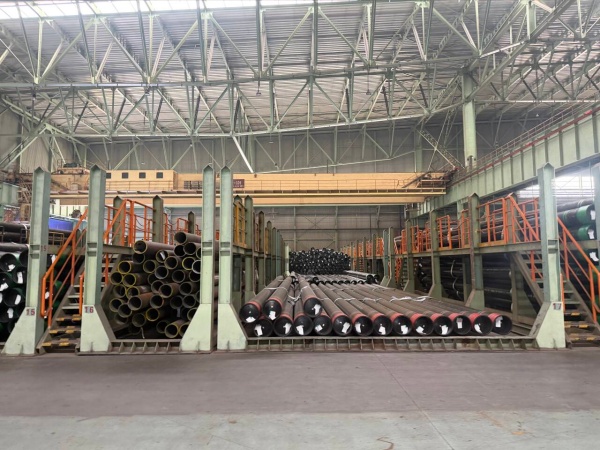
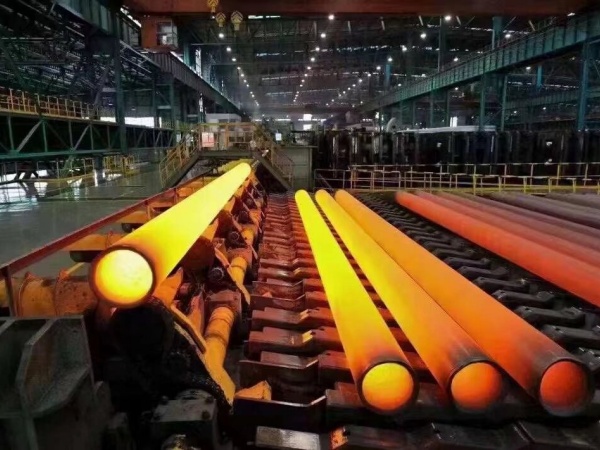
1. Why Pipe Selection Matters in Oil and Gas Operations
In oil and gas operations, pipe selection is not a minor specification decision—it directly affects drilling efficiency, well integrity, and long-term production safety. Different stages of the project require different types of oil and gas pipe, each designed to handle specific mechanical loads, pressure conditions, and environmental challenges.
During drilling, pipes must withstand high torque, axial loads, and cyclic stress. In production, the focus shifts to pressure containment, corrosion resistance, and flow efficiency. For transportation, pipeline systems must balance strength, weldability, and cost over long distances.
Because of these varying demands, choosing the wrong pipe type can lead to issues such as premature failure, excessive maintenance, or even well control risks.
2. Pipeline Classification in the Oil and Gas Industry
Pipes used in the oil and gas industry are not classified randomly—they are typically grouped based on where they are used within the production chain. This functional classification provides a clearer understanding of performance requirements and helps engineers select the appropriate pipe for each stage.
2.1 Upstream (Drilling Phase)
In the upstream sector, pipes are primarily used for drilling and well construction. This includes drill pipe, casing, and tubing, which are collectively often referred to as OCTG (Oil Country Tubular Goods).
These pipes operate under the most demanding conditions in the entire lifecycle:
High mechanical loads (tension, compression, torque)
Abrasive environments
Exposure to drilling fluids and formation pressures
Each type serves a distinct role:
Drill pipe transmits rotational energy
Casing stabilizes the wellbore
Tubing carries hydrocarbons to the surface
2.2 Midstream (Transportation)
Midstream operations focus on transporting oil and gas from production sites to processing facilities or storage terminals. The primary pipe type used here is line pipe.
Unlike drilling pipes, line pipes are designed for:
Continuous flow over long distances
Internal pressure resistance
Weldability and structural integrity
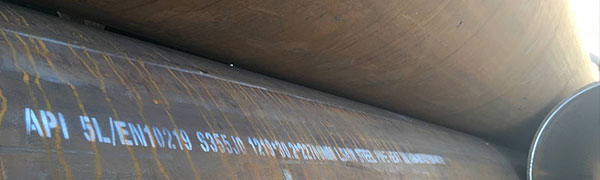
Material consistency and compliance with standards such as API 5L are critical in this stage to ensure pipeline reliability.
2.3 Downstream (Processing and Refining)
In downstream facilities such as refineries and petrochemical plants, pipes are used in processing systems where temperature, pressure, and chemical exposure vary significantly.
These pipes must handle:
High temperatures
Corrosive media
Complex flow systems
Although not always categorized the same way as OCTG or line pipe, they still require careful material selection and engineering design to ensure operational stability.
3. Drill Pipe
Among all pipe types, drill pipe plays a central role in drilling operations.
3.1 Function of Drill Pipe
The primary function of drill pipe is to transmit rotary motion and torque from the surface equipment to the drill bit. At the same time, it serves as a channel for drilling fluid circulation, which is essential for:
Cooling the drill bit
Removing cuttings from the wellbore
Maintaining pressure balance
In real operations, drill pipe is subjected to combined stresses:
Torsion from rotation
Tension from string weight
Bending in directional drilling
This makes fatigue resistance and structural reliability critical factors in its design and selection.
3.2 Key Specifications (OD, Weight, Grade)
Drill pipe specifications are not just nominal values—they determine how the pipe performs under actual drilling conditions.
Outer Diameter (OD): Affects hydraulic performance and compatibility with other downhole tools
Weight (per unit length): Directly influences the load distribution along the drill string
Steel Grade: Defines strength and resistance to mechanical stress (commonly grades like E75, X95, G105, S135)
Selecting the correct combination of these parameters is essential to prevent issues such as excessive torque, buckling, or connection failure.
3.3 Common Materials
They are typically manufactured from high-strength alloy steel to withstand harsh drilling environments. These materials are engineered to provide:
High tensile strength
Good toughness under dynamic loading
Resistance to fatigue and wear
In more demanding environments—such as deep wells or high-corrosion formations—enhanced materials or additional treatments may be required to extend service life and maintain performance consistency.
4. Casing Pipe
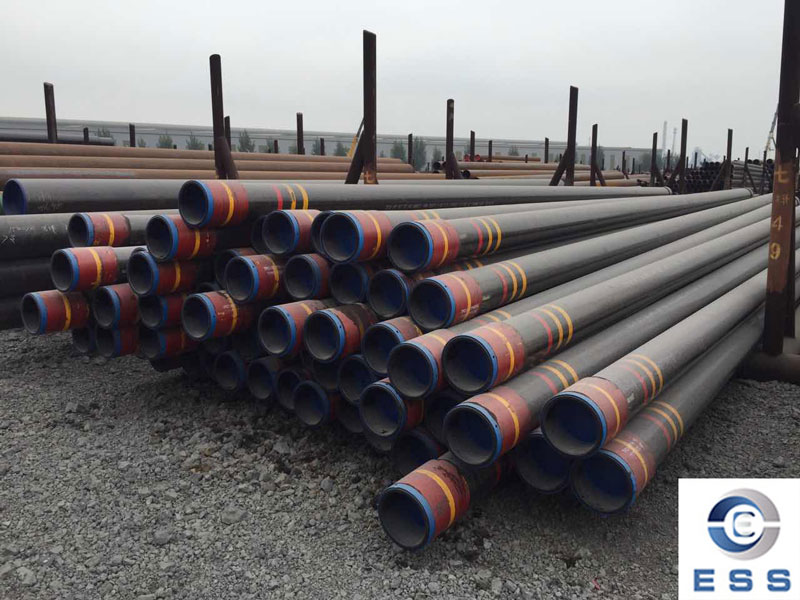
Casing is a critical structural component in well construction. Unlike drill pipe, which is temporary and dynamic, casing is permanently installed in the wellbore to maintain stability, isolate formations, and ensure safe production throughout the life of the well.
Improper casing design or material selection can lead to wellbore collapse, fluid migration between formations, or long-term integrity failure—issues that are significantly more costly to fix after completion.
4.1 What Is Casing Used For?
In practical drilling operations, casing serves multiple engineering functions simultaneously:
(1) Wellbore stabilization: Prevents the collapse of unconsolidated or fractured formations
(2) Zonal isolation: Separates different pressure zones to avoid crossflow and contamination
(3) Pressure containment: Provides a pressure barrier for drilling and production operations
(4) Foundation for wellhead equipment: Supports blowout preventers (BOP) and surface infrastructure
These functions make casing design a key part of well integrity engineering, not just a material selection task.
4.2 Types of Casing
Casing is installed in stages as drilling progresses deeper. Each casing string is designed based on depth, formation characteristics, and pressure conditions.
(1) Surface Casing
Installed at shallow depths, surface casing is primarily used to:
a) Protect freshwater aquifers
b) Provide structural support for the wellhead
c) Enable safe installation of BOP systems
(2) Intermediate Casing
Intermediate casing is used when additional isolation is required due to:
a) Abnormal formation pressures
b) Unstable geological zones
c) Lost circulation risks
It acts as a contingency layer to maintain drilling safety in complex formations.
(3) Production Casing
Production casing extends to the target reservoir and remains in place during the entire production phase. Its primary roles include:
a) Isolating the hydrocarbon-bearing zone
b) Withstanding long-term production pressure
c) Providing a conduit for tubing installation
4.3 Why Strength and Corrosion Resistance Matter
Casing operates under combined loads and aggressive environments over extended periods, making material performance a critical factor.
(1) Mechanical Strength
Casing must withstand:
a) External collapse pressure
b) Internal burst pressure
c) Axial tension from string weight
Failure in any of these modes can compromise the entire well structure.
(2) Corrosion Resistance
Exposure to CO₂, H₂S, and saline formation fluids introduces significant corrosion risks. Depending on the environment, operators may require:
a) Corrosion-resistant alloys (CRA)
b) Protective coatings
c) Enhanced material grades
In practice, casing selection is often a balance between mechanical strength, corrosion resistance, and economic feasibility.
5. Tubing Pipe
Tubing is the primary conduit used to transport oil and gas from the reservoir to the surface after the well has been completed. Unlike casing, tubing is not cemented in place and can be removed, replaced, or optimized over the life of the well.
This flexibility makes tubing a key component in production optimization rather than just well construction.
Although tubing and casing may appear similar in geometry, their roles and design considerations are fundamentally different.
Casing is a structural and protective barrier, cemented in place and designed for long-term integrity
Tubing is a flow conduit, designed for efficient production and operational flexibility
From an engineering standpoint:
Tubing is exposed to internal flow conditions (pressure, temperature, corrosive fluids)
Casing is more focused on external loads and formation interaction
This distinction directly affects material selection, connection design, and maintenance strategy.
5.2 Performance Requirements
Tubing must meet a combination of mechanical and operational requirements:
(1) Pressure resistance: Must handle internal production pressure without failure
(2) Corrosion resistance: Continuous exposure to produced fluids, often containing CO₂, H₂S, or water
(3) Flow efficiency: Internal diameter and surface condition influence production rates
(4) Workover compatibility: Must withstand repeated installation and removal cycles
In high-performance wells, tubing design may also consider erosion resistance and scale deposition control.
5.3 Common Sizes and Standards
Tubing is typically specified by outer diameter, wall thickness, and steel grade. Common standards include:
(1) API 5CT (widely used for OCTG products)
(2) Various proprietary grades for enhanced performance
Standard sizes vary depending on well design, but selection is generally based on:
(1) Expected production rate
(2) Reservoir pressure
(3) Completion design
6. Line Pipe
Line pipe is used in midstream operations to transport oil, gas, and other fluids over long distances. Unlike downhole pipes, line pipe systems are designed for continuous operation, often under high pressure and varying environmental conditions.
Reliability, weldability, and material consistency are key considerations in pipeline design.
6.1 Seamless vs Welded Line Pipe
Line pipes can be broadly divided into seamless and welded types, each with distinct characteristics.
(1) Seamless Line Pipe
a) Manufactured without a weld seam
b) Typically offers better uniformity and pressure resistance
c) Preferred for high-pressure or critical applications
(2) Welded Line Pipe (ERW / LSAW)
a) Produced by forming and welding steel plates or strips
b) More cost-effective for large diameters
c) Widely used in long-distance pipeline projects
In practice, the choice depends on project requirements, including pressure rating, diameter, and budget constraints.
6.2 API 5L Standard
API 5L is the primary specification governing line pipe used in oil and gas transportation.
It specifies the chemical composition, mechanical properties, manufacturing processes, and testing requirements.
Grades such as X42, X52, X65, and X70 are commonly used, with higher grades providing greater strength for demanding pipeline conditions.
Compliance with API 5L ensures that pipes meet industry requirements for safety, reliability, and performance.
6.3 Pipeline Applications
Line pipes are used in a wide range of transportation systems, including crude oil, natural gas, and refined product pipelines. Depending on the application, they may operate under high pressure, variable temperatures, or corrosive environments,
This requires careful coordination between material selection, welding procedures, and inspection standards to ensure long-term operational integrity.
7. The Main Differences Between Drill Pipe, Casing, Tubing, and Line Pipe
Although drill pipe, casing, tubing, and line pipe are all used in the oil and gas industry, their functions, operating environments, and design requirements differ significantly.
|
Pipe Type
|
Primary Function
|
Operating Location
|
Load Conditions
|
Key Standards
|
Connection Type
|
Typical Size Range
|
Installation Method
|
Service Role
|
|
Drill Pipe
|
Transmit torque and circulate drilling fluid
|
Drilling (Upstream)
|
Torsion, tension, bending, fatigue
|
API Spec 5DP
|
Tool Joint
|
2⅜" – 6⅝"
|
Run and rotated during drilling
|
Temporary
|
|
Casing
|
Stabilize wellbore and isolate formations
|
Well Structure (Upstream)
|
External collapse, internal pressure
|
API 5CT
|
Threaded / Premium
|
4½" – 20"+
|
Cemented in wellbore
|
Permanent
|
|
Tubing
|
Transport oil and gas to surface
|
Production (Upstream)
|
Internal pressure, corrosion, flow wear
|
API 5CT
|
EUE / NUE
|
1.9" – 4½"
|
Installed inside casing
|
Replaceable
|
|
Line Pipe
|
Transport oil and gas over long distances
|
Midstream
|
Internal pressure, environmental stress
|
API 5L
|
Welded
|
2" – 48"+
|
Welded and laid in pipelines
|
Long-term
|
8. How to Choose the Right Pipe for Oil and Gas Applications
8.1 Based on Pressure Conditions
Pressure determines both structural requirements and pipe type selection.
(1) High internal pressure
Typically associated with tubing and line pipe, where fluid containment is critical. Higher-grade materials and appropriate wall thickness are required to maintain integrity over time.
(2) High external pressure
Common in deep well casing design, where collapse resistance becomes the governing factor rather than internal strength.
(3) Combined and dynamic loads
Drill pipe operates under torsion, tension, and cyclic stress simultaneously, making fatigue resistance and connection reliability key selection criteria.
8.2 Based on Operating Environment
Environmental conditions often dictate material selection more than mechanical loads.
(1) Corrosive media (CO₂ / H₂S)
Tubing is most exposed and typically requires enhanced corrosion resistance, while casing may need upgraded grades in sour service wells.
(2) Temperature effects
Elevated temperatures reduce material strength and accelerate degradation, particularly in deep reservoirs.
(3) Erosion and wear
High-velocity flow with solids primarily affects tubing and flowlines, requiring attention to material hardness and internal surface quality.
8.3 Based on Well Depth and Application Scenario
Well depth and trajectory define load distribution and structural demands.
(1) Deep wells
Increase axial tension and external pressure, driving the need for higher-grade casing and stronger drill pipe.
(2) Directional and horizontal wells
Introduce bending stress, torque, and drag, which significantly impact drill pipe fatigue life and tubing performance.
(3) Long-distance transportation
Line pipe selection focuses on consistency, weldability, and long-term reliability under continuous operation.
As well complexity increases, pipe selection shifts from standard specification to performance-driven design.
9. Conclusion
Each pipe type in the oil and gas industry is designed for a specific role—drilling, well integrity, production, or transportation.
For projects with complex operating conditions or strict performance requirements, working with a supplier who understands both standards and real-world applications can significantly reduce risk and avoid over or under specification.
If you need support in selecting the right pipe type or specification for your project, contact our team for technical guidance and product recommendations.
Read More: The difference between tubing and casing and Casing Pipe Price: Main Material And Installation





 Eastern Steel Manufacturing Co.,Ltd not only improve product production and sales services, but also provide additional value-added services. As long as you need, we can complete your specific needs together.