Square tube (SHS
steel) is one of the most commonly used metal
profiles in structural engineering, manufacturing, machinery, and architectural
decoration. The wall thickness of square tube is a core parameter affecting its
strength, stability, weight, cost, and service life.
Basics of Square Tube Wall Thickness
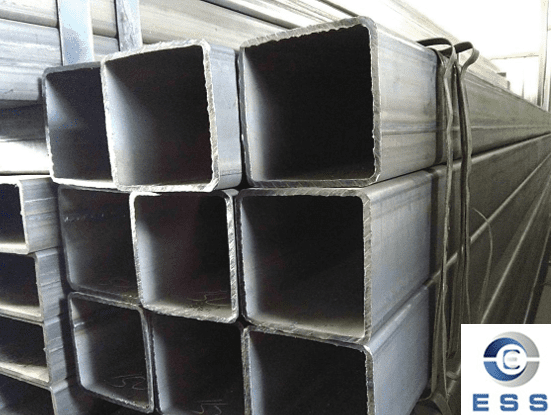
The wall thickness of a square tube refers
to the thickness of the metal material in its cross-section, usually measured
in millimeters.
Accurate wall thickness measurement is
crucial as it affects the overall strength and weight of the square tube.
For example, with the same cross-sectional
dimensions, a thicker wall thickness allows a square tube to withstand higher
loads, but also increases material cost and weight. Conversely, a thinner wall
thickness makes it lighter and suitable for weight-sensitive applications, but
may be less effective in certain high-strength scenarios.
Methods of Expressing Square Tube Wall
Thickness
1. Metric Method
This method uses
millimeters as the unit, directly reflecting the actual wall thickness of the square
tube.
For example, a square tube with dimensions
of 20 x 20 mm and a wall thickness of 2 mm can be simply expressed as 20 x 20 x
2.0.
2. Imperial Units Expression Method
This method converts the square tube wall
thickness to inches, which is more intuitive for users accustomed to imperial
units.
If the square tube wall thickness is given
in millimeters, it must first be converted to inches.
For example, a wall thickness of 20mm
corresponds to 0.7874 inches. Therefore, a square tube with dimensions of 2 x 2
inches and a wall thickness of 20mm can be expressed as 2 x 2 x 0.7874.
3. Cross-sectional Area Weight Expression
Method
This method expresses the wall thickness by
calculating the weight per meter of the square tube. It is commonly used for
cost estimation and logistics weight distribution.
The calculation formula combines the
cross-sectional area and the weight per unit length. For example, the
cross-sectional area weight of a square tube with dimensions of 50 x 50mm and a
wall thickness of 4.5mm can be obtained using a specific formula.
Square Tube Dimensions
|
Outer Diameter (OD)
|
Wall Thickness (WT)
|
Approx. Weight (kg/m)
|
Common Applications
|
|
10 × 10 mm
|
0.8 – 1.5 mm
|
0.28 – 0.55
|
Furniture, lightweight structures
|
|
20 × 20 mm
|
1.0 – 2.0 mm
|
0.56 – 1.10
|
Handrails, frames, displays
|
|
25 × 25 mm
|
1.2 – 3.0 mm
|
0.90 – 2.15
|
Equipment frames, small supports
|
|
30 × 30 mm
|
1.5 – 3.5 mm
|
1.25 – 2.70
|
Machinery frames, doors, windows
|
|
40 × 40 mm
|
1.8 – 4.0 mm
|
1.90 – 3.85
|
Structural parts, racks
|
|
50 × 50 mm
|
2.0 – 5.0 mm
|
2.60 – 5.80
|
Building columns, gates
|
|
60 × 60 mm
|
2.5 – 6.0 mm
|
3.50 – 7.20
|
Industrial frameworks
|
|
80 × 80 mm
|
3.0 – 8.0 mm
|
5.20 – 10.80
|
Construction beams, platforms
|
|
100 × 100 mm
|
4.0 – 10.0 mm
|
7.85 – 19.60
|
Heavy structures, bridges
|
|
120 × 120 mm
|
5.0 – 12.0 mm
|
11.50 – 27.00
|
Building columns, cranes
|
|
150 × 150 mm
|
6.0 – 16.0 mm
|
17.60 – 45.10
|
Industrial buildings
|
|
200 × 200 mm
|
8.0 – 20.0 mm
|
31.40 – 78.50
|
Large-scale construction
|
Wall Thickness Range of Square Tubes of
Different Sizes
1. Small Square Tubes (13–50mm)
Common Wall Thickness: 0.8–3.0mm
Uses: Furniture, Shelving, Decorative
Structures.
2. Medium Square Tubes (50–100mm)
Common Wall Thickness: 2.0–6.0mm
Uses: Building Railings, Machinery Frames.
3. Large Square Tubes (100–200mm)
Common Wall Thickness: 4.0–20mm
Uses: Columns, Heavy Structures, Equipment
Supports.
Wall Thickness Range of Square Tubes by
Different Processes
1. Hot-Dip Galvanized Square Tubes
The wall thickness of hot-dip galvanized
square tubes is typically between 0.8-6.0mm.
Common specifications include 20 x 20 x
0.8mm, 40 x 40 x 1.5mm, etc.
2. Welded Square Tubes
Welded square tubes have a wider wall
thickness range, generally from 0.6mm to 20mm.
Due to its excellent load-bearing capacity
and weldability, it is widely used in construction, bridges, and other fields.
3. Seamless Square Tubes
Seamless square tubes typically have a wall
thickness between 1.0-12mm and possess high precision and mechanical
properties.
They are commonly used in high-precision
machinery manufacturing and hydraulic equipment.
Square Tube Wall Thickness in mm
|
Size
(mm)
|
Wall thickness (mm)
|
|
1.6
|
2.0
|
2.5
|
3.0
|
3.5
|
4.0
|
4.5
|
5.0
|
6.0
|
|
13×13
|
0.56
|
|
|
|
|
|
|
|
|
|
16×16
|
0.68
|
|
|
|
|
|
|
|
|
|
19×19
|
0.94
|
1.15
|
|
|
|
|
|
|
|
|
25×25
|
1.19
|
1.47
|
1.80
|
2.13
|
|
|
|
|
|
|
32×32
|
1.52
|
1.88
|
2.31
|
2.74
|
|
|
|
|
|
|
38×38
|
1.85
|
2.29
|
2.83
|
3.36
|
3.86
|
4.37
|
|
|
|
|
50×50
|
2.44
|
3.03
|
3.76
|
4.48
|
5.18
|
5.87
|
6.55
|
|
|
|
60×60
|
2.94
|
3.66
|
4.55
|
5.42
|
6.28
|
7.12
|
7.96
|
|
|
|
63×63
|
3.09
|
3.85
|
4.78
|
5.70
|
6.60
|
7.50
|
8.38
|
|
|
|
75×75
|
3.69
|
4.59
|
5.70
|
6.81
|
7.90
|
8.98
|
10.04
|
11.10
|
|
|
80×80
|
3.95
|
4.91
|
6.11
|
7.30
|
8.47
|
9.63
|
10.78
|
11.91
|
|
|
90×90
|
4.45
|
5.54
|
6.89
|
8.24
|
9.57
|
10.88
|
12.19
|
13.48
|
16.03
|
|
100×100
|
|
6.17
|
7.68
|
9.18
|
10.66
|
12.14
|
13.60
|
15.05
|
17.91
|
|
120×120
|
|
|
|
11.06
|
12.85
|
14.64
|
16.41
|
18.18
|
21.67
|
|
152×152
|
|
|
|
|
16.42
|
|
21.00
|
|
27.78
|
Comparison of Square Tube Wall Thickness
with Other Tube Materials
Compared to round tubes (CHS
steel), square tubes have unique advantages in wall thickness design.
Round tubes typically have a uniform wall
thickness distribution, but square tubes are easier to optimize in terms of
bending and torsional resistance due to their cross-sectional shape.
For example, in building structures, by
adjusting the wall thickness of square tubes, overall stability can be improved
without increasing weight.
Round tubes may require thicker walls in
some situations to achieve the same effect, leading to material waste and
increased costs.
Compared to rectangular tubes
(RHS steel), square tubes have more standardized wall thickness design.
Rectangular tubes may be affected by the
uniformity of their aspect ratio and wall thickness, while square tubes, with
equal sides, have a more uniform wall thickness distribution, making the
manufacturing process easier to control.
This gives square tubes the advantage of
high consistency in mass production.
The Impact of Wall Thickness on Square
Tube Performance
1. Bending Strength
The greater the wall thickness, the
stronger the bending resistance. Suitable for: equipment racks, bridge
structures, heavy-duty frames.
2. Compressive Strength
Thick-walled
square tubes are less prone to buckling and are
suitable for columns, purlins, and floor supports.
3. Torsional Strength
Due to their symmetrical cross-section,
square tubes have strong torsional resistance. The greater the wall thickness,
the more stable the torsional resistance.
4. Corrosion Resistance
Thin-walled square tubes are more
susceptible to corrosion. Recommendation: Increase wall thickness and choose
galvanized steel.
Factors Affecting Square Tube Wall
Thickness
1. Operating Environment
In highly corrosive environments or
environments requiring heavy loads, thicker steel tubes are needed to ensure
safety.
2. Manufacturing Process
Different manufacturing processes affect
the wall thickness of the steel tube. For example, hot-rolled steel tubes
typically have thicker walls than cold-rolled tubes.
3. Tube Diameter
As the tube diameter increases, the wall
thickness needs to be increased accordingly to ensure sufficient strength and
rigidity.
How to Choose the Appropriate Square
Tube Wall Thickness
1. Load Requirements
Select an appropriate
thickness based on the required load-bearing capacity. Generally, thicker steel
pipes are required for applications with high load-bearing requirements.
2. Operating Environment
When used in corrosive environments,
thick-walled steel pipes with better corrosion protection should be selected.
3. Economy
While ensuring safety, the lowest possible
steel pipe thickness should be chosen to improve economic efficiency.
FAQ
1. Is Thicker Wall Thickness Always Better for
Square Tubes?
Not necessarily.
Thicker wall thickness generally means
higher strength, but also significantly increased cost and weight.
The appropriate wall thickness should be
selected based on the load, application, and structural design, rather than
simply increasing thickness indiscriminately.
2. Are Thin-Walled Square Tubes Prone to
Deformation?
Yes.
Thin-walled square tubes (≤1.5mm) are more prone to deformation under welding, bending, or
external forces.
They are suitable for light loads and
decorative applications, but not for heavy load scenarios.
Summary
The wall thickness of square tubes is a key
parameter that not only determines the basic performance of the pipe but also
affects the economy and feasibility of practical applications. By rationally
selecting the wall thickness, square tubes can play an important role in
diverse scenarios. Compared to other pipe materials, the flexibility and
standardization of square tube in wall thickness design make it the preferred
choice in many fields.
Read more: What is the difference between square tube and rectangular
tube? or SHS
steel meaning





 Eastern Steel Manufacturing Co.,Ltd not only improve product production and sales services, but also provide additional value-added services. As long as you need, we can complete your specific needs together.