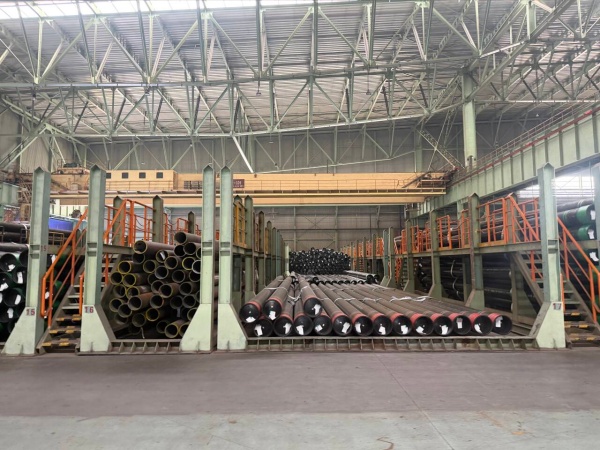
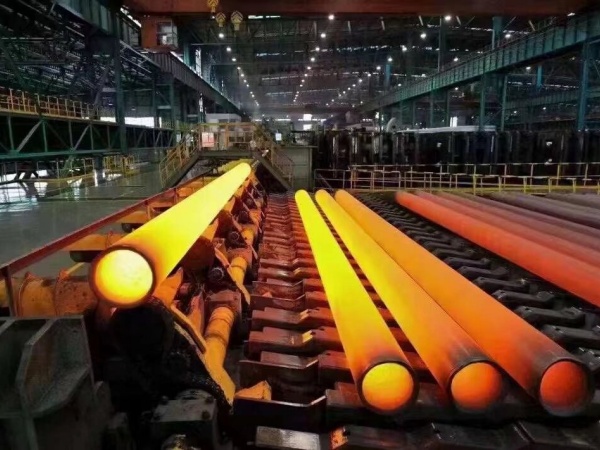
Large diameter seamless
pipes generally refer to seamless steel pipes with an outer diameter ≥ 219 mm (8").
They are characterized by strong pressure resistance, minimal welding, and high
reliability, and are widely used in oil, gas, chemical, and power industries.
As an
important industrial material, large diameter seamless steel pipes are often
used in high-temperature, high-pressure, corrosive media, and complex working
conditions. Therefore, several strict technical standards have been established
internationally to ensure their quality, safety, and reliability. The following
is a detailed introduction to the main international standards.
ISO
Large Diameter Seamless Pipes
"Steel
Pipeline Systems for Oil and Gas Industry"
This
standard is the core international standard for steel pipes used in oil and gas
pipelines and is applicable to large diameter seamless pipes. The latest
version is ISO 3183:2019. Its main technical contents include:
-
Specifying two product specification levels, PSL1 and PSL2;
-
Detailed specifications for chemical composition, mechanical properties,
dimensional tolerances, etc.;
-
Strict requirements for non-destructive testing;
-
Includes special requirements for resistance to hydrogen-induced cracking (HIC)
and sulfide stress cracking (SSC).
"Specification
for Casing and Tubing for the Oil and Gas Industry"
Applicable
to large diameter seamless casing for oil and gas wells. The latest version is
ISO 11960:2020. Key features:
-
Classified into 9 groups according to steel grade: H, J, K, N, C, L, P, Q, R;
- Specifies
thread processing and connection performance requirements;
- Includes
special performance requirements under high temperature and high pressure
environments;
- Clearly
specifies the impact toughness of the pipe body.
API
Large Diameter Seamless Pipe
"Specification
for Pipeline Steel Pipe"
This
is the most widely used pipeline pipe standard globally. The latest version is
API SPEC 5L 46 (2018). Key contents:
-
Products are divided into two levels: PSL1 and PSL2;
-
Steel grades range from A25 to X120, totaling 20 grades;
- Specifications
for Charpy V-notch Impact Test:
- Specific
requirements for welding procedure qualification:
- Supplementary
requirements for alternative energy pipelines:
"Specification
for Casing and Tubing"
Applicable
to large diameter seamless casing for oil and gas wells. The latest version is
API SPEC 5CT 9 (2018):
- Includes
11 steel grades from H40 to Q125:
- Specifies
performance requirements for special threaded connections:
- Strict
limits on tube body hardness:
- Includes
special requirements for crush resistance:
ASTM
Large Diameter Seamless Pipe
1. ASTM
A106/A106M Pipe
"Seamless Carbon Steel Pipes
for High-Temperature Services"
Applicable
to large diameter seamless tubes for high-temperature services. The latest
version is ASTM A106/A106M-19:
- Divided
into three grades: A, B, and C:
- Specifies
minimum tensile strength at high temperatures:
- Clear
limits on carbon equivalent:
-
Includes normalizing requirements.
2.
ASTM A333/A333M Pipe
"Seamless
and Welded Steel Pipes for Low Temperatures"
Applicable
to large diameter seamless tubes for low-temperature environments. The latest
version is ASTM A333/A333M-18:
-
Includes 6 grades (1, 3, 6, 7, 8, 9, 10);
-
Specifies low-temperature impact test requirements;
-
Minimum service temperature down to -195°C;
-
Specific requirements for heat treatment processes.
3.
ASTM A335/A335M Pipe
"Seamless
Ferritic Alloy Steel Tubes for High Temperatures"
Applicable
to large diameter alloy seamless tubes for high-temperature and high-pressure
environments. The latest version is ASTM A335/A335M-19:
-
Includes 11 grades from P5 to P92;
-
Specifies the range of alloy element content;
-
Strict requirements for microstructure;
-
Includes hardness testing requirements.
EN
Large Diameter Seamless Pipes
1. EN
10216-2 Pipe
"Seamless
Steel Pipes for Pressure Applications"
- Part
2: Non-alloy and alloy steel tubes specifying high-temperature properties
- Applicable
to large diameter seamless tubes for high-temperature applications. Main
contents:
-
Includes 8 steel grades from P195 to P460;
-
Specifies creep rupture strength requirements;
-
Strict limitations on non-metallic inclusions;
-
Includes special inspection requirements.
"Hot-Formed
Structural Hollow Profiles of Non-Alloy And Fine Grained Steels"
Applicable
to large diameter seamless tubes for structural applications. Main
characteristics:
-
Includes 5 steel grades from S235 to S460;
-
Specifies impact energy requirements;
-
Detailed specifications for dimensional tolerances;
-
Includes weldability requirements.
Other
Important International Standards
1. JIS
G3454 Pipe
"Carbon Steel Pipes for High-Pressure Applications"
Japanese
Industrial Standard, applicable to large diameter seamless tubes for
high-pressure applications:
-
Includes 4 grades from STPT370 to STPT480;
- Specifies
the requirements for hydrostatic testing;
-
Strict requirements for surface quality.
2.
GOST 8732-78 Pipe
"Seamless Hot-Rolled Steel Pipe"
Russian
national standard, applicable to general-purpose large diameter seamless pipes:
-
Includes 5 steel grades from 10 to 20;
-
Specifies the requirements for flaring tests;
-
Special provisions for bending tests.
Comparison
of Common Standards for Large Diameter Seamless Pipes
|
Standard
System
|
Main
Uses
|
Typical
Steel Grades
|
Characteristics
|
|
API
5L
|
Pipeline
|
X42–X120
|
PSL2
High requirements, strict toughness requirements, most commonly used in the
oil and gas industry
|
|
API
5CT
|
Oil
and Gas Well Casing
|
H40–Q125
|
Strict
threaded connections, high resistance to crushing
|
|
ISO
3183
|
Oil
and Gas Transportation
|
L245–L555
|
Close
to API 5L, strong international applicability
|
|
ASTM
A106
|
High
Temperature Structural Pipe
|
A/B/C
|
Commonly
used in boilers and chemical industries, carbon steel
|
|
ASTM
A333
|
Low
Temperature Pressure Pipe
|
Gr.6 etc.
|
Pipes
for -195°C operating conditions
|
|
ASTM
A335
|
High
Temperature & High Pressure
|
P5–P92
|
Alloy
steel power plant pipes
|
|
EN
10216-2
|
Pressure
Piping
|
P235–P460
|
Strict
high temperature performance requirements
|
|
EN
10210
|
Structural
Steel Pipes
|
S235–S460
|
Widely
used in building structures
|
International
Standard Development Trends
1.
High Performance
New
standards continuously increase strength and toughness requirements, such as
the addition of the X120 steel grade in API 5L.
2.
Environmental Adaptability
Increased
requirements for special operating conditions such as acidic and
low-temperature environments.
3.
Stricter Testing
Continuously
improving non-destructive testing standards, such as adding TOFD testing
requirements.
4.
Full Life Cycle Management
Standards
are beginning to cover the entire lifecycle requirements of steel pipe design,
manufacturing, installation, and operation.
5.
Digitalization Trend
Some
new standards are beginning to require the provision of digital product data.
Recommendations
for Standard Selection of Large Diameter Seamless Pipes
|
Application
|
Recommended
Standards
|
|
Long-Distance
Oil & Gas Pipelines
|
API
5L / ISO 3183
|
|
Oil
and Gas Well Casing
|
API
5CT / ISO 11960
|
|
High
Temperature and High Pressure Boilers
|
ASTM
A335 / EN 10216-2
|
|
Structural
Engineering
|
EN
10210 / ASTM A106
|
|
Low
Temperature Environments (e.g., LNG)
|
ASTM
A333
|
|
Acidic
Media (containing H₂S)
|
API
5L PSL2 Sour / API 5CT SSC Requirements
|
FAQ
1.
What is The Difference Between Large Diameter Seamless Pipes and Seam Pipes?
Seamless
pipes are made by piercing a single piece of steel billet, without welds,
resulting in high strength and a higher price.
Seam
pipes are made by rolling and welding steel plates, resulting in welds,
slightly lower strength, and a more affordable price.
2. What
are The Applications of Large Diameter Seamless Pipes?
Oil
and gas transportation; oil and gas well completion and drilling;
high-temperature steam pipelines in thermal power plants; chemical pressure
equipment; large scale structural engineering.
3.
What is The Size Range of Large Diameter Seamless Pipes?
Common
outer diameter range: 219mm–1220mm; Wall thickness: 6mm–60mm (can be extended according to standards).
Summary
With
technological advancements and industrial development, international standards
for large diameter seamless steel pipes will continue to be updated and
improved. It is recommended that relevant companies closely monitor standard
developments and adjust their production processes and quality control systems
accordingly.



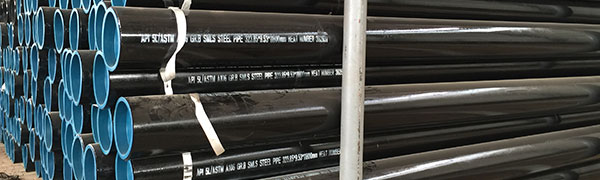


 Eastern Steel Manufacturing Co.,Ltd not only improve product production and sales services, but also provide additional value-added services. As long as you need, we can complete your specific needs together.