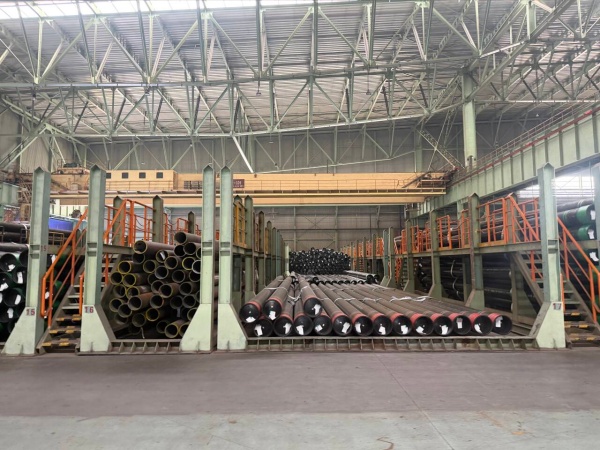
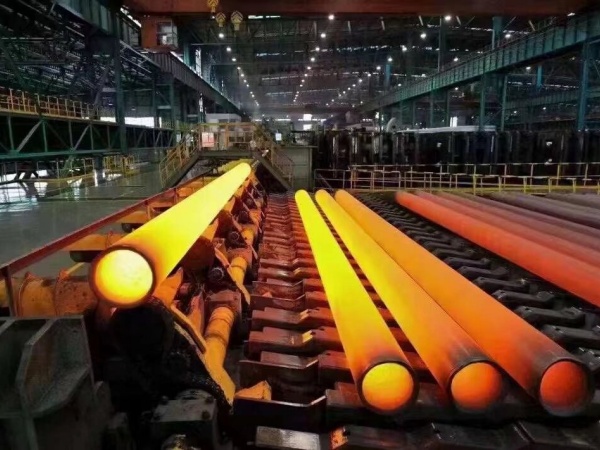
Seamless carbon steel pipe standards such as ASTM, API, and EN play a critical role in oil and gas, pressure piping, and industrial systems. In practical engineering projects, however, the real challenge is not whether to use seamless pipes, but which standard system to adopt.
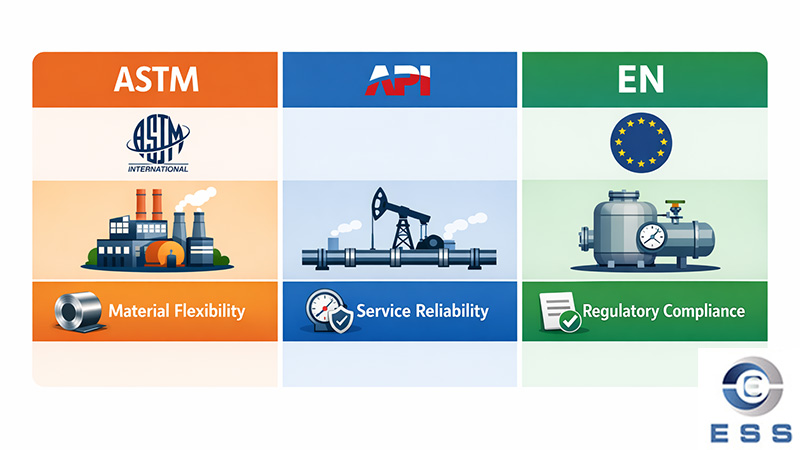
The three major standard systems—ASTM International, American Petroleum Institute (API), and European Committee for Standardization (EN)—differ significantly in design philosophy, application scope, and quality control requirements.
This article provides a practical comparison of ASTM, API, and EN standards, along with clear guidance on how to select the most appropriate standard for different applications.
1. Quick Comparison: ASTM vs API vs EN
To better understand their differences, it is useful to first look at how each standard is applied in practice.
|
Standard System
|
Main Applications
|
Typical Standards
|
Key Focus
|
|
ASTM
|
General industry, structural applications, boiler systems
|
ASTM A106, ASTM A53
|
Material properties and application flexibility
|
|
API
|
Oil and gas transportation, pipeline engineering
|
API 5L
|
Pressure rating and service reliability
|
|
EN
|
European pressure equipment and EPC projects
|
EN 10216 series
|
Regulatory compliance and dimensional accuracy
|
These comparisons are based on practical engineering applications and international project experience across oil & gas, EPC, and industrial systems.
2. Understanding Seamless Carbon Steel Pipe
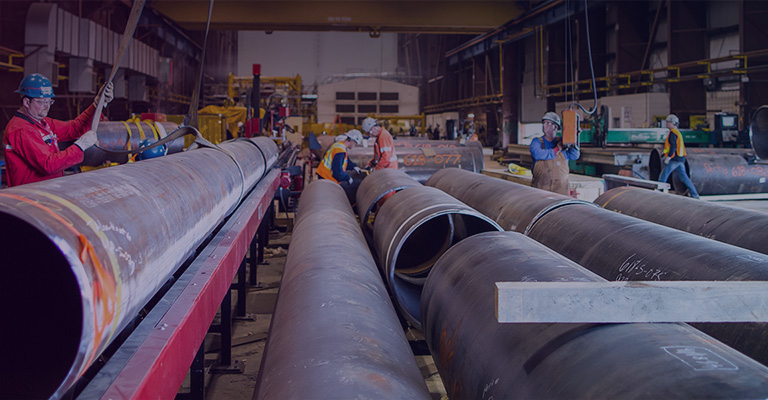
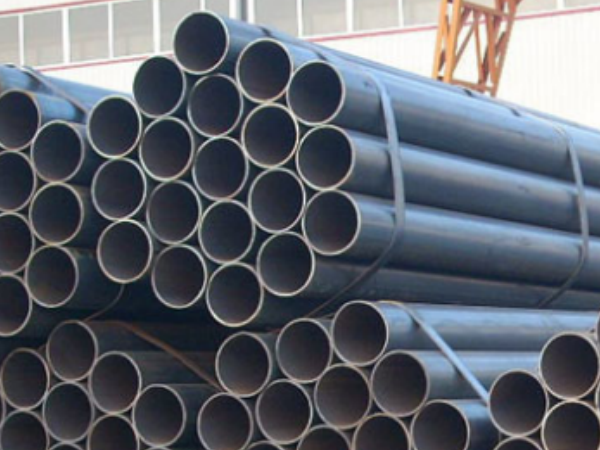
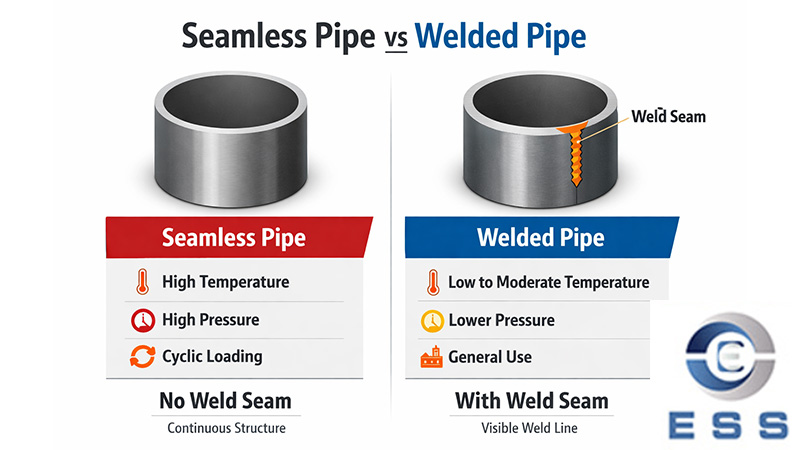
Seamless carbon steel pipes are manufactured through piercing and rolling processes, forming a continuous structure without any welded seams. Compared to welded pipes, the absence of a seam is a critical advantage in pressure-bearing applications.
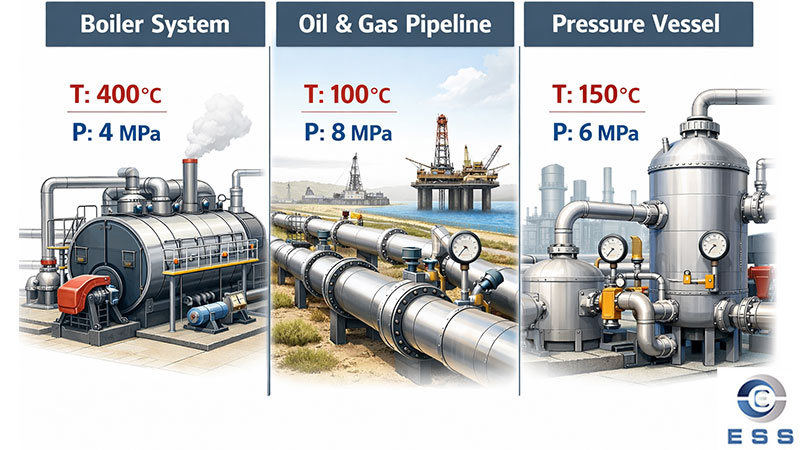
Because of this structural characteristic, seamless pipes are typically preferred for high-temperature, high-pressure, or cyclic loading conditions, such as boiler systems, oil and gas transportation, and pressure vessel piping.
3. Key Differences Between ASTM, API, and EN Standards
3.1 Design Philosophy
The differences between ASTM, API, and EN standards originate primarily from their underlying design philosophies.
ASTM International focuses on material properties, with detailed definitions of chemical composition and mechanical performance. Its standards are widely applicable across industries but impose fewer constraints on specific applications.
The American Petroleum Institute (API) develops its standards based on actual service conditions, particularly for oil and gas transportation environments.
The EN standards, developed by the European Committee for Standardization, place greater emphasis on safety, consistency, and regulatory compliance, especially in cross-border and regulated engineering projects.
In simple terms, ASTM defines what the material is, API determines whether it is suitable for a specific service condition, and EN ensures compliance within a unified regulatory framework.
3.2 Chemical Composition and Materials
In terms of chemical composition control, ASTM, API, and EN standards differ in the level of restriction they impose.
ASTM standards typically define acceptable ranges for chemical elements, offering greater flexibility in material selection across a wide range of applications.
API standards—particularly PSL2—apply stricter controls on chemical composition to ensure performance stability in corrosive or high-pressure environments.
EN standards place greater emphasis on composition consistency and traceability, with stricter requirements for batch control and documentation.
As a result, for applications involving corrosive environments or special media, API and EN standards generally impose more stringent requirements than ASTM.
3.3 Mechanical Properties
The three standards also differ in how they prioritize mechanical properties.
API standards place strong emphasis on impact toughness and crack resistance to ensure long-term performance in demanding pipeline environments.
EN standards focus on performance stability and consistency between material batches, making them well-suited for pressure equipment applications.
ASTM standards provide multiple material grades, allowing engineers to select properties based on specific project requirements.
These differences become more significant in low-temperature conditions, dynamic loading scenarios, or high-pressure systems.
3.4 Testing and Certification
Testing and certification represent one of the most noticeable differences between the three standards.
API standards introduce PSL1 and PSL2 levels, with PSL2 requiring more stringent controls, including non-destructive testing, impact testing, and tighter chemical composition limits.
EN standards are typically linked to CE marking and the Pressure Equipment Directive (PED), with strict requirements for documentation, traceability, and compliance.
ASTM standards primarily define material specifications, while actual testing requirements are often governed by project specifications or integrated with ASME codes.
In other words, API and EN provide more comprehensive and system-oriented quality control frameworks, whereas ASTM serves as a more fundamental material standard.
3.5 Dimensions and Tolerances
Regarding dimensional control:
EN standards generally require higher dimensional accuracy, suitable for systems with strict assembly requirements.
API standards, under PSL2 conditions, enforce stricter control on wall thickness and ovality.
ASTM standards have more relaxed tolerances, making them better suited for general manufacturing and trade circulation.
In practical engineering, these differences directly affect installation fit and long-term operational stability.
4. ASTM A106 vs A53 vs API 5L: Practical Differences
In real projects, the choice of standard rarely stops at the system level (ASTM vs API). Decisions are typically made at the material grade level. The differences between A106, A53, and API 5L essentially reflect the priorities for controlling failure modes under different service conditions.
|
Standard
|
Typical Applications
|
Key Control Focus
|
Risks if Misapplied
|
|
ASTM A106
|
High-temperature fluids, steam systems, boiler lines
|
High-temperature strength and microstructural stability
|
Performance degradation or deformation under long-term high-temperature service
|
|
ASTM A53
|
General structures, low-pressure piping, building pipelines
|
Basic load-bearing capacity and cost control
|
Insufficient safety margin for high-temperature or critical pressure systems
|
|
API 5L
|
Long-distance pipelines (oil, gas, water)
|
Impact resistance, defect control, weldability
|
Increased risk of failure under dynamic loads or corrosive environments
|
A106 is typically used in temperature-dominated conditions. In steam or heat-exchange systems, the material is exposed to long-term high temperatures, where the primary concern is not peak strength but microstructural stability and creep behavior. While A53 may have comparable strength, it is not the preferred choice for high-temperature service.
A53 has a relatively clear usage boundary, mainly in structural or low-pressure systems. In most cases, the issue is not that it “cannot be used,” but that it lacks redundancy in safety margins. Once conditions shift from static to fluctuating temperature or pressure, risks escalate quickly.
API 5L is designed from a different perspective. For pipeline systems, the main concern is not single-point strength but defect propagation and fracture control. This is why the standard introduces PSL grading:
PSL1: Meets basic transportation requirements
PSL2: Adds impact testing, non-destructive testing, and stricter compositional control
In low-temperature, long-distance, or high-risk transportation environments, PSL2 is typically treated as the default rather than an upgrade option.
5. Where EN Standards Fit (EN 10216 Explained)
The use of the EN 10216 series is not determined by “better performance,” but by project system requirements.
In the European pressure equipment framework, material standards are closely linked to regulations. Once a project falls under the Pressure Equipment Directive (PED), material selection is no longer optional; it must comply with EN standards and the corresponding documentation system.
This differs from the logic of ASTM or API:
ASTM can be adapted to different projects through supplementary specifications.
API allows grade adjustments according to service conditions (e.g., PSL levels).
EN requires that materials, manufacturing, testing, and documentation form a closed-loop system within the same framework.
Key features of EN 10216 in engineering practice:
Stricter dimensional tolerances, reducing assembly deviations during installation.
High batch-to-batch material consistency, suitable for continuously operating systems.
Comprehensive testing and documentation, meeting audit and traceability requirements.
In multinational EPC projects—especially those involving European owners or certification bodies—using non-EN standards often leads to additional certification costs or may even fail audits. Therefore, in these projects, EN standards are not a performance-based choice, but a regulatory requirement.
6. How to Choose the Right Standard
The choice of standard is not based on a single parameter; it depends on service conditions, project framework, and compliance requirements. The following outlines typical selection paths for common project scenarios.
6.1 By Industry
Oil and gas transmission systems (onshore/offshore pipelines): Prefer the API system, typically evaluating API 5L; critical lines should consider PSL2 directly.
Process piping within refineries: Select ASTM based on temperature class; for high-temperature sections, A106 is preferred.
Boilers and heat-exchange systems: Primarily use ASTM, with material grades chosen according to design temperature.
General industrial and structural applications: ASTM A53 or equivalent materials are sufficient.
Projects involving European owners or CE certification: Directly follow the EN system, with no cross-standard substitutions.
6.2 By Temperature and Pressure
Design temperatures ≥ 400°C continuously: Do not use general structural pipes; ASTM A106 is preferred.
Thermal cycling or temperature fluctuations: Prioritize materials with stable microstructure; avoid A53-type materials.
Long-distance pipelines with internal pressure fluctuations: Use API 5L, selecting PSL2 according to risk level.
High pressure combined with corrosive environments (e.g., H₂S/CO₂): Material selection is limited to the API system, with additional performance verification requirements.
Pressure equipment connection piping under PED scope: Use EN standard materials directly.
6.3 By Project Location
North America or ASME-based projects: Default to ASTM standards, supplemented according to design codes.
Conventional industrial projects in the Middle East or Southeast Asia: ASTM and API may run in parallel, assigned according to application.
Multinational EPC projects: Follow the owner’s specifications; mixing standards is generally not allowed.
EU projects or those requiring CE certification: Use EN standards only, without substituting ASTM/API.
Systems with multiple standard interfaces: Prioritize a unified standard system to avoid adaptation and certification issues later.
When selecting seamless steel pipes for international projects, it is essential to work with an experienced supplier familiar with ASTM, API, and EN standards to ensure compliance and efficient delivery.
7. Evaluating Carbon Steel Seamless Pipe Manufacturers
When assessing a manufacturer of carbon steel seamless pipes, consider the following factors:
7.1 Certifications and Qualifications
Check whether the manufacturer holds API certification or ISO 9001/14001 management systems, and can provide complete Mill Test Reports (MTRs). Certifications not only reflect the factory’s management standards but also ensure product traceability and compliance with relevant standards.
7.2 Testing Capabilities
Verify if the manufacturer can perform non-destructive testing (NDT), hydrostatic testing, and other physical and chemical property inspections. Early detection of material defects is critical for pressure-bearing systems.
7.3 Export and Project Experience
Manufacturers familiar with international standards (ASTM, API, EN) and multinational project requirements are better equipped to support engineering design, delivery schedules, and documentation management.
Selecting a manufacturer that meets these criteria ensures that the seamless pipes not only satisfy project performance requirements but also provide reliable support for installation and final inspection.
Technical Tip: Prefer suppliers experienced in both API and EN standards, enabling flexible deployment across North American, Middle Eastern, and European projects while minimizing cross-standard coordination risks.
8. FAQs
Q1. Is ASTM A106 pipe always seamless?
Yes, ASTM A106 pipes are always manufactured as seamless carbon steel pipes. They are specifically designed for high-temperature and high-pressure applications such as boilers, refineries, and power plants. Unlike ASTM A53, A106 does not include welded pipe options.
Q2. Is ASTM A53 pipe seamless or welded?
ASTM A53 pipes can be either seamless or welded (ERW). This standard is widely used for general structural and low-pressure applications. However, for high-temperature or critical pressure systems, seamless pipes such as ASTM A106 are usually preferred.
Q3. What is the main difference between ASTM A106 and API 5L?
ASTM A106 is mainly used for high-temperature service in industrial systems, while API 5L is designed for oil and gas pipeline transportation. API 5L focuses more on toughness, impact resistance, and long-distance pipeline reliability, especially under dynamic loading conditions.
9. Conclusion
Different standard systems do not imply better or worse quality—they reflect differences in application scenarios and engineering requirements.
ASTM is better suited for general industrial and high-temperature applications.
API is designed for oil and gas transmission pipelines, emphasizing service reliability.
EN addresses European pressure equipment projects and regulatory compliance.
When selecting the appropriate standard, consider:
Service conditions (temperature, pressure, media)
Industry and project type (oil & gas, industrial, EPC, pressure equipment)
Region and regulatory requirements (North America, Asia, Europe, CE certification)
By carefully evaluating these factors and choosing the most suitable standard and a reliable manufacturer, you can maximize both safety and engineering efficiency. As a professional supplier of seamless carbon steel pipes, we support ASTM, API, and EN standards for global projects.
Read more:Types of seamless carbon steel pipes and How Seamless Carbon Steel Pipe Is Made





 Eastern Steel Manufacturing Co.,Ltd not only improve product production and sales services, but also provide additional value-added services. As long as you need, we can complete your specific needs together.