A pipe flange static jumper is used to electrically bond two flanges and prevent static electricity accumulation in pipeline systems. It is commonly used in oil, gas, chemical, and flammable media service where electrostatic discharge may create fire or explosion risk. This guide explains its purpose, installation requirements, grounding resistance, and practical application.
1. Principle of Pipe Flange Static Jumper
Pipe flange static jumper is to install
metal wires between the pipe flanges to form an equipotential body between
them, thereby eliminating static electricity accumulation. When the medium
flows in the pipeline, the static charge generated by friction will be quickly
transferred to the earth through the metal wire to avoid accumulation at the
flange. In this way, even if there is static electricity in the pipeline, it
will not pose a threat to the pipeline system.
2. Static Jumper Standard Setting
2.1 Set the ground wire
Before connecting the pipe flange, the
ground wire must be set. Under the condition that the grounding resistance is
less than 1 ohm, a suitable location should be selected for reliable grounding.
The ground wire must be connected to the electrostatic grounding device to
ensure that the potential of the entire system is equal.
2.2 Electrostatic grounding
The electrostatic grounding of the pipe
flange should meet the following requirements:
The electrostatic grounding resistance
should be less than 10 ohms;
The pipe flange and the electrostatic
grounding body are connected by copper wire;
The electrostatic jumper line should be
directly connected to the earth, and the grounding wire should be well laid to
ensure safety and reliability;
The electrostatic jumper line should be
parallel to the pipeline and no more than 10 meters away from the pipeline;
When setting up the electrostatic jumper,
avoid using the same grounding line as other electrical systems to ensure
electrostatic safety.
2.3 Detect the effectiveness of the
electrostatic jumper
After completing the electrostatic jumper,
it is necessary to test to ensure the effectiveness of the jumper. The method
is to use a multimeter to test the test point. If the resistance is less than
10 ohms, it means that the electrostatic jumper line is effective.
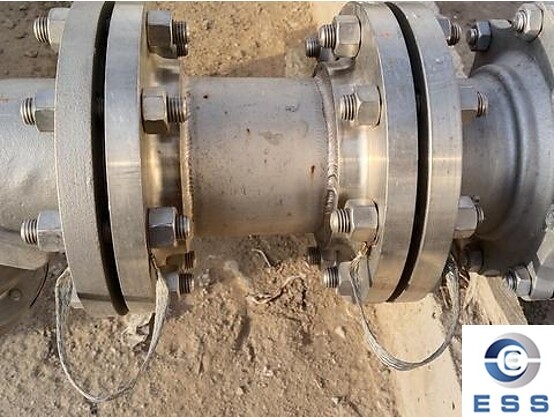
3. How to Install a Pipe Flange Static Jumper
Before flange connection, the flange surface should be clean enough to ensure good metal-to-metal contact. Rust, paint, coating, or oil around the connection points should be removed where necessary.
The jumper is normally connected across both sides of the flange so that electrical continuity can be maintained even when insulating gaskets or surface coatings interrupt conductivity.
A copper jumper wire is commonly used because it offers good conductivity and performs well in industrial environments. The connection points should be firm enough to resist loosening caused by vibration during operation.
After installation, continuity should be checked with a multimeter. In most applications, the jumper is only considered effective when resistance remains within the required grounding limit.
4. The Role of Static Jumper on Pipe Flange
4.1 Prevent fire and explosion
Static jumper can eliminate static
electricity accumulation at the pipe flange and reduce the risk of fire and
explosion.
4.2 Protect equipment
Static jumper can reduce the damage of
static electricity to pipeline system equipment and extend the service life of
equipment.
4.3 Improve work efficiency
By eliminating static electricity problems,
the pipeline system can be ensured to operate stably and work efficiency can be
improved.
5. When Is a Static Jumper Required on Pipe Flanges?
A static jumper is usually considered when electrical continuity across the flange cannot be taken for granted.
This happens quite often in pipelines carrying flammable liquids, hydrocarbons, or other media where electrostatic discharge could create ignition risk. It also becomes more relevant where non-conductive gaskets, coatings, or corrosion protection layers may interrupt the natural metal contact between flanges.
In practice, static jumpers are commonly seen around loading and unloading lines, tank connections, and piping installed in hazardous areas. In these situations, the jumper is not there as an extra accessory — it is there to make sure charge does not remain isolated at the flange connection.
6. Summary
In short, the static jumper of the pipe
flange is an important measure to ensure the safe and stable operation of the
pipeline system. By understanding its principles and functions and taking
correct operating guidelines and precautions, static electricity problems can
be effectively prevented and solved, providing strong guarantees for the safe
operation of the pipeline system. In practical applications, a reliable flange supplier,
suitable metal wire, installation method and maintenance cycle should be
selected according to the specific situation to ensure the effectiveness and
reliability of the static jumper facilities.



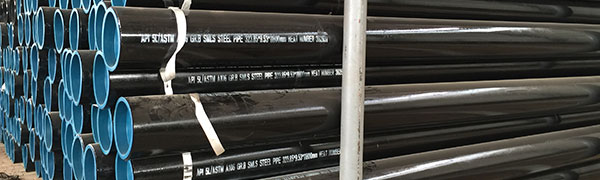



 Eastern Steel Manufacturing Co.,Ltd not only improve product production and sales services, but also provide additional value-added services. As long as you need, we can complete your specific needs together.