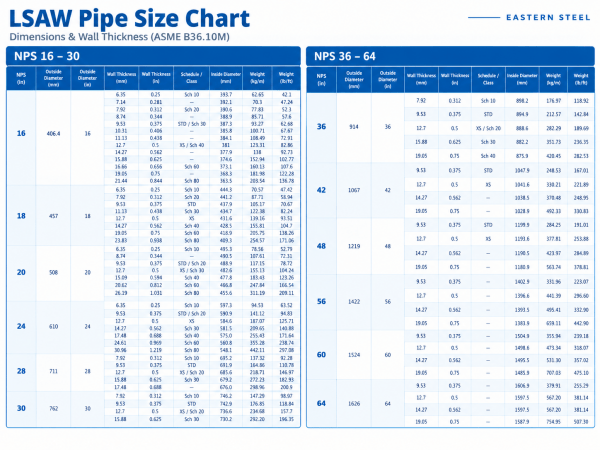
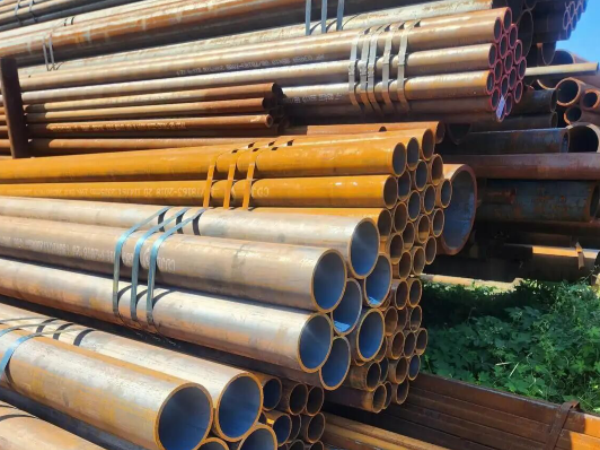
La tubería de perforación utilizada en las operaciones de perforación existe en diversos tamaños y especificaciones. Sus principales parámetros incluyen el diámetro exterior (OD), diámetro interior (ID), espesor de pared, peso por unidad de longitud y longitud total.
Parte 1: Tamaños estándar de tubería de perforación (API)
En las operaciones de perforación petrolera, los tamaños de tubería de perforación más comunes suelen oscilar entre 2-3/8 pulgadas y 6-5/8 pulgadas, dependiendo de la profundidad del pozo y de los requisitos de carga durante la perforación. Los tamaños de tubería de perforación utilizados en las operaciones petroleras generalmente se definen por su diámetro exterior (OD) y siguen las normas establecidas por la API 5DP de la American Petroleum Institute (API). Estas dimensiones estandarizadas garantizan la compatibilidad entre las tuberías de perforación, los acoplamientos de herramientas y otros equipos de perforación en la industria del petróleo y gas.
En la mayoría de las operaciones de perforación, los tamaños de tubería de perforación oscilan entre 2-3/8 pulgadas y 6-5/8 pulgadas, dependiendo de la profundidad del pozo, los requerimientos de torque y la resistencia mecánica necesaria para la operación.
Los diámetros de tubería API más comúnmente utilizados en la perforación petrolera son:
Tubería de 2-3/8 pulgadas – Generalmente utilizada en pozos poco profundos y operaciones de perforación ligeras.
Tubería de 2-7/8 pulgadas – Uno de los tamaños más comunes en pozos de profundidad media.
Tubería de 3-1/2 pulgadas – Común en perforación direccional y operaciones estándar en campos petroleros.
Tubería de 4 pulgadas – Ofrece mayor capacidad de torque para pozos más profundos.
Tubería de 4-1/2 pulgadas – Utilizada en entornos de perforación con cargas elevadas.
Tubería de 5 pulgadas – Adecuada para operaciones de perforación pesada.
Tubería de 5-1/2 pulgadas – Común en pozos profundos que requieren alta resistencia a la tracción.
Tubería de 6-5/8 pulgadas – Tubo de gran diámetro, diseñado para pozos profundos o proyectos de perforación con alto torque.
Cada tamaño no solo difiere en el diámetro exterior, sino también en diámetro interior (ID), espesor de pared, peso por unidad de longitud y capacidad de torque, parámetros que determinan su idoneidad para condiciones específicas de perforación.
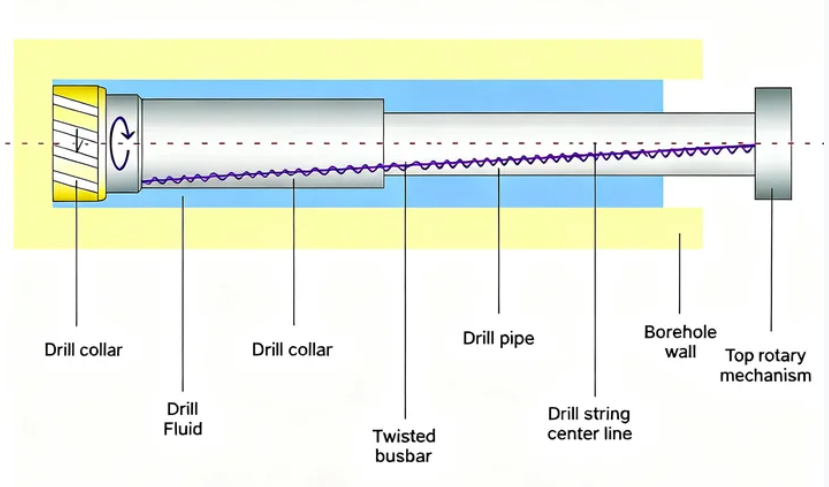
Parte 2: Clasificación de los tamaños de tubería de perforación en plataformas petroleras
Según el diámetro exterior (OD), las tuberías de perforación se pueden clasificar en diámetro pequeño, medio y grande. Los diferentes tamaños de tubería difieren en su capacidad de carga, transmisión de torque y profundidad de pozo para la que son adecuados.
(1) Tubería de perforación de diámetro pequeño
Características: Ligera, fácil de manejar, adecuada para operaciones con cargas bajas.
Tamaños comunes: 2-3/8"
Grado de acero: E-75
Parámetros mecánicos típicos:
Torque: ~15,000 ft-lb
Resistencia a la tracción: ~75,000 psi
(2) Tubería de perforación de diámetro medio
Características: Equilibrio entre resistencia y peso; es el tamaño más común en los campos petroleros.
Tamaños comunes: 2-7/8" y 3-1/2"
Grado de acero: G-105
Parámetros mecánicos típicos:
Torque: ~30,000 – 50,000 ft-lb
Resistencia a la tracción: ~105,000 psi
(3) Tubería de perforación de diámetro grande
Características: Mayor capacidad de carga y torque, adecuada para pozos profundos o operaciones con cargas elevadas.
Tamaños comunes: 4-1/2", 5-1/2" y 6-5/8"
Grado de acero: S-135
Parámetros mecánicos típicos:
Torque: ~70,000 – 120,000 ft-lb
Resistencia a la tracción: ~135,000 psi
Parte 3. Factores clave que influyen en la selección del tamaño de la tubería de perforación
Los factores clave que influyen en la selección del tamaño de la tubería de perforación incluyen la profundidad del pozo, la presión, la temperatura y las condiciones específicas de perforación.
Profundidad del pozo:
Los pozos más profundos generalmente requieren tuberías de mayor diámetro y de mayor grado para soportar mayores cargas de torque y tensión.
Presión:
Las zonas de alta presión exigen tuberías con suficiente espesor de pared y resistencia del material para soportar tanto la presión interna como la externa.
Temperatura:
Las formaciones de alta temperatura requieren tuberías fabricadas con aceros especiales capaces de mantener sus propiedades mecánicas bajo condiciones térmicas extremas.
Condiciones de perforación:
Las operaciones de perforación direccional, pozos desviados o perforación con alto torque requieren tuberías diseñadas con mayor resistencia a la fatiga y capacidad de transmisión de torque.
La siguiente tabla ofrece una visión general de la clasificación de tamaños de tubería de perforación, lo que permite comprender rápidamente los parámetros típicos de los diámetros pequeño, medio y grande.
|
Categoría de tamaño
|
OD común
|
Grado típico
|
Peso típico (lb/ft)
|
Capacidad de torque
|
Profundidad típica del pozo
|
Características
|
|
Tubería de diámetro pequeño
|
2-3/8"
|
E-75
|
6.65
|
~15,000 ft-lb
|
Pozos poco profundos
|
Ligera y flexible
|
|
Tubería de diámetro medio
|
2-7/8" – 3-1/2"
|
G-105
|
10.4 – 13.3
|
30,000 – 50,000 ft-lb
|
Pozos de profundidad media
|
Tamaño más utilizado
|
|
Tubería de diámetro grande
|
4-1/2" – 6-5/8"
|
S-135
|
16.6 – 25.2
|
70,000 – 120,000 ft-lb
|
Pozos profundos
|
Alta capacidad de carga y torque
|
Si se requieren datos más precisos para consulta de ingenieros, a continuación se presenta una tabla técnica detallada con los principales parámetros, incluyendo diámetro interior, espesor de pared, tipo de upset, torque y resistencia a la tracción.
|
OD (in)
|
ID (in)
|
Wall (in)
|
Weight (lb/ft)
|
Grade
|
Upset
|
Torque (ft-lb)
|
Tensile (psi)
|
|
37323
|
1.815
|
0.217
|
6.65
|
E-75
|
EU
|
15000
|
75000
|
|
37445
|
2.151
|
0.276
|
10.4
|
G-105
|
EU
|
30000
|
105000
|
|
37623
|
2.764
|
0.3
|
13.3
|
S-135
|
EU
|
50000
|
135000
|
|
4
|
3.34
|
0.33
|
14
|
G-105
|
IU
|
60000
|
140000
|
|
5
|
4.276
|
0.362
|
19.5
|
G-105
|
IEU
|
90000
|
165000
|
|
38354
|
4.778
|
0.361
|
21.9
|
S-135
|
IEU
|
110000
|
180000
|
|
|
|
|
|
|
|
|
|
|
Parte 4. Correspondencia entre tamaños de tubería de perforación y tipos de conexión
Las tuberías de perforación se conectan mediante uniones roscadas, lo que garantiza una transmisión de torque fiable y una conexión mecánica segura durante las operaciones de perforación. El tamaño de la tubería de perforación se define por su diámetro exterior (OD), y cada tamaño suele estar asociado con un tipo específico de conexión roscada para asegurar la compatibilidad mecánica y la seguridad operativa.
Dependiendo del diámetro de la tubería, los requisitos de torque y las condiciones de perforación, en las operaciones de perforación de petróleo y gas se utilizan distintos estándares de conexión. Los tipos de conexión de tubería de perforación más comunes incluyen:
|
Tipo de rosca
|
Nombre completo
|
Rango de OD
|
Aplicaciones típicas
|
Características
|
|
IF
|
Internal Flush
|
Diámetros pequeños (2-3/8″–2-7/8″)
|
Pozos poco profundos, perforación direccional
|
Rosca con interior alineado que permite buen flujo y capacidad media de torque
|
|
REG
|
Regular
|
Diámetros medios
|
Pozos estándar y pozos profundos
|
Rosca externa sobresaliente, fácil montaje y desmontaje, mayor capacidad de carga
|
|
EU
|
External Upset
|
Diámetros pequeños y medios
|
Pozos poco profundos o aplicaciones específicas en campos petroleros
|
Conexión reforzada, adecuada para múltiples operaciones de ensamblaje y desmontaje
|
|
API IF
|
API Internal Flush
|
2-7/8″–3-1/2″
|
Perforación direccional, operaciones de alto torque
|
Cumple con estándares API y ofrece capacidad de carga moderada
|
Parte 5. Conclusión
Este artículo tiene como objetivo ayudar a los ingenieros de perforación en la industria del petróleo y gas a comprender y seleccionar rápidamente los tamaños y tipos adecuados de tubería de perforación, mejorando así la seguridad y la eficiencia de las operaciones de perforación.
Leer más:
Grados de acero y métodos de clasificación de la tubería de perforación




 Eastern Steel Manufacturing Co.,Ltd not only improve product production and sales services, but also provide additional value-added services. As long as you need, we can complete your specific needs together.