1. Does Mild Steel Rust?
Yes. Mild steel pipe will rust if it is exposed to moisture and oxygen without adequate surface protection. Because mild steel contains a high percentage of iron and only a small amount of alloying elements, it has limited natural corrosion resistance compared with stainless steel.
2. Why Does Mild Steel Rust?
Mild steel rusts because its primary component is iron. When iron comes into contact with oxygen and moisture, an electrochemical reaction occurs on the metal surface, gradually forming iron oxides—commonly known as rust.
Several factors can accelerate the rusting process.
2.1 Moisture and Oxygen
Rain, condensation, high humidity, and standing water provide the moisture required for corrosion and significantly accelerate rust formation.
2.2 Corrosive Environments
Corrosion progresses much faster in environments containing salt, acids, alkalis, or industrial pollutants. For this reason, mild steel pipes used in marine, coastal, or chemical processing applications typically require additional corrosion protection.
2.3 Surface Condition
Scratches, damaged coatings, and exposed steel surfaces allow moisture and oxygen to contact the base metal directly, increasing the risk of corrosion.
2.4 Storage and Maintenance
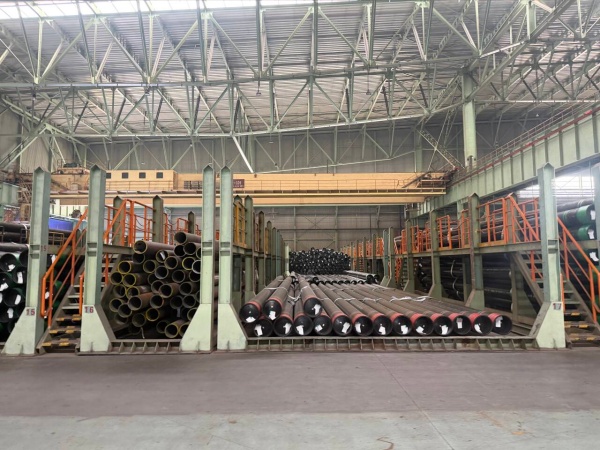
Pipes stored outdoors, placed directly on damp ground, or exposed to prolonged moisture may begin to corrode before installation.
3. How Does Mild Steel Rust?
Rusting is an electrochemical corrosion process rather than a simple reaction between iron and oxygen. When moisture is present on the steel surface, microscopic anodic and cathodic areas form naturally, allowing corrosion to occur.
3.1 Initial Oxidation
At the anodic area, iron atoms lose electrons and dissolve into the moisture as ferrous ions (Fe²⁺).
Fe → Fe²⁺ + 2e⁻
At the same time, dissolved oxygen accepts these electrons at the cathodic area, producing hydroxide ions (OH⁻).
This electrochemical reaction is the starting point of steel corrosion.
3.2 Formation of Iron Hydroxides
The ferrous ions combine with hydroxide ions to produce iron hydroxides, which are unstable corrosion products.
Continued oxidation gradually converts these compounds into ferric hydroxides, which eventually form hydrated iron oxide (rust).
3.3 Formation of Rust
The final corrosion product is hydrated iron oxide (Fe₂O₃·nH₂O), commonly known as red rust.
Unlike the protective oxide film that forms on stainless steel, rust is porous and loosely attached to the surface. Once it flakes away, fresh steel is exposed, allowing corrosion to continue.
4. Does Mild Steel Rust Faster Than Other Steels?
Yes. Compared with galvanized steel, stainless steel, and weathering steel, unprotected mild steel generally corrodes at a higher rate because it has no built-in corrosion protection mechanism.
|
Material
|
Corrosion Protection Mechanism
|
Typical Performance
|
|
Mild Steel
|
None
|
Rust develops once exposed to oxygen and moisture.
|
|
Galvanized Mild Steel
|
Zinc sacrificial coating
|
Zinc corrodes before the underlying steel, delaying rust formation.
|
|
Stainless Steel
|
Chromium passive film
|
A thin chromium oxide layer continuously protects the surface.
|
|
Weathering Steel
|
Stable oxide patina
|
Forms a dense rust layer that slows further corrosion under suitable conditions.
|
Despite its lower corrosion resistance, mild steel remains widely used because it offers an excellent balance of strength, weldability, availability, and cost for general engineering applications. For projects exposed to outdoor weather, moisture, or corrosive environments, hot-dip galvanized steel pipe is one of the most effective ways to improve corrosion resistance.
5. How to Prevent Mild Steel Pipe from Rusting
5.1 Hot-Dip Galvanizing
Hot-dip galvanizing protects mild steel pipe by forming a metallurgically bonded zinc layer over the steel surface. The zinc coating acts as both a physical barrier and a sacrificial layer, delaying corrosion even when minor surface damage occurs.
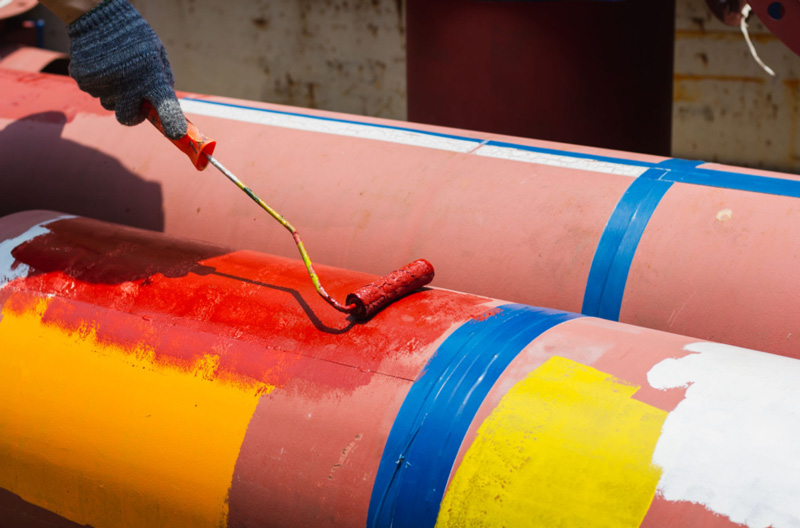
5.2 Protective Coatings
Common protective coatings include epoxy coatings, powder coatings, and other industrial coating systems selected according to the service environment. The appropriate coating depends on the service environment, operating temperature, and corrosion requirements.
5.3 Storage
Store pipes in a dry, well-ventilated location above ground and protect them from standing water during transportation and storage. Proper handling before installation helps reduce the risk of early surface corrosion.
5.4 Inspection
Regular inspection helps identify coating damage and early signs of corrosion so that maintenance can be carried out before significant metal loss occurs.
6. FAQs
Q1. Can rusted mild steel pipe still be used?
Light surface rust usually does not affect the structural integrity of the pipe and can often be removed before use. However, deep corrosion, pitting, or significant wall thickness loss may reduce the pipe's strength and should be evaluated before installation.
Q2. Does surface rust weaken mild steel pipe?
A thin layer of surface rust normally has little effect on mechanical properties. Corrosion becomes a concern when it progresses into pitting or causes measurable metal loss.
Q3. How quickly does mild steel rust outdoors?
The corrosion rate depends on the environment. Outdoor exposure, coastal conditions, high humidity, and industrial pollutants can all accelerate rust formation.
Q4. Can painted mild steel pipe still rust?
Yes. If the coating is scratched, damaged, or deteriorates over time, moisture can reach the underlying steel and corrosion may begin beneath the coating.
Q5. Can rust be removed from mild steel pipe?
Yes. Surface rust can usually be removed by mechanical cleaning, abrasive blasting, or chemical rust removal before applying a suitable protective coating.
Q6. Is galvanized mild steel pipe completely rust-proof?
No. Galvanizing greatly improves corrosion resistance, but the zinc coating gradually wears away over time, especially in highly corrosive environments. Once the zinc layer is consumed, the underlying steel may begin to rust.
7. Related Guides
Continue reading the following guides to learn more about mild steel pipe properties, corrosion protection, and material selection.
- Mild Steel Pipe — Understand the properties, grades, specifications, and common applications of mild steel pipe.
- Difference Between Mild Steel Pipe and Carbon Steel Pipe — Learn how mild steel differs from carbon steel in composition, performance, and typical uses.
- Mild Steel Pipe vs. Black Steel Pipe — Compare material definition, surface finish, corrosion resistance, and applications.
- How to Extend the Service Life of Mild Steel Pipes — Explore practical methods to reduce corrosion and improve long-term durability.
- How to Prevent Corrosion on the Inner Wall of Mild Steel Pipe — Learn how to control internal corrosion in water, oil, and industrial piping systems.





 Eastern Steel Manufacturing Co.,Ltd not only improve product production and sales services, but also provide additional value-added services. As long as you need, we can complete your specific needs together.