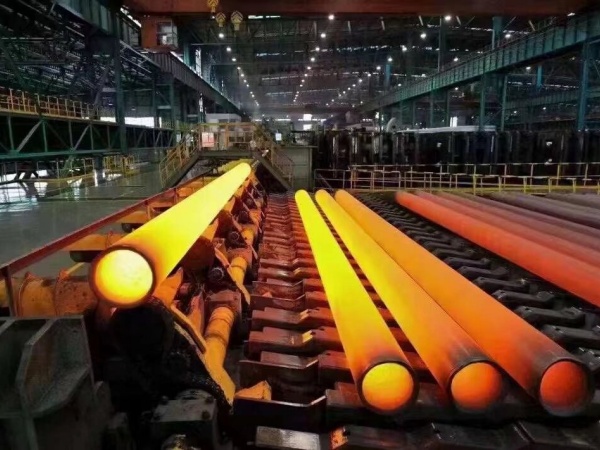
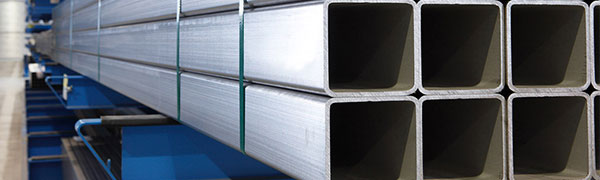
Square tube is a common structural material in industrial and construction
fields, and the choice of material directly affects the safety, durability, and
cost-effectiveness of a project. Different square tube materials vary
significantly in mechanical properties, corrosion resistance, and processing
technology. Therefore, a targeted selection must be made based on the specific
application scenario (such as machinery manufacturing, building framing, and
decoration engineering). In the fields of building engineering, machinery
manufacturing, energy equipment, and industrial support, square tubes are an
extremely common structural profile. For purchasing managers, engineers, and
project contractors, choosing the right square tube material not only
determines structural safety and service life but also directly impacts the
total project cost, maintenance expenses, and delivery cycle.
Based on international engineering practice
and export project experience, the mainstream square tube materials mainly fall
into three categories: carbon steel square tubes, stainless steel square tubes,
and aluminum alloy square tubes. This article will systematically compare them
from the dimensions of mechanical properties, corrosion resistance, processing
and installation, application scenarios, and overall cost-effectiveness to help
you quickly make a business decision that meets your project needs.
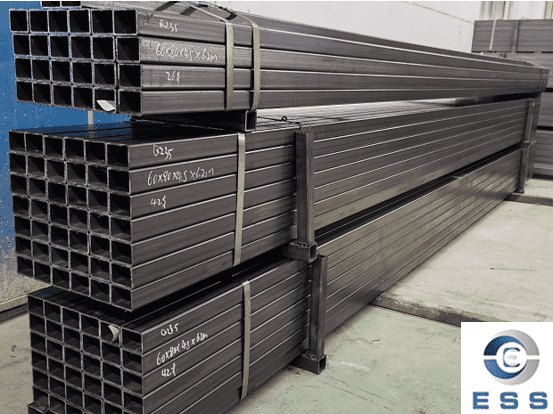
Carbon Steel Square Tube: The Most
Cost-Effective Structural Choice
Carbon steel square tube is currently the
most widely used type of material. Its main components are iron and carbon.
Based on carbon content and strength, it can be divided into ordinary carbon
steel and high-strength carbon steel. Common grades include EN S235/S355.
1. Advantages of Carbon Steel Square Tube
High strength (S355 tensile strength
reaches 470-630MPa), good rigidity, low price (approximately 3000-5000
RMB/ton), easy to weld and cut, and highly convenient to process.
2. Disadvantages of Carbon Steel Square Tube
Poor corrosion resistance; prone to rusting in humid, outdoor, or
chemically corrosive environments, requiring additional anti-corrosion
treatment; heavier than aluminum alloys and plastics (density approximately
7.85g/cm³).
3. Applicable Scenarios for Carbon Steel
Square Tube
Building structures: such as columns/beams
of steel structure factories, scaffolding, curtain wall support frames, and
stair handrail skeletons.
Mechanical Manufacturing: Such as equipment
bases, conveyor frames, machine tool supports (relying on their high strength
and low cost).
Civilian Applications: Such as clothes rack
supports, security window frames (requiring painting or galvanizing for
corrosion protection).
If your project prioritizes load-bearing
capacity and cost control, and environmental corrosion risks are manageable,
carbon steel square tube remains the optimal solution.
Stainless Steel Square Tube: The First
Choice for Corrosion Resistance and Quality Projects
The core advantage of stainless steel square
tube is its corrosion resistance, primarily due to the oxide film formed by
chromium (Cr≥12%) and nickel (Ni) elements in the
material, isolating it from external corrosion.
1. Core Performance of Stainless Steel Square
Tube (Comparison by Material)
304 Stainless Steel: Resistant to air,
water, and weak acids and alkalis (such as rainwater and tap water), not
resistant to strong salt spray (such as at the seaside), easy to weld and
polish.
316 Stainless Steel: Resistant to strong
corrosion (salt spray, seawater, chemical solutions), contains molybdenum (Mo)
to improve corrosion resistance, slightly less machinable than 304.
2. Advantages of Stainless Steel Square
Tube
Excellent corrosion resistance; service
life 2-3 times that of carbon steel square tubes.
High hygiene standards, meeting the
requirements of the food and pharmaceutical industries.
High-end appearance; brushed and
mirror-polished finishes are available.
Low maintenance costs; virtually no
post-contamination protection required.
3. Disadvantages of Stainless Steel Square
Tube
High procurement cost (typically 2-4 times
that of carbon steel square tubes).
High material density, hindering
lightweight design.
4. Applicable Scenarios for Stainless Steel
Square Tubes
304 Stainless Steel Square Tubes: Food
processing equipment (e.g., workbench frames), interior decoration (e.g.,
shopping mall handrails, ceiling joists), household kitchenware (e.g., range
hood brackets), general outdoor applications (non-coastal areas).
316 Stainless Steel Square Tubes: Coastal
construction (e.g., seaside curtain walls, railings), chemical pipeline
supports, marine aquaculture equipment, medical equipment (e.g., operating room
instrument frames, requiring resistance to disinfectant solutions).
Aluminum Alloy Square Tube: A Preferred
Material for Lightweight Design
Aluminum alloy square tubes use aluminum as
the base material, with added elements such as magnesium (Mg) and silicon (Si).
They combine lightweight design with moderate strength, making them an
important alternative to carbon steel square tubes.
1. Advantages of Aluminum Alloy Square
Tube
Lightweight (density approximately 2.7g/cm³, only 1/3 that of carbon steel), good corrosion resistance (an
oxide film naturally forms on the aluminum surface, requiring no additional
treatment), high thermal conductivity, and aesthetically pleasing appearance
(can be anodized to various colors).
2. Disadvantages of Aluminum Alloy Square
Tube
Lower strength than carbon steel (6061
tensile strength approximately 276MPa), poorer rigidity (easily deformed),
higher price than carbon steel (approximately 10,000-18,000 RMB/ton), and
require specialized aluminum welding technology for welding.
3. Applicable Scenarios for Aluminum Alloy
Square Tube
Applications requiring lightweight
materials: such as aluminum alloy door and window frames, bicycle frames,
luggage handles, and drone frames (relying on their low density).
Decorative and Civil Applications: Such as
interior partitions, advertising light box frames, exhibition display racks
(can be anodized to black, silver, etc., combining aesthetics and corrosion
resistance).
Heat Dissipation Needs: Such as equipment
heat dissipation brackets, automotive cooling system components (utilizing
their high thermal conductivity).
How to Quickly Select Square Tube
Material?
Large Span, Heavy-Duty Structures – Carbon Steel Square Tube (Q355)
Outdoor but Limited Budget – Galvanized Carbon Steel Square Tube
Coastal/Chemical Environments – 316 Stainless Steel Square Tube
Food/Medical Engineering – 304 Stainless Steel Square Tube
Lightweight and Aesthetically Pleasing – Aluminum Alloy Square Tube
FAQ
1. How to determine if square tubes meet
international engineering standards?
Check the material certificate (MTC/EN10204
3.1), dimensional tolerances, weld quality, and request third-party testing
(such as SGS, BV).
2. What are the supply guarantee measures
for square tubes in large-scale engineering projects?
Reputable manufacturers establish dedicated
supply channels, assign project specialists to track shipments, and maintain a
safety stock of at least 30% of the contracted volume to ensure timely supply.
3. How to prevent deformation or corrosion
during the export transportation of square tubes?
Use steel strapping and wooden padding for
isolation. Add moisture-proof materials inside the container. If necessary,
apply rust-preventive oil or VCI packaging.
Read more: The
Benefits of Using Square Tube in Construction





 Eastern Steel Manufacturing Co.,Ltd not only improve product production and sales services, but also provide additional value-added services. As long as you need, we can complete your specific needs together.