1. Black Steel Pipe Life Expectancy Explained
The life expectancy of black steel pipe typically ranges from 15 to 25 years, but this is not a fixed value. In practice, service life can vary significantly depending on installation conditions, exposure environment, and maintenance practices.
In controlled indoor environments—such as gas distribution systems or dry mechanical applications—black steel pipe can often exceed 20 years of service with minimal degradation. However, when exposed to moisture, outdoor weathering, or corrosive conditions, the lifespan may be reduced to less than 10–15 years.
For engineering and procurement decisions, it is therefore more useful to evaluate lifespan based on specific service conditions rather than relying on a single average number.
2. Typical Life Expectancy of Black Steel Pipe Under Different Conditions
To better understand how service conditions affect durability, the typical lifespan of black steel pipe can be broken down as follows:
|
Service Condition
|
Typical Lifespan
|
Notes
|
|
Indoor (dry, controlled environment)
|
20–30 years
|
Minimal corrosion, commonly used in gas systems
|
|
Indoor (humid conditions)
|
15–20 years
|
Risk of surface rust over time
|
|
Outdoor (general exposure)
|
10–15 years
|
Affected by rain, temperature changes
|
|
Corrosive environments (coastal/chemical)
|
<10 years
|
Accelerated corrosion without protection
|
In practice, the service life of black steel pipe is rarely limited by material strength, but rather by corrosion conditions and protection strategy.
3. Factors Affecting the Life Expectancy of Black Steel Pipe
In practical applications, not all factors contribute equally to the life expectancy of black steel pipe. The overall service life is primarily determined by environmental conditions, followed by corrosion protection, with maintenance acting as a supporting safeguard.
Factor 1: Environmental Conditions (Primary Driver)
In most cases, the installation environment is the dominant factor affecting lifespan.
Because black steel pipe has no protective coating, it reacts directly with oxygen and moisture. In dry indoor conditions (for example, relative humidity below 50%), corrosion develops very slowly and may remain negligible for many years.
However, in more aggressive environments—such as coastal areas with salt exposure or industrial zones with chemical pollutants—the corrosion rate can increase significantly, often reducing service life far below typical expectations.
Temperature fluctuations can further accelerate degradation. Repeated condensation (“sweating”) on the pipe surface may lead to localized corrosion, even when the overall environment does not appear highly aggressive.
Factor 2: Corrosion Protection (Key Control Measure)
Since black steel pipe is uncoated, its actual lifespan is closely tied to the effectiveness of external protection.
In practical terms, the difference between a treated and untreated pipe can be substantial. For example, a pipe installed in a damp environment without protection may only last around 10 years, while the same pipe with proper coating or painting can achieve more than 20–25 years of service.
In closed systems, such as chilled water or industrial loops, the use of corrosion inhibitors can also play a critical role in slowing internal degradation.
Factor 3: Inspection and Maintenance (Supporting Factor)
Inspection and maintenance help extend service life by identifying early-stage issues before they develop into system failures.
In many cases, corrosion begins at vulnerable locations such as joints, threads, or areas affected during installation. Mechanical damage—such as scratches or deformation—can also act as starting points for localized rust.
Timely inspection and minor repairs at these points can significantly reduce the risk of leakage or premature replacement.
Practical Insight
In engineering practice, the life expectancy of black steel pipe is rarely limited by its mechanical strength. Instead, it is primarily governed by corrosion conditions and how effectively the system is protected and maintained.
4. FAQs
Q1. What is the realistic service life of black steel pipe?
The service life depends heavily on application and environment. In controlled indoor systems—such as gas distribution—black steel pipe can last several decades. In outdoor or unprotected industrial environments, a more typical range is 15 to 25 years. If moisture is continuously trapped against the pipe (for example, under insulation), failure may occur in less than 10 years.
Q2. Does black steel pipe rust easily?
Yes. Black steel pipe has no protective coating and relies only on a thin oxide layer from manufacturing. Once moisture reaches the surface, corrosion begins. In high-humidity environments, surface rust can develop relatively quickly if no protection is applied.
Q3. Can You Use Black Steel Pipe Outside Without Protection?
It can be used outdoors, but only with proper protection. Uncoated black steel exposed to rain and humidity tends to corrode rapidly. In practice, protective coatings or wrapping are required. For long-term outdoor reliability, galvanized steel is often the preferred choice.
Q4. What is the biggest threat to its lifespan?
External corrosion is typically the main cause of failure. While pressure and mechanical strength are important, most black steel pipes degrade from the outside due to moisture, salt exposure, or repeated condensation.
Q5. Is black steel pipe suitable for water systems?
For potable water systems, it is generally not recommended due to the risk of internal corrosion and water quality issues. In some closed or low-oxygen systems, such as fire protection networks, it can still perform effectively under controlled conditions.
Q6. How can you extend the life of black steel pipe?
The most effective approach is to control moisture exposure. This includes applying protective coatings, sealing vulnerable areas such as threads, and using corrosion inhibitors in closed systems where applicable. Proper design and installation play a key role in long-term performance.
Q7. Which is better: black steel or galvanized steel pipe?
The choice depends on the application. Black steel pipe is widely used in gas systems due to its strength and cost efficiency. Galvanized steel pipe, with its zinc coating, offers better corrosion resistance and is more suitable for outdoor or water-related applications.
Q8. Does pipe thickness (schedule) affect lifespan?
Wall thickness can influence lifespan by providing additional corrosion allowance. Thicker pipes do not prevent corrosion, but they can extend service life by delaying the point at which material loss leads to leakage.
5. Conclusion
The life expectancy of black steel pipe typically falls within 15–25 years, but the actual result depends mainly on environment and corrosion control.
It performs reliably in dry, controlled systems, but in outdoor or humid conditions, proper protection—or alternative materials like galvanized steel—should be considered. For a more detailed breakdown of applications, advantages, and limitations, see our full black steel pipe guide.
In practice, selecting the right material for the right environment is more important than the material itself. For specific projects, evaluating operating conditions early can help avoid premature failure and unnecessary cost.
Read more: Seamless black steel pipe VS. Black iron pipe or Seamless black steel pipe schedule 40



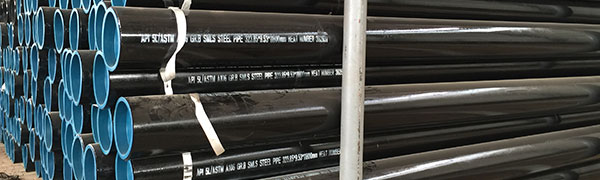


 Eastern Steel Manufacturing Co.,Ltd not only improve product production and sales services, but also provide additional value-added services. As long as you need, we can complete your specific needs together.