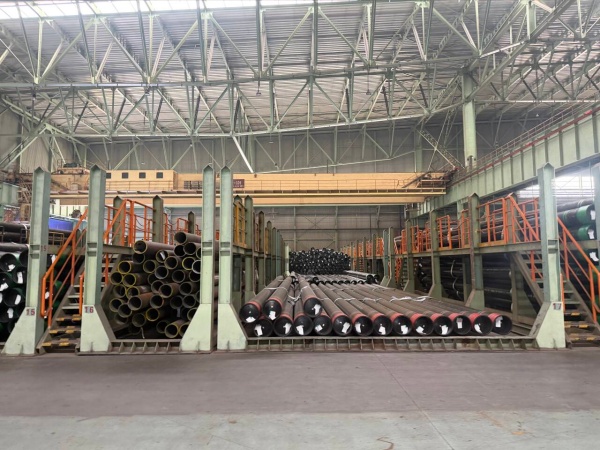
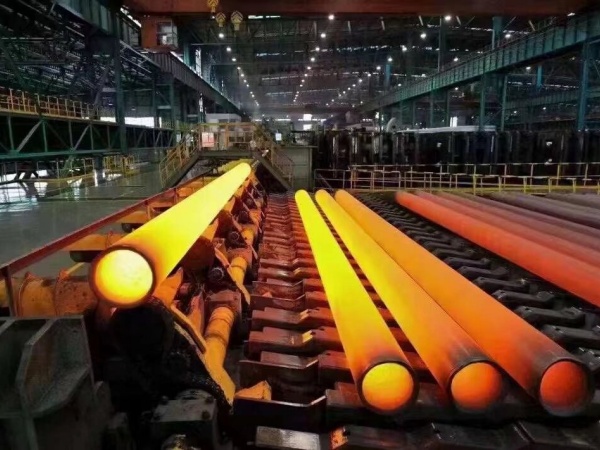
Drill pipe is a steel pipe with a thread at the end, used to connect the surface equipment of the drilling rig to the drilling and grinding equipment or bottom hole device at the bottom of the drilling well. Generally, seamless pipes are used.The purpose of the drill pipe is to transport drilling mud to the drill bit and to raise, lower or rotate the bottom hole device together with the drill bit. Drill pipe must be able to withstand tremendous internal and external pressure, twisting, bending and vibration. In the process of oil and gas extraction and refining, drill pipe can be used multiple times. So how do drill pipes connect? Common connection methods of drill pipe are threaded connection, clamp connection, hook connection, friction welding connection, threaded bonded male and female connectors and welded male and female connectors.
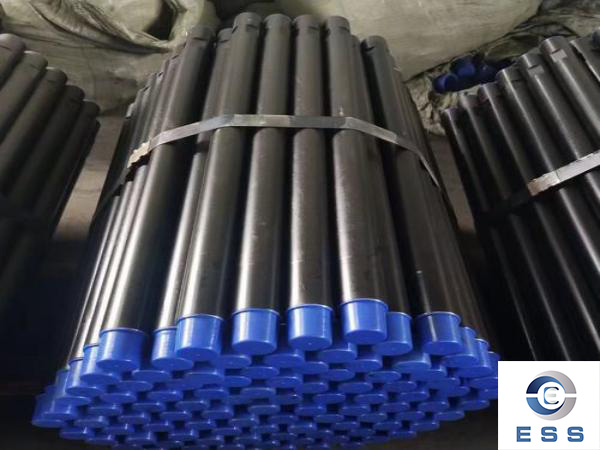
Drill Pipe Structure
A complete drill pipe consists of three
parts:
Drill Pipe Body: The middle section,
typically a thin-walled steel tube.
Joint: The thickened ends with threads.
Welded Zone: The area where the joint is
butt-welded to the drill pipe body.
Drill Pipe Classification
Drill pipes are classified into three
types: kelly, standard drill pipe, and heavy weight drill pipe.
The connection sequence is: angular drill
pipe (1 piece) + standard drill pipe (n pieces, determined according to well
depth) + heavy-duty drill pipe (n pieces, determined according to the drill
string assembly design).
1. Kelly
Connects the rotary table to the drill
string, transmitting torque.
2. Standard Drill Pipe
Constitutes the main drill string,
transmitting torque and drilling mud.
Transitions stress, reducing stress
concentration.
Drill Pipe Connection Methods
1. Threaded Connection
Threaded connection is one of the most
common ways of connecting drill pipes. It threads two drill pipes tightly
together and tightens them by turning. Threaded connections are different from
ordinary threads.
The thread shape and size are more precise
to ensure a secure connection and reduce leakage. Threaded connections can be
subdivided into two types: internal threads and external threads.
Internal threaded connections are generally
used to connect the upper part of the drill pipe, and external threads are
generally used to connect the lower part of the drill pipe.
Common threaded connections include API
threads, IF threads, and REG rotary drill pipe threads.
|
Thread Type
|
Standard
|
Features
|
Applicable Scenarios
|
|
API REG
|
API 7-2
|
Tapered thread, high load-bearing
capacity
|
Conventional oil and gas wells
|
|
API IF
|
API 7-2
|
Internal flat thread, low fluid
resistance
|
Deep wells, directional wells
|
|
API FH
|
API 7-2
|
Full-bore thread, high flow rate
|
High-displacement drilling
|
|
NC Series
|
API 7-2
|
High torque, high sealing
|
Deep wells, ultra-deep wells
|
|
XT Series
|
Non-API
|
High torque, long life
|
High-end drilling projects
|
Advantages:
The advantages of threaded connections are
tight and convenient connections, simple structure, and wide application range.
It can connect various types of drill pipes and pipe strings, and is suitable
for use in drilling wells with smaller depths and smaller diameters.
Disadvantages:
The disadvantage of threaded connections is
that the tightening process is cumbersome and requires corresponding tools, and
the connection process is prone to wear and fatigue and has a relatively short
service life.
2. Locking Connection/Clamp Connection
The locking connection uses a metal clamp
with high-strength material properties to connect two pipes. The pipes are
fixed together by compressing the clamp to achieve the connection. Due to its
high connection strength, the locking connection has extremely high Robustness
and reliability.
Locking connections are suitable for large
diameter drill pipes and ultra-deep wells. Locking connections come in various
designs, but the most common is the cylinder-shaped clamp, which consists of
several lugs that allow the tightness of the connection to be adjusted as
needed.
Advantages:
The advantages of the locking connection
are fast, simple, stable, high reliability, easy to carry and use, and long
life.
Disadvantages:
The disadvantage of the clamp connection is
that the length of the connected pipe is longer, resulting in shallower depth
and smaller diameter.
There are problems with use in drilling
operations. In addition, locking connections have poorer sealing properties
than threaded connections.
3. Hook Connection
Hook head connection is a way to connect drill pipes together through hook heads. It is a common quick connection method and is suitable for quick disassembly and installation of drill pipes.
Advantages:
The advantage of the hook head connection
is that it is quick and convenient to connect and disassemble.
Disadvantages:
The disadvantage of the hook head
connection is that the connection strength is relatively small and is not
suitable for working environments that bear large tensile or compressive
forces.
4. Triangular Pyramid Type High-efficiency Friction Welding Connection
This connection method uses a triangular pyramid-shaped rod body and connects the drill pipe joints together through friction welding. This method embodies the characteristics of energy saving and high efficiency.
5. Threaded Bonded Male and Female Connectors and Welded Male and Female Connectors
Both methods are to weld or bond male and female thread joints at both ends of the drill pipe body to achieve the connection of the drill pipe.
How to Choose the Appropriate Drill Pipe
Connection Method?
When choosing a drill pipe connection
method, the following should be considered comprehensively:
Well depth and well type
(vertical/directional/horizontal well);
Torque and tensile load;
Mud discharge and pressure;
Compliance with API/ISO standards;
Maintenance and replacement costs.
In the oil and gas drilling field, API
standard threaded connections remain the irreplaceable preferred solution.
FAQ
1. Which drill pipe connection method is
the most reliable?
Threaded connections are currently the most
commonly used, mature, and reliable drill pipe connection method in oil and gas
drilling, especially API REG, IF, FH, and NC series threads that conform to API
7-2/API
5DP standards, which are widely used in conventional wells, deep wells,
and ultra-deep wells.
2. What is the difference between API drill
pipe threads and ordinary industrial threads?
API drill pipe threads are high-precision
tapered load-bearing threads, offering the following advantages compared to
ordinary industrial threads:
Higher torque capacity;
Better airtightness and hydraulic
tightness;
Specialized tooth profile design reducing
stress concentration;
Strict tolerance and inspection
requirements;
Ordinary industrial threads are not
suitable for drilling conditions.
3. Why are NC (Numbered Connection) drill
pipe connections more suitable for deep and ultra-deep wells?
NC threads possess:
Higher torque resistance;
Longer engagement length;
Better fatigue life.
Therefore, they are more widely used in
deep wells, horizontal wells, and high-speed drilling.
4. What are the most common failure modes
of drill pipe threads?
Galling: Scratching of the thread surface,
metal adhesion.
Wear: Blunt tooth profile, reduced thread
height.
Slippage: Reduced load-bearing capacity,
inability to lock.
Seal failure: Mud leakage at the joint
shoulder.
Fatigue cracking: Fracture at the thread
root or joint.
Summarize
Drill pipe is a very important tool in the drilling operation. The stability and reliability of its connection method are crucial to the safety and efficiency of the drilling operation. Threaded connection, locking connection and hook head connection are common drill pipe connection methods. When selecting a connection method, it is necessary to comprehensively consider factors such as drilling depth, compression force, and tensile force to select the most suitable method.
Read more: How Many Types of Drill Pipe Threads Are There? or API Drill Pipe Thread Types



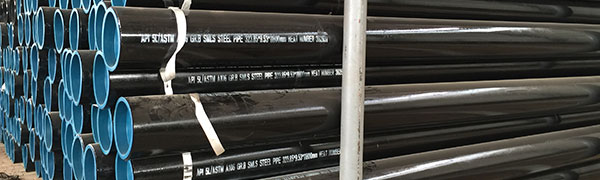



 Eastern Steel Manufacturing Co.,Ltd not only improve product production and sales services, but also provide additional value-added services. As long as you need, we can complete your specific needs together.