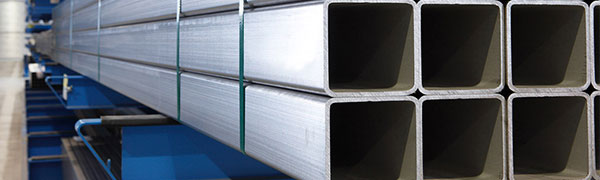
RHS steel (Rectangular tube) is a type of
hollow, long steel tube, also known as flat tube, flat square tube, or
square-flat tube. With the same bending and torsional strength, rectangular
tubes are lighter, making them widely used in the manufacture of mechanical
parts and engineering structures.
ASTM A500 is a standard developed by ASTM
International, covering cold-formed welded and seamless carbon steel structural
tubes.
ASTM A500 rectangular tube specifically
refers to hollow structural steel profiles with rectangular cross-sections
conforming to this standard. ASTM A500 Class B rectangular tubes are the most
commonly used and widely adopted standard rectangular hollow structural steel
profiles in the construction and structural engineering fields in North America
and internationally.
ASTM A500 RHS Steel Advantages
Excellent weldability;
Good machinability;
Cold working capability;
Aesthetically pleasing.
A500 RHS Steel Properties
A500 carbon steel structural tubes are
manufactured using only materials conforming to carbon steel standards. The
chemical composition of A500 is primarily iron, with added carbon, manganese,
phosphorus, sulfur, and copper.
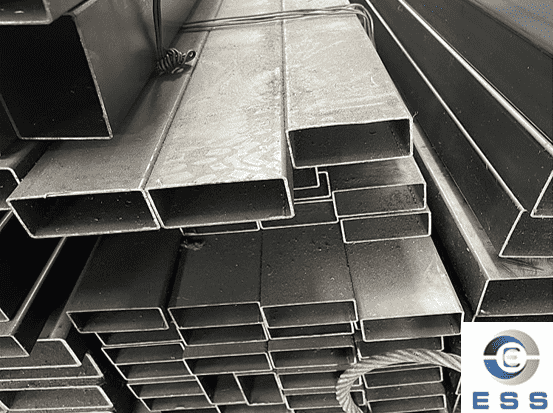
Common Size Ranges for A500 RHS Steel
Long side: 2 inches to 20 inches or longer.
Wall thickness: 0.125 inches to 0.5 inches
or thicker.
A500 RHS Steel Grades and Mechanical
Properties
The ASTM A500 standard includes four
grades: A, B, C, and D. Each grade has different strength requirements.
Grades B and C are the most commonly used
grades for rectangular tubes.
The minimum yield strength for grade B is
46,000 psi.
Grade C has a higher yield strength of
50,000 psi.
These grades ensure that the tubing can
withstand loads, pressure, and resist deformation during use.
The excellent mechanical properties of ASTM
A500 rectangular tubing make it ideal for both static and dynamic structures.
Chemical Requirements of ASTM A500 RHS Steel
|
Element
|
Grades A, B and D
|
Grace C
|
|
|
Heat
Analysis
|
Product
Analysis
|
Heat
Analysis
|
Product
Analysis
|
|
Carbon, max
|
0.26
|
0.30
|
0.23
|
0.27
|
|
Manganese, max
|
...
|
...
|
1.35
|
1.40
|
|
Phosphorus, max
|
0.035
|
0.045
|
0.035
|
0.045
|
|
Sulfur, max
|
0.035
|
0.045
|
0.035
|
0.045
|
|
Copper, when copper steel is
specified, min
|
0.20
|
0.18
|
0.20
|
0.18
|
Tensile Requirements of ASTM A500 RHS Steel
|
|
Grade A
|
Grade B
|
Grade C
|
Grade D
|
|
Tensile strength, mn, ps (MPa)
|
45 000
(310)
|
58 000
(400)
|
62 00
(427)
|
58 000
(400)
|
|
Yield strength, mn, psi (MPa)
|
39 000
(269)
|
46 000
(317)
|
50 000
(345)
|
36 000
(250)
|
|
Elongation in 2 in. (50.8 mm), min, %A
|
25B
|
23C
|
21D
|
23C
|
A500 Outside Dimensional Tolerances for RHS
Steel
There are multiple considerations that must
be accounted for when determining the outside dimensional tolerances for RHS
steel. The chart below and the following attributes describes the exact outside
dimensional tolerances for A500 carbon steel.
|
Outside Large Flat Dimension, in. (mm)
|
Large Flat Dimension Tolerance, A plus
and minus, in. (mm)
|
|
2½ (63.5) or under
|
0.020 (0.51)
|
|
Over 2½ to 3½ (63.5 to 88.9), incl
|
0.025 (0.64)
|
|
Over 3½ to 5½, inc
|
0.030 (0.76)
|
|
Over 5½ (139.7)
|
0.01 times large flat dimension
|
Twist Tolerances for RHS Steel
|
Specified Dimension of Longest Side,
in. (mm)
|
Maximum Twist in the First 3 ft (1 m)
and in each additional 3 ft
|
|
|
in.
|
mm
|
|
1½ (38.1) and under
|
0.050
|
1.39
|
|
Over 1½ to 2½ (38.1 to 63.5),incl
|
0.062
|
1.72
|
|
Over 2½ to 4 (63.5 to 101.6), incl
|
0.075
|
2.09
|
|
Over 4 to 6 (101.6 to 152.4), incl
|
0.087
|
2.42
|
|
Over 6 to 8 (152.4 to 203.2), incl
|
0.100
|
2.78
|
|
Over 8 (203)
|
0.112
|
3.11
|
ASTM A500 vs Other Structural Tubing
Standards
ASTM A500 is often compared to the
following standards:
ASTM A513: Used for mechanical tubing, not
structural tubing.
ASTM A36: Used for structural profiles such
as I-beams, not tubing.
EN
10210: European standard for thermoformed
structural tubing.
In North America, ASTM A500 remains the
preferred standard for welded and seamless structural tubing.
Applications of ASTM A500 RHS Steel
ASTM A500 rectangular tubing is used in
numerous industries due to its high strength, good formability, and wide range
of applications:
1. Construction Industry
It is commonly found in commercial
buildings, warehouses, and residential buildings. Its hollow structure
effectively reduces weight while maintaining structural performance.
2. Infrastructure Projects
RHS steel is used in bridges, road signs,
guardrails, and urban railings. Its reliability under dynamic stress is
critical for safety.
3. Equipment Framing
This tubing is ideal for manufacturing
frames for equipment, agricultural machinery, and transportation systems.
4. Furniture and Design
Modern furniture manufacturers use ASTM
A500 tubing for both aesthetic and practical considerations. Its clean lines
and strength make it ideal for industrial design.
FAQ
1. How strong is RHS steel?
RHS steel is very strong. Due to its unique
shape, rectangular tubing distributes stress evenly when subjected to external
forces, thus improving its overall strength.
Compared to traditional CHS steel,
RHS steel has a more stable cross-sectional shape, effectively resisting
external pressure and bending forces.
2. Is RHS steel stronger than SHS
steel?
RHS steel, due to its rectangular shape, is
generally stronger than square tubes (SHS steel).





 Eastern Steel Manufacturing Co.,Ltd not only improve product production and sales services, but also provide additional value-added services. As long as you need, we can complete your specific needs together.