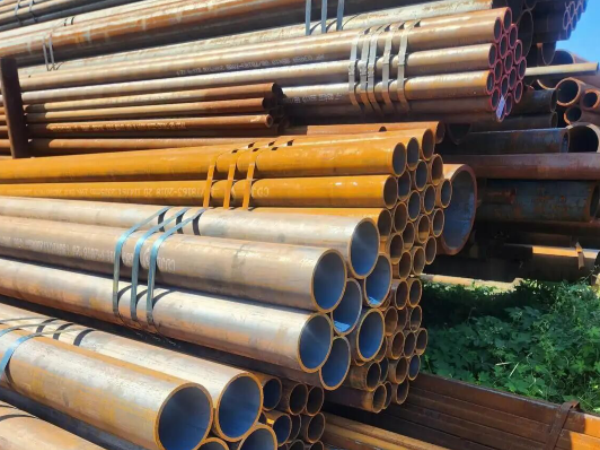
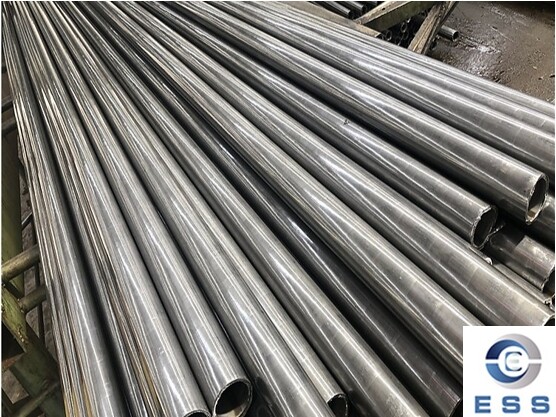
Cold drawn precision
tube, also known as cold drawn seamless
steel pipe, refers to seamless steel tube with high precision, high finish
and high strength produced by cold drawing process at room temperature. Its
inner and outer wall dimensional accuracy is high and the finish is good. It is
a high-quality and high-performance steel tube product. Cold drawing can
significantly improve the dimensional accuracy, surface quality and mechanical
properties of the pipe, and is widely used in fields requiring precise
dimensions and high performance.
Cold-drawn Precision Tubes Classification
Cold drawn precision steel tubes include
precision seamless steel tubes, precision hydraulic seamless steel tubes, cold
rolled precision seamless steel tubes, high precision seamless steel tubes and
precision bright seamless steel tubes.
Cold-drawn Precision Tubes Properties
1. High precision
Cold drawn precision steel tubes have high
dimensional accuracy, which can ensure accurate matching during manufacturing
and installation.
2. High strength
After cold drawing, the strength and
toughness of the steel tube are improved, enabling it to withstand greater
pressure and load.
3. Good corrosion resistance
Cold-drawn precision steel tubes are
usually made of high-quality steel, with good corrosion resistance, and can
resist erosion by corrosive media such as groundwater and chemicals in the
soil.
4. No oxide layer on the inner and outer
walls
The cold drawing process ensures that the
inner and outer walls of the steel tube are clean and free of oxide layer,
thereby reducing the resistance of the fluid in the pipeline.
Manufacturing Process of Cold-drawn
Precision Tubes
The manufacturing process of cold-drawn
precision tubes mainly includes the following steps:
1. Preparation stage
Select suitable metal materials and cut and
clean them according to requirements.
2. Pickling stage
The material is pickled to remove oxide
scale and impurities on the metal surface.
3. Rust removal stage
The metal material after pickling is
rust-removed to ensure the smoothness of the metal surface.
4. Coating stage
The metal material after rust removal is
coated to increase the hardness and wear resistance of the metal.
5. Pressing stage
The metal material is placed in a cold
drawing machine for pressing to deform the metal material into a billet.
6. Mold making stage
According to the specifications and
requirements of cold-drawn precision tubes, make the corresponding molds.
7. Cold drawing stage
Put the steel billet into the cold drawing
machine, and gradually thin it by stretching and rolling to form a cold-drawn
tube.
8. Heat treatment stage
The tube is annealed or normalized to
improve its mechanical properties and internal structure.
9. Tube
cutting and trimming stage
The tube is cut and trimmed as required to
meet the standards and specifications.
10. Inspection and quality control stage
The tube is inspected, including
appearance, size, chemical composition, physical properties, etc., to ensure
that its quality meets the requirements.
11. Packaging and transportation stage
The tube is packaged
and marked for easy storage and transportation.
Dimensional Tolerance Standards for Cold
Drawn Precision Tubes
The dimensional tolerance standards for
cold drawn precision tubes are mainly based on GB/T 3639, specifically as
follows:
1. Outer diameter tolerance
The tolerance varies depending on the outer
diameter. For example, the tolerance is ±0.10mm for an
outer diameter of 4mm; ±0.15mm for an outer diameter of
32mm; and ±0.45mm for an outer diameter of 100mm.
2. Inner diameter tolerance
The inner diameter tolerance varies
depending on the outer diameter and wall thickness. For example, the inner
diameter tolerance is ±0.20mm for an outer diameter of
10mm and a wall thickness of 2mm.
3. Wall thickness tolerance
The wall thickness tolerance is ±10% (minimum ±0.12mm). For example, the
tolerance is ±0.12mm for a wall thickness of 2mm; and ±0.5mm for a wall thickness of 5mm.
Cold Drawn Precision Tubes Specifications
1. Outer diameter
Cold drawn precision tubes come in various
outer diameter specifications, typically ranging from a few millimeters to
several hundred millimeters.
|
Outer Diameter Range (mm)
|
Typical Application Scenarios
|
|
6 – 20
|
Precision machinery, instruments,
automotive parts
|
|
20 – 50
|
Hydraulic hoses, mechanical structural
components
|
|
50 – 200
|
Engineering machinery, equipment support,
structural tubes
|
|
>200(Minority)
|
Customized mechanical structural
applications
|
2. Wall thickness
Wall thickness is also an important
specification parameter for cold drawn precision tubes. The choice of wall
thickness depends on the application scenario and pressure requirements of the
steel tube.
|
Wall Thickness Range (mm)
|
Application Characteristics
|
|
0.5 – 2.0
|
Lightweight, low-pressure systems,
space-constrained structures
|
|
2.0 – 5.0
|
Conventional hydraulics, machinery
manufacturing (mainstream)
|
|
5.0 – 10.0+
|
High-pressure systems, heavy-duty
machinery
|
3. Length
The length of cold drawn precision tubes
are usually determined based on user needs and processing capabilities.
Fixed lengths: 3 m / 6 m / 9 m / 12 m
Variable lengths: 2 – 12 m
High-end projects: ±5mm fixed-length cutting available
Cold drawn precision tubes can be delivered
in fixed lengths, effectively reducing secondary processing costs and improving
assembly efficiency.
Common Standards for Cold Drawn
Precision Tubes
Common standards include:
GB/T 3639 – Chinese
standard for cold-drawn/cold-rolled precision seamless steel tubes
EN 10305-1 / EN 10305-4 – European standard for precision steel tubes
ASTM A519 – American standard for seamless steel tubes for machinery
DIN 2391– German
standard for seamless precision steel tubes
Cold Drawn Precision Tube Application
Cold-drawn precision steel tubes are widely
used in many fields, such as automobile manufacturing, oil and gas industry,
construction industry, power industry and machinery manufacturing industry. In
these fields, cold-drawn precision steel tubes are used to manufacture
automotive parts, pipelines, oil well pipes, building supports, telephone poles
and various mechanical parts.
Key Points for Selecting Cold Drawn
Precision Tubes
1. Selection based on the usage environment
Different usage environments have different
performance requirements for cold drawn precision tubes.
For use in humid or corrosive environments,
steel tubes with good corrosion resistance should be selected, such as those
with galvanized or chrome-plated surface treatments.
In high-temperature environments,
cold-drawn precision tubes made of alloy steel with high-temperature resistance
are required to ensure that the steel tubes do not deform or degrade in
performance at high temperatures.
2. Selection based on pressure bearing
When selecting cold-drawn precision tubes,
their pressure bearing capacity must be considered.
For applications requiring high pressure,
steel tubes with thicker walls and higher material strength should be selected.
Relevant standards and materials can be
consulted to understand the allowable pressure range of steel tubes of
different specifications and materials, thereby ensuring the safe and reliable
operation of the selected steel tubes.
3. Selection based on precision
requirements
The precision of cold-drawn precision tubes
includes outer diameter tolerance, wall thickness tolerance, and straightness.
For applications requiring high precision,
such as precision machinery and aerospace, steel tubes with higher precision
grades must be selected.
Generally, higher precision grades increase
the processing difficulty and cost of the steel tubes; therefore, the precision
grade should be selected appropriately based on actual needs.
4. Selection based on connection method
The connection method of the steel tubes is
also a factor to consider when selecting them.
Common connection methods include welding,
threaded connections, and flange connections. Different connection methods have
different requirements for the shape and size of the steel pipe ends.
For example, when using threaded
connections, it is necessary to ensure that the thread accuracy and dimensions
of the steel pipe meet the standard requirements; when using welded
connections, the weldability of the steel pipe must be considered.
FAQ
1. Are cold-drawn precision tubes suitable
for hydraulic systems?
Yes. Cold-drawn precision tubes are
commonly used materials for hydraulic cylinders and hydraulic lines for the
following reasons:
Stable inner and outer diameters;
Good inner surface quality, low fluid
resistance;
High pressure resistance, high reliability.
In high-end hydraulic applications,
cold-drawn precision tubes are often subjected to inner bore rolling or honing
treatment.
2. What are the common materials for
cold-drawn precision tubes?
Common materials include:
Carbon steel: 10#, 20#, E355, SAE 1026
Alloy steel: 42CrMo, 40Cr
Stainless steel: 304, 316L (special working
conditions)
Therefore, in scenarios with high
requirements for precision and assembly efficiency, cold-drawn precision tubes
have a cost advantage.



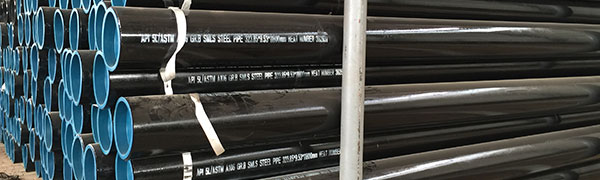


 Eastern Steel Manufacturing Co.,Ltd not only improve product production and sales services, but also provide additional value-added services. As long as you need, we can complete your specific needs together.