1. Is It Suitable for Outdoor Applications?
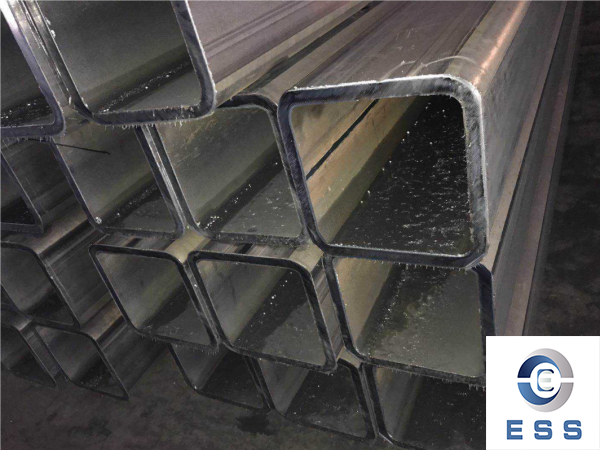
Yes. In many real projects, galvanized square tube is one of the best choices for outdoor steel structures because its zinc coating protects the steel from corrosion and significantly reduces long-term maintenance. For applications such as fences, frames, support structures, and exposed installations, it typically offers a much longer service life than untreated black steel.
2. Why It Performs Better Outdoors
2.1 Corrosion Resistance in Real Environments
In field applications, rust outdoors rarely develops evenly. It usually begins in areas exposed to wet–dry cycles, trapped dirt, scratches, and cut edges.
In contrast, ordinary steel relies entirely on an intact protective coating. Once that coating is damaged, corrosion can spread quickly.
Galvanized square tube, however, benefits from a dual protection mechanism: a physical zinc barrier and cathodic protection. Even if the surface is scratched or cut, the zinc layer can still slow down the spread of corrosion.
In real service conditions, the consumption rate of the zinc layer is closely related to how long the material is exposed to moisture. In engineering practice, this allows engineers to estimate remaining service life based on annual corrosion rates.
2.2 Reduced Maintenance Requirements
Unprotected steel typically requires rust removal and repainting every 2–3 years, and maintenance often depends on limited access windows.
By comparison, galvanized square tube used in standard outdoor environments can extend maintenance intervals to around 8–10 years, usually requiring attention only for localized mechanical damage.
In hard-to-reach installations—such as elevated structures, crossings, or rooftop systems—In many installations, this difference can directly determine whether a structure is practical and cost-effective to maintain.
2.3 More Stable Long-Term Performance
In ordinary steel, the reduction in load-bearing capacity is nonlinearly related to the depth of localized corrosion, meaning that even early-stage surface rust can be underestimated in practice.
Galvanized square tube, by contrast, keeps the base steel in a largely inactive corrosion state. As a result, its mechanical performance degrades at a much slower and more predictable rate compared with coating-based protection systems.
This stability is directly linked to the way the zinc coating is formed during the galvanizing process, which controls coating adhesion, thickness, and overall long-term corrosion resistance.
2.4 Better Suitability for On-Site Installation
During on-site installation, scratches and cut edges are almost unavoidable. When protection relies solely on a surface coating, these damages often become starting points for corrosion.
Galvanized square tube, however, can tolerate a certain level of surface damage. The surrounding zinc layer can still provide sacrificial protection to exposed steel within a small radius.
This makes construction sequencing, lifting operations, and joint detailing more forgiving, while also reducing the likelihood of rework caused by coating damage.
3. Galvanized vs Black Steel Square Tube
The key differences between galvanized and black steel square tubes lie in corrosion resistance, service life, and long-term maintenance cost.
3.1 Corrosion Resistance
The main advantage of galvanized square tube is its zinc coating. This layer not only acts as a physical barrier but also provides electrochemical (sacrificial) protection, helping prevent rust formation in humid or corrosive environments.
In contrast, black steel tubing has no protective coating. Once exposed to air and moisture, it begins to oxidize quickly. In outdoor environments, this difference becomes even more pronounced, especially in regions with high rainfall or humidity.
3.2 Lifespan in Outdoor Applications
Under the same operating conditions, galvanized square tube generally offers a significantly longer service life.
If left untreated, black steel square tube is highly dependent on environmental conditions, and its lifespan can vary widely. Even when protected with paint or other surface coatings, these systems require regular maintenance; otherwise, their protective performance gradually deteriorates over time.
By contrast, galvanized steel tubing benefits from continuous protection provided by the zinc layer.In most outdoor environments, it maintains stable performance over time, reducing the risk of corrosion-related replacement or structural failure.
3.3 Cost vs Maintenance
From a procurement perspective, black steel square tube has a lower upfront cost. However, this advantage is mainly short-term.
For long-term outdoor projects, engineers often consider galvanized square steel tube worth the higher initial investment because lifecycle costs are easier to control.
That difference becomes even more important when the structure is installed on roofs, high frames, or difficult-to-access areas.
3.4 Galvanized vs Painted Steel Protection
In some projects, black steel square tubes are protected by painting; however, painting and galvanizing are fundamentally different corrosion protection methods.
Paint protection relies on a surface coating to create a barrier. Once the coating is damaged during transportation, installation, or use, the steel is directly exposed to the environment, and its protective performance quickly deteriorates. In addition, coating aging, cracking, and peeling are also common issues.
Galvanizing, on the other hand, forms a metallic zinc layer on the steel surface. Even if the coating is locally scratched, the zinc layer can still provide a degree of ongoing protection.
Therefore, for applications with long-term exposure to outdoor environments, zinc-coated square tube are generally more reliable than painted steel.
4. How Long Does Galvanized Square Tube Last Outside?
In many real-world conditions, galvanized square tube can last 20–50 years outdoors, sometimes even longer. The actual lifespan depends mainly on the surrounding environment, coating thickness, and how the tube is used.
4.1 Normal Urban or Rural Environments
In standard city or inland rural conditions, galvanized square tube often lasts 30 years or more before serious corrosion becomes a concern. The zinc coating slowly weathers over time while continuing to protect the steel underneath.
4.2 Coastal or High-Humidity Areas
In coastal regions, tropical climates, or areas with constant moisture, salt and humidity can accelerate zinc consumption. Even so, galvanized square tube may still provide 15 to 25 years of service life, depending on exposure level and maintenance.
4.3 Industrial or Polluted Environments
Where airborne chemicals or industrial pollutants are present, corrosion rates may increase. In these conditions, expected life is often shorter, but galvanized steel still performs significantly better than untreated black steel.
4.4 Why It Still Matters
For outdoor fences, support frames, solar structures, and exposed equipment bases, a longer service life means fewer repairs, lower maintenance costs, and less frequent replacement. In many projects, paying more upfront for galvanized square tube can save money over the long run.
5. Common Outdoor Applications
Due to its strong corrosion resistance and structural reliability, galvanized square tube is widely used in various outdoor engineering projects, especially in applications exposed to long-term natural weathering.
Typical applications include, but are not limited to:
- Fencing, guardrails, and security barriers
- Agricultural greenhouses and support systems
- Outdoor equipment frames and structural supports
- Solar mounting and photovoltaic support systems
- External secondary structures in building construction
In these applications, materials must not only meet basic load-bearing requirements but also maintain stable performance under long-term exposure to wind, rain, and changing environmental conditions. As a result, corrosion resistance is often a primary factor in material selection.
6. FAQS
Q1. Does galvanized square tube rust over time?
Yes, it can corrode eventually, but the zinc coating greatly slows rust formation. Compared with untreated steel, the tube offers much better protection in outdoor environments.
Q2. How long can galvanized square tube last outdoors?
Galvanized square tube typically lasts 20 to 50 years outdoors, depending on the environment and zinc coating thickness.
Q3. Should I choose galvanized or black steel square tube for outside use?
In most real applications, yes. Galvanized square tube is preferred outdoors because it resists rust and requires less maintenance. Black steel is more commonly used indoors or where regular repainting is acceptable.
Q4. Can painted steel replace galvanized steel?
Painted steel can be used in some projects, but its protection depends entirely on the coating staying intact. If the paint cracks, chips, or peels, corrosion may begin quickly. Galvanized steel usually provides more reliable long-term outdoor protection.
Q5. Is galvanized square tube worth the higher initial cost?
For long-term outdoor structures such as fences, frames, and support systems, galvanized steel pipe is often selected as a more reliable material option due to its consistent corrosion resistance and reduced maintenance requirements.
7. Conclusion
If the structure will stay outdoors for years, galvanized square tube is usually the smarter choice. It resists rust, reduces maintenance, and helps avoid early replacement.
Although the upfront price is higher, the long-term cost is often lower. For fences, frames, supports, and exposed steelwork, it is an investment that pays back over time.
Read more: What is square tube(SHS)? or What is the difference between square tube and rectangular tube?





 Eastern Steel Manufacturing Co.,Ltd not only improve product production and sales services, but also provide additional value-added services. As long as you need, we can complete your specific needs together.