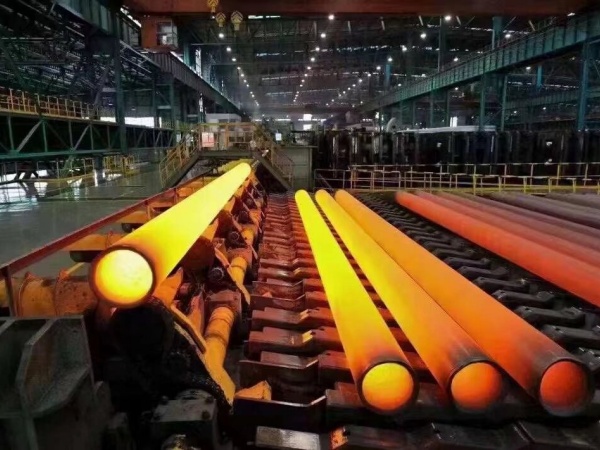
Below is a set of commonly used outer diameter and wall thickness combinations with theoretical weights (unit: kg/m), suitable for quick estimation of carbon steel seamless pipes.
Note: Calculated based on the standard formula:
W = 0.02466 × WT × (OD − WT), with steel density assumed as 7.85 g/cm³.
Common Seamless Steel Pipe Weight Table (kg/m)
|
OD (mm)
|
WT (mm)
|
Theoretical Weight (kg/m)
|
|
21.3
|
2.0
|
0.95
|
|
26.9
|
2.3
|
1.38
|
|
33.7
|
3.2
|
2.43
|
|
42.4
|
3.5
|
3.36
|
|
48.3
|
3.7
|
4.05
|
|
60.3
|
3.9
|
5.44
|
|
60.3
|
4.5
|
6.19
|
|
76.1
|
4.0
|
7.26
|
|
88.9
|
4.0
|
8.56
|
|
114.3
|
4.5
|
12.04
|
|
114.3
|
6.0
|
15.80
|
|
141.3
|
6.5
|
21.77
|
|
168.3
|
7.1
|
28.26
|
|
219.1
|
8.2
|
42.55
|
Practical Rule of Thumb
- For small diameter pipes (≤ 60 mm), weight is highly sensitive to wall thickness changes.
- For medium and large diameter pipes (≥ 114 mm), weight is mainly influenced by outer diameter.
- For the same outer diameter, every 1 mm increase in wall thickness typically increases weight by about 5%–12%.
The outside diameters listed above are selected from commonly used sizes specified in EN 10220, one of the principal dimensional standards for steel pipes.
For a wider range of NPS, OD, wall thickness and schedule combinations, see our Seamless Steel Pipe Weight Chart.
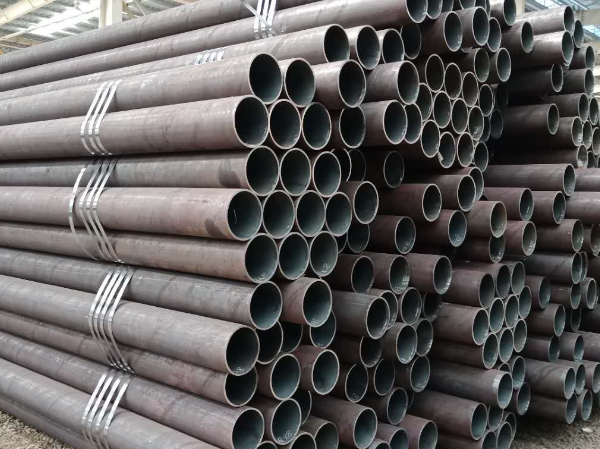
2. Quick Calculation: Seamless Steel Pipe Weight Calculator
If the required pipe size is not listed in the weight table, use the formula below to calculate the theoretical weight.
Formula
W = 0.02466 × WT × (OD − WT)
Where:
W = weight per meter (kg/m)
OD = outside diameter (mm)
WT = wall thickness (mm)
Example: 60 × 4 mm seamless pipe
W = 0.02466 × 4 × (60 − 4)
W = 5.52 kg/m
For a 6 m pipe:
5.52 × 6 = 33.12 kg/pipe
For 100 pipes:
33.12 × 100 = 3,312 kg = 3.31 metric tons
This calculation gives the theoretical weight per meter, weight per pipe, and total weight for a specified quantity.
3. Why do seamless steel pipes need to be calculated by weight?
3.1 Material Cost
Steel is typically priced and purchased based on weight. By calculating the weight of seamless steel pipes, it becomes easier to estimate the material cost accurately. This is particularly important in industries such as construction, manufacturing, and infrastructure projects where precise cost estimation is crucial.
3.2 Transportation and Handling
The weight of seamless steel pipes is an essential factor for transportation and handling purposes. Freight charges are often calculated based on weight, and knowing the weight of the pipes helps determine the shipping costs. Additionally, understanding the weight helps in planning the logistics and ensuring that proper equipment and manpower are allocated for loading, unloading, and installation.
3.3 Structural Integrity and Load Bearing Capacity
The weight of seamless steel pipes is relevant to their structural integrity and load-bearing capacity. Engineers and designers need to consider the weight of the pipes when designing structures or systems that incorporate them. This ensures that the supporting elements can adequately handle the weight and stresses imposed by the pipes.
3.4 Installation and Assembly
When installing or assembling seamless steel pipes, it is essential to know their weight to ensure proper handling and positioning. Knowing the weight helps determine the lifting equipment required and ensures that the installation process is carried out safely and efficiently.
3.5 Quality Control and Compliance
Calculating the weight of seamless steel pipes allows for quality control and compliance with industry standards. By comparing the actual weight with the specified weight, manufacturers and inspectors can ensure that the pipes meet the required specifications, tolerances, and quality standards.
Overall, calculating the weight of seamless steel pipes provides valuable information for cost estimation, transportation, structural design, installation, quality control, and compliance. It facilitates efficient project planning, helps maintain safety standards, and ensures that the pipes perform as intended within their intended applications.
4. FAQs
Q1. How do you calculate seamless steel pipe weight?
Use the pipe's OD and WT in the formula: W = 0.02466 × WT × (OD − WT). The result is the theoretical weight per meter in kg/m.
Q2. How much does a seamless steel pipe weigh per meter?
The weight per meter depends on the pipe's OD and WT. Use the weight table above or calculate the required size with the formula.
Q3. How do you calculate the total weight of seamless steel pipes?
Multiply the weight per meter by the pipe length and quantity: Total Weight = kg/m × Length × Quantity.
Q4. What is the weight of one seamless steel pipe?
Multiply the theoretical weight per meter by the pipe length: Weight per Pipe = kg/m × Length.
Read more:
Seamless Steel Pipe Weight Chart
Seamless Steel Pipe Size Chart – OD, Wall Thickness



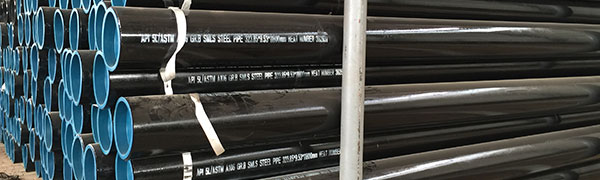
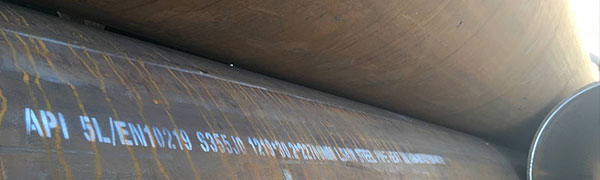


 Eastern Steel Manufacturing Co.,Ltd not only improve product production and sales services, but also provide additional value-added services. As long as you need, we can complete your specific needs together.