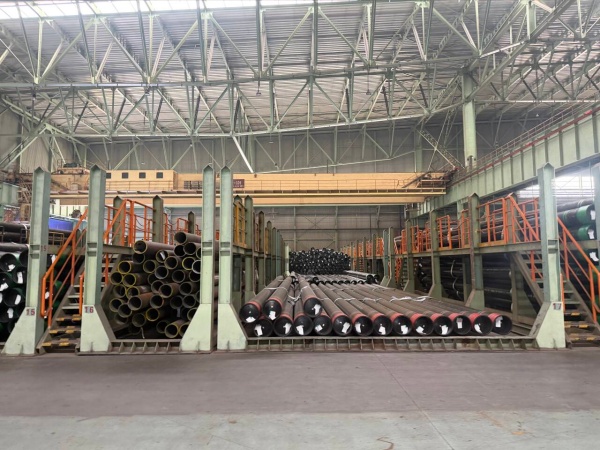
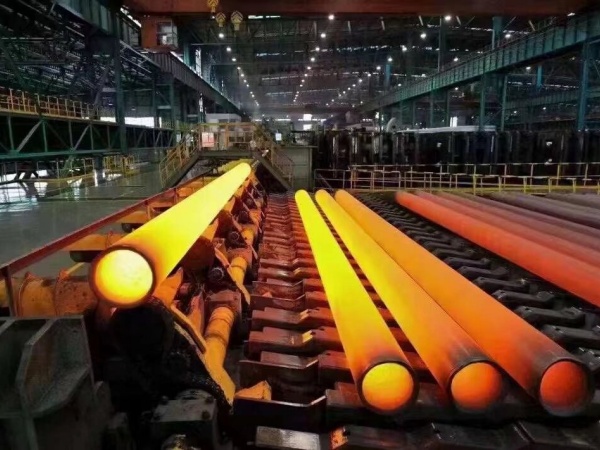
ERW pipe and seamless pipe are among the most commonly specified steel pipe products in pipeline, structural, and industrial applications. In reality, both products have distinct advantages and are designed for different operating requirements.
This article compares ERW pipe and seamless pipe from the perspectives of manufacturing, performance, dimensional characteristics, availability, and cost.
1. ERW Pipe vs Seamless Pipe: Quick Comparison
|
Criteria
|
ERW Pipe
|
Seamless Pipe
|
|
Manufacturing Method
|
Formed from steel coil and welded by high-frequency electric resistance welding
|
Produced from a solid billet through piercing and rolling
|
|
Weld Seam
|
Present
|
None
|
|
Dimensional Accuracy
|
Generally higher and more consistent
|
Good, but greater variation may occur
|
|
Surface Finish
|
Smooth and uniform
|
Depends on the rolling process
|
|
Production Efficiency
|
Higher
|
Lower
|
|
Cost
|
Generally lower
|
Generally higher
|
|
Availability
|
Widely available in standard sizes
|
More limited depending on size and grade
|
|
Heavy-Wall Capability
|
Suitable for most standard wall thicknesses
|
Often preferred for thick-wall products
|
|
Pressure Service
|
Suitable for many industrial applications
|
Often specified for severe service conditions
|
|
Typical Applications
|
Pipelines, water transmission, structural tubing
|
High-pressure process piping, power generation, and critical services
|
Modern ERW pipes (e.g., API 5L PSL2) are widely used in oil and gas transmission systems, while seamless pipes are often preferred for extreme pressure, severe cyclic loading, and other critical service conditions.
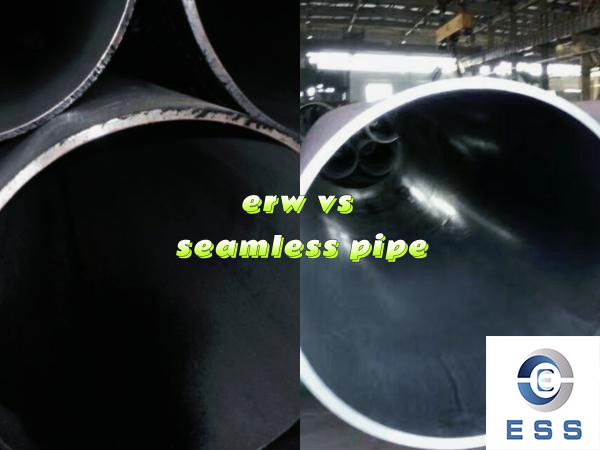
Another major difference between ERW steel pipe blanks and seamless steel pipe blanks is that the former is made of hot-rolled steel strips by cold rolling, while the latter is formed by perforating round steel in a hot-rolled state. Obviously, the grain size and the weave density of the seamless tube blank formed in the hot rolling state are quite different from those of the ERW tube blank, and the properties that can be caused by this must also be very different.
2. Strength and Mechanical Performance
Both ERW pipe and seamless pipe can be manufactured to meet the mechanical property requirements specified by standards such as API 5L, ASTM A53, and ISO 3183. In modern industrial applications, however, pipe selection is rarely based on strength values alone.
Engineers typically evaluate a combination of factors including weld integrity, material cleanliness, toughness, weldability, dimensional consistency, and long-term service performance. These factors provides a more meaningful comparison between ERW and seamless pipe than tensile strength alone.
2.1 Weld Strength
The existence of a longitudinal weld seam is often regarded as the most obvious difference between ERW pipe and seamless pipe.
Modern ERW pipe is produced using High-Frequency Welding (HFW), a solid-state welding process that joins the strip edges through heat generated by electrical resistance without the addition of filler metal. During production, the weld area is forged under pressure and subsequently inspected using non-destructive testing methods such as ultrasonic examination.
When manufactured in accordance with standards such as API 5L PSL2, the weld zone can achieve mechanical properties comparable to the surrounding base metal. As a result, ERW pipe is widely used in oil and gas transmission pipelines, water transportation systems, piling projects, and structural applications worldwide.
For many pipeline applications, the weld seam itself is no longer considered the limiting factor in pipe performance.
2.2 Material Quality and Metallurgical Characteristics
Modern ERW pipe is typically manufactured from continuously cast and controlled-rolled steel strip produced under clean-steel practices. Advanced secondary metallurgy processes help reduce sulfur and phosphorus content while improving chemical composition consistency throughout the coil.
In addition, calcium treatment is commonly applied to modify non-metallic inclusions and improve steel cleanliness. Compared with traditional steelmaking methods, modern pipeline-grade strip steel generally contains fewer harmful inclusions and demonstrates more uniform metallurgical properties.
For higher-strength grades, microalloying elements such as niobium (Nb), vanadium (V), and titanium (Ti) are often added in carefully controlled quantities. These elements refine grain structure, improve strength, and enhance toughness without significantly increasing carbon content.
2.3 Toughness and Field Weldability
Modern pipeline-grade ERW pipe often utilizes microalloying elements such as niobium (Nb), vanadium (V), and titanium (Ti). These elements improve strength through grain refinement while maintaining toughness and weldability.
For long-distance pipeline construction, field weldability is often more important than base metal strength alone. Low-carbon ERW steel provides predictable welding behavior, reduces the risk of weld cracking, and helps improve construction efficiency during pipeline installation.
3. Cost Comparison
ERW pipe is often associated with lower procurement costs, but the comparison is more complex than a simple price-per-ton calculation.
In practice, total project economics may be affected by factors such as hot-rolled coil versus billet pricing, manufacturing yield efficiency, diameter selection, wall thickness tolerance, and transportation weight.
For this reason, the cost difference between ERW and seamless pipe varies across applications and should be evaluated within the context of the overall project rather than product price alone.
For a detailed discussion of cost drivers and procurement considerations, refer to our ERW Pipe vs Seamless Pipe Cost Comparison guide.
4. Why Is Seamless Pipe Often Preferred for Critical Service?
Although modern ERW pipe has achieved excellent reliability and is widely used in transmission pipelines, seamless pipe continues to be specified in certain critical-service applications.
One reason is the absence of a longitudinal weld seam. In high-pressure piping systems governed by design codes such as ASME B31.3, weld joint efficiency may influence wall-thickness calculations and code compliance requirements.
Because seamless pipe contains no longitudinal weld seam, it is often treated with a weld efficiency factor of 1.0. Modern ERW pipe can also achieve equivalent design factors when manufactured and inspected in accordance with applicable specifications, but project requirements ultimately depend on the governing code and service conditions.
5. Engineering Selection Considerations
ERW pipe is widely used in standard pressure applications, transmission pipelines, structural systems, and large-volume projects where dimensional consistency, availability, and cost efficiency are key considerations.
Seamless pipe, on the other hand, is more commonly specified in systems involving elevated pressure, severe cyclic loading, high-temperature operation, or other critical-service conditions governed by stricter design margins.
In practice, both products can meet applicable international standards such as API 5L, ASTM A53, and ASME requirements.
Read more: What Is ERW Pipe? Complete Guide and ERW Pipe Production Line Overview



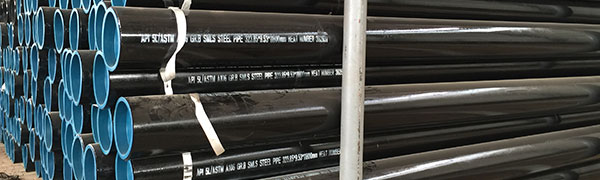
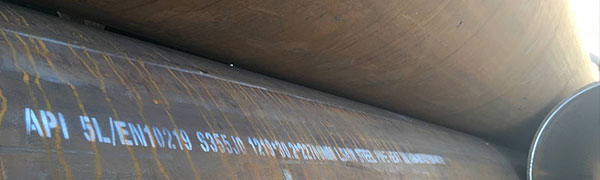
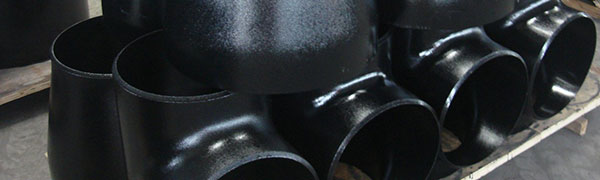
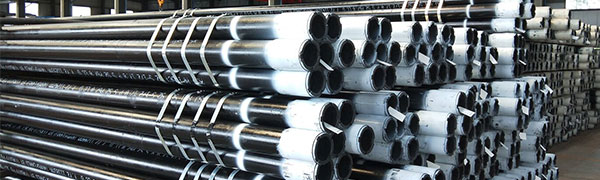
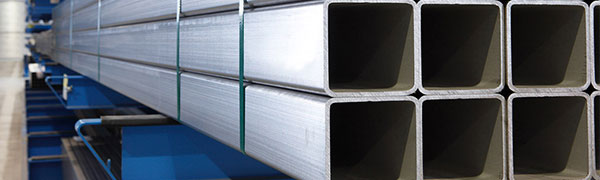


 Eastern Steel Manufacturing Co.,Ltd not only improve product production and sales services, but also provide additional value-added services. As long as you need, we can complete your specific needs together.