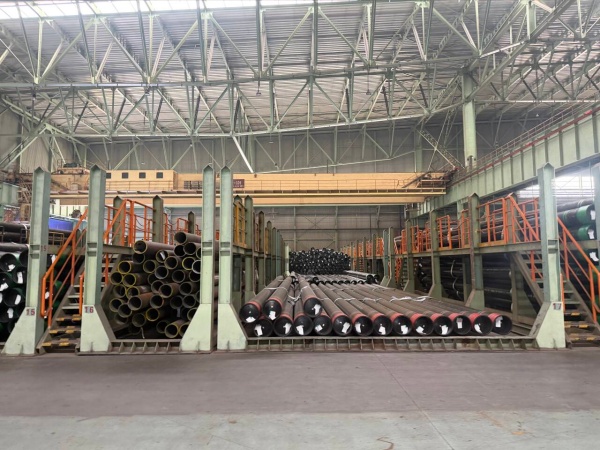
Large-diameter
seamless steel pipe refers to seamless
steel pipe with an outer diameter of 1000mm or more. Seamless steel
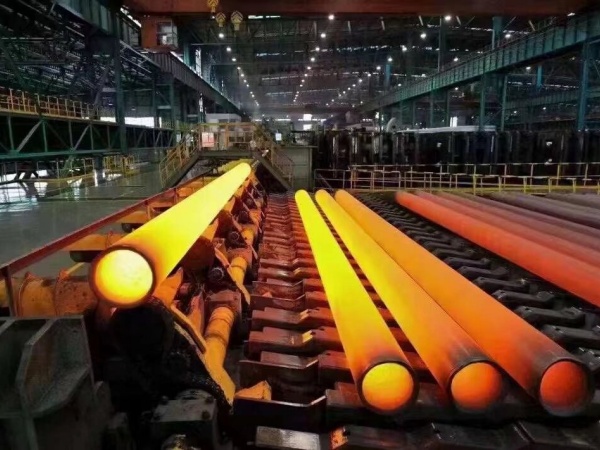
pipe is made by perforating steel ingots or solid billets into capillaries, and
then processing them through processes such as hot rolling, cold rolling, or
cold drawing. The seamless steel pipes we purchase come in different lengths.
Shorter pipes can be welded, while longer pipes require trimming (cutting) to
the required length for seamless pipe construction.
There are many methods for cutting seamless
steel pipe. Flame cutting, laser cutting, or specialized mechanical cutting
tools are recommended for cutting large-diameter seamless steel pipe. The
specific method to choose depends on factors such as pipe diameter, material
thickness, required cutting accuracy, and site conditions.
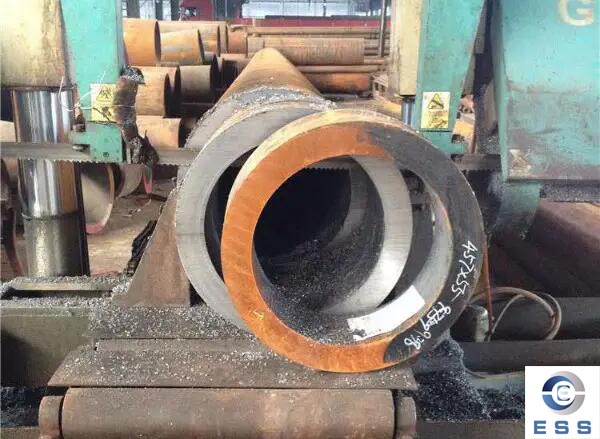
Cutting Methods for Large-Diameter
Seamless Steel Pipe
1. Flame Cutting
Flame cutting is a traditional method for
cutting large-diameter seamless steel pipe.
Cutting Principle:
It uses a mixture of a fuel gas such as
oxyacetylene or oxypropane and oxygen to generate a high-temperature flame,
which heats and melts the steel pipe. A high-pressure oxygen stream then blows
away the molten portion, achieving cutting.
Features:
Flame cutting equipment is simple and
low-cost, making it suitable for field operations and cutting thick-walled
steel pipes.
However, flame cutting suffers from low
precision, a rough cut surface, and a tendency to create a heat-affected zone
(HAZ), which can affect the mechanical properties of the steel pipe.
2. Laser Cutting
Laser cutting is a high-precision,
high-efficiency cutting method.
Cutting Principle:
It uses a high-energy laser beam to
illuminate the surface of the steel pipe, rapidly melting, vaporizing, or
igniting the material. Simultaneously, a high-speed airflow blows away the
molten or burning material, achieving the desired effect.
Features:
Laser cutting offers advantages such as
high precision, high speed, and a minimal heat-affected zone, making it
suitable for applications requiring high cutting precision.
However, laser cutting equipment is
expensive and requires high operator skill.
3. Mechanical Cutting
Mechanical cutting involves cutting
large-diameter seamless steel pipes using specialized mechanical cutting tools.
Cutting Principle:
These tools typically feature a high-speed
rotating blade or saw, which cuts through friction and shearing between the
blade and the pipe.
Features:
Mechanical cutting offers advantages such
as high precision, high efficiency, and ease of operation, and it avoids
creating a heat-affected zone (HAZ). However, mechanical cutting tools are
relatively expensive, and the blades or saws are subject to significant wear
and tear, requiring regular replacement.
Basic Requirements for Cutting Large
Diameter Seamless Steel Pipes
The cutting of large diameter seamless
steel pipes requires ensuring a smooth, burr-free, and dimensionally accurate
cut. Furthermore, deformation or material damage caused by high temperatures or
mechanical stress during the cutting process must be avoided. To ensure cutting
quality and subsequent welding performance, the cutting process must meet the
following technical standards:
|
Item
|
Requirement Standard
|
Description
|
|
Cut perpendicularity
|
≤1 mm/100 mm
|
Ensure end-to-end butt joint accuracy
during installation
|
|
Surface quality
|
Free of burrs, cracks, or heavy skin
|
Affect weld sealing
|
|
Heat-affected zone
|
Minimize
|
Avoid annealing or hardening of tissue
|
|
Dimensional deviation
|
≤±1 mm
|
Meet engineering design requirements
|
Seamless steel pipes for different
applications require different cutting accuracy and surface quality. Therefore,
it is important to clearly define the requirements and select the appropriate
cutting method before cutting.
Choosing Large Diameter Seamless Steel
Pipe Cutting Equipment
When selecting cutting equipment, consider
the following factors:
1. Steel Pipe Material and Wall Thickness
Different steel pipe materials require
different cutting methods. For example, stainless
steel pipes are more suitable for laser or water jet cutting, while carbon
steel pipes are better suited for flame or mechanical cutting.
2. Cutting Accuracy Requirement
High-precision processing requires laser or
plasma cutting.
3. Production Volume
For large-volume production, it is
recommended to use highly automated equipment, such as CNC laser cutting
machines.
4. Budget
Equipment price and subsequent maintenance
costs should be considered comprehensively. Flame cutting offers the highest
cost-effectiveness.
Post-Cutting Processing for Large
Diameter Seamless Steel Pipes
After cutting, the following processing is
typically required:
1. Deburring
Use a grinding tool or a dedicated
deburring machine to clean the cut edges.
2. Anti-corrosion Treatment
Some steel pipes require anti-rust paint or
protective coating.
3. Dimensional Inspection
Use measuring tools to check that the cut
meets the requirements.
Safety Precautions
1. Operators must wear protective equipment
such as goggles and gloves.
2. Fire precautions must be taken during
flame and plasma cutting, and the work area should be well ventilated.
3. Regularly maintain equipment to avoid
accidents caused by mechanical failure.
Summary
When selecting cutting tools for
large-diameter seamless steel pipe, factors such as pipe diameter, material
thickness, required cutting accuracy, and site conditions should be
comprehensively considered. For example, for large-diameter and thick-walled steel
pipes, flame cutting or mechanical cutting can be used; for applications
requiring higher cutting accuracy, laser cutting is recommended. Safety and
environmental considerations should also be considered during the cutting
process to ensure the safety of operators and the environment.



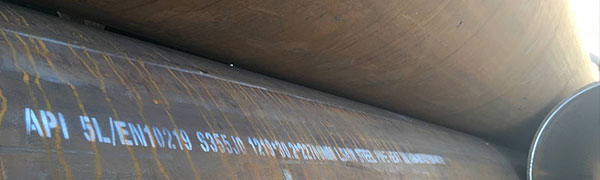
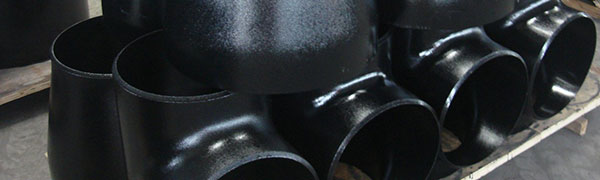
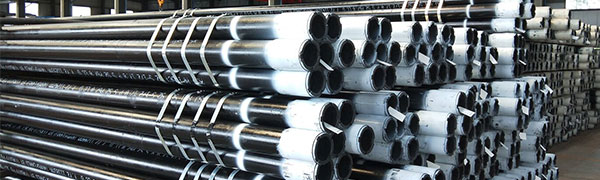
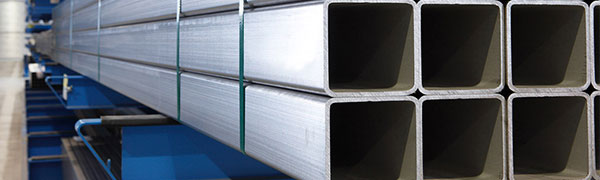


 Eastern Steel Manufacturing Co.,Ltd not only improve product production and sales services, but also provide additional value-added services. As long as you need, we can complete your specific needs together.