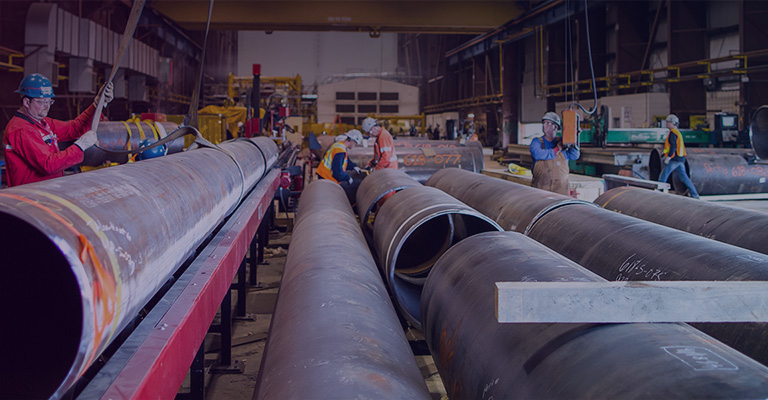
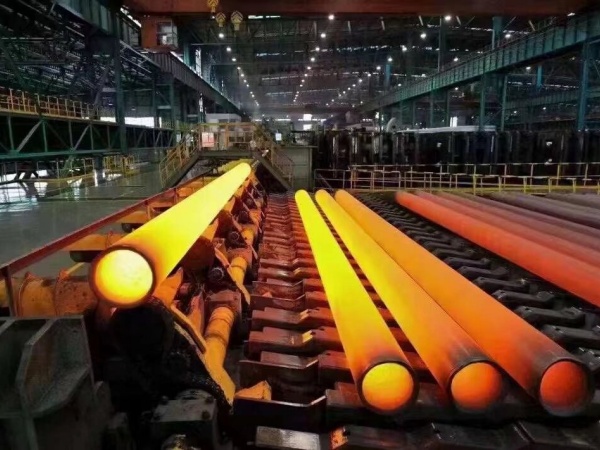
Drill pipe heat treatment refers to heating the drill pipe material to a certain
temperature and holding it for a certain period of time, and then rapidly
cooling or slowly cooling it to achieve a certain metallographic structure and
hardness. The drill pipe after heat treatment has higher strength, wear
resistance and corrosion resistance, thereby extending the service life of the
drill pipe and improving drilling efficiency.
Heat treatment process
Drill pipe heat treatment mainly includes
two steps: Quenching and tempering.
1. Quenching
Heat the drill pipe body to 880℃-930℃, keep it warm for 40-60 minutes, and
then quickly cool it to a quenching liquid of 10℃-30℃ for no less than 30 seconds.
2. Tempering
Heat the quenched drill pipe body to 560℃-590℃, keep it
warm for 60-85 minutes, and then naturally cool it to room temperature.
Drill Pipe Heat Treatment Flow
1. Quenching
Overhead crane hoisting → Loading platform → Automatic loading
mechanism → Feed roller conveyor → Quenching inductor → Discharge roller
conveyor → Spraying → Quenching
complete
2. Tempering
Feed roller conveyor → Tempering inductor → Discharge roller
conveyor → Tempering complete → Automatic unloading mechanism → Unloading platform → Overhead crane hoisting
Features of the Drill Pipe Heat
Treatment
The entire production line is fully
automated, using online continuous heating and PLC/computer centralized control
for high precision. The workpiece heating temperature curve can be preset
according to process requirements.
The computer program compares the measured
workpiece temperature with the set temperature curve and uses PID regulation to
adjust the heating power in real time, controlling the heating temperature to
achieve a better metallographic structure.
1. Uniform heating and high temperature
control precision.
2. High degree of automation, enabling
fully automatic unmanned operation and improving labor productivity.
3. High power efficiency and power factor,
with a wide voltage range.
4. Rapid start-up: Can reach full power
operation within 0.1 seconds.
5. High reliability: Can operate
continuously for 24 hours without interruption.
6. Energy monitoring: Equipped with
continuous recording, saving, and querying functions for key production
parameters such as heating voltage, current, power, quenching fluid flow rate,
and quenching fluid temperature; historical data can be exported for easy
viewing.
Benefits of Drill Pipe Heat Treatment
1. Anti-corrosion
The oil working
environment is seriously polluted and is easily affected by corrosion during
the drilling process. After heat treatment, the drill pipe can effectively
improve its corrosion resistance and maintain corrosion resistance for a long
time.
2. Improve hardness
After heat treatment,
the drill pipe has fine grains and a denser metallographic structure, thereby
improving the hardness of the drill pipe. This increase in hardness not only
prevents wear caused by friction, but also helps to improve the strength and
toughness of the drill pipe.
3. Improve toughness
Heat treatment of
drill pipe can improve the internal structure of steel, reduce grain size, and
make the structure dense, thereby improving the toughness of the drill pipe and
reducing the risk of drill pipe breakage.
4. Improve heat resistance
In high
temperature environments, conventional steel is prone to chemical changes,
resulting in performance degradation, while heat-treated drill pipes can
maintain a certain heat resistance and can be used for a long time in high
temperature environments.
5. Extend service life
Heat-treated drill
pipes have the advantages of wear resistance, corrosion resistance, and high
strength. They can be used in complex working environments, extend the service
life of drill pipes, reduce maintenance costs, and improve production
efficiency.
Applications of Drill Pipe Heat Treatment
Used for heat treatment, quenching and tempering of oil drill pipes, heating of oil drill pipes, geological drill pipes, sucker rods, and coal drill pipes.
Similar production lines mainly include oil drill pipe heat treatment production lines, hydraulic support tempering, single support tempering, cylinder tempering, round steel (pipe) tempering, medium frequency tempering, long bar tempering, pin tempering, piston rod tempering, drill pipe and drill collar tempering, and medium frequency tempering equipment, etc.
Summary
Drill pipe heat treatment has important
application value in the field of oil exploration and production. Heat-treated
drill pipe has multiple advantages, such as corrosion resistance, enhanced
hardness, improved toughness, improved heat resistance and extended service
life. Compared with conventional drill pipe, heat-treated drill pipe is more
suitable for use in harsh working environments, which helps to improve
exploration and production efficiency and reduce costs.
Read more: API Drill Pipe Thread Types or Steel Grade and Classification Method of Drill Pipe



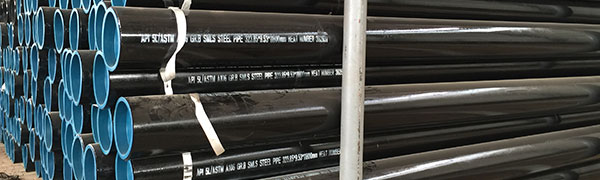
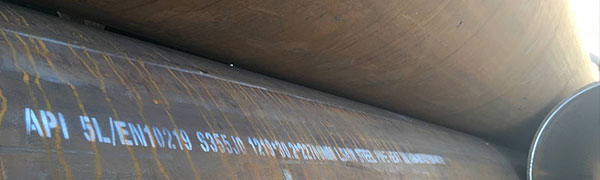


 Eastern Steel Manufacturing Co.,Ltd not only improve product production and sales services, but also provide additional value-added services. As long as you need, we can complete your specific needs together.