In most industrial and construction projects, carbon steel pipe is usually cheaper than galvanized steel pipe because galvanized pipe requires an additional zinc coating process.
However, galvanized pipe may provide lower long-term maintenance costs in outdoor or humid environments due to its corrosion resistance.
The actual price difference depends on pipe size, wall thickness, coating method, and project application.
1. Average Price Difference Between Carbon and Galvanized Steel Pipe
In most industrial and construction applications, carbon steel pipe is generally cheaper than zinc-coated pipe.
Because galvanized steel pipe requires an additional zinc coating process, its manufacturing and processing costs are usually higher. Depending on pipe size, wall thickness, coating type, and market conditions, galvanized steel tubing may cost approximately 10%–30% more than standard carbon steel pipe.
The actual price difference may vary based on several technical and commercial factors, including:
- Pipe diameter and wall thickness
- Seamless pipe or welded pipe type
- Hot-dip galvanized or pre-galvanized process
- Zinc coating thickness
- Steel raw material prices
- Order quantity and project specifications
For example, seamless galvanized steel pipe is usually more expensive than welded galvanized pipe because of its more complex manufacturing process and higher production cost.
|
Pipe Type
|
Relative Initial Cost
|
Main Cost Factor
|
|
Carbon Steel Pipe
|
Lower
|
Standard steel manufacturing
|
|
Pre-Galvanized Steel Pipe
|
Medium
|
Zinc-coated steel strip
|
|
Hot-Dip Galvanized Steel Pipe
|
Higher
|
Post-production zinc coating
|
2. Why Does Galvanized Steel Pipe Cost More?
The higher price of galvanized steel pipe mainly comes from the additional galvanizing process and zinc material consumption.
Compared with standard carbon steel pipe, galvanized pipe requires additional processing after pipe manufacturing, including surface treatment, zinc coating, and coating inspection. These extra production steps increase both material consumption and manufacturing costs.
In addition, zinc itself is a significant cost factor. Changes in global zinc prices may directly affect galvanized steel pipe prices, especially for pipes with thicker coating requirements.
Coating thickness standards also influence the final cost. Pipes designed for outdoor, humid, or corrosive environments often require heavier zinc coatings to improve long-term corrosion protection and service life.
Furthermore, galvanized steel pipe production requires specialized galvanizing equipment, additional energy consumption, and stricter quality control processes, all of which increase the overall manufacturing cost.
3. Long-Term Cost Comparison
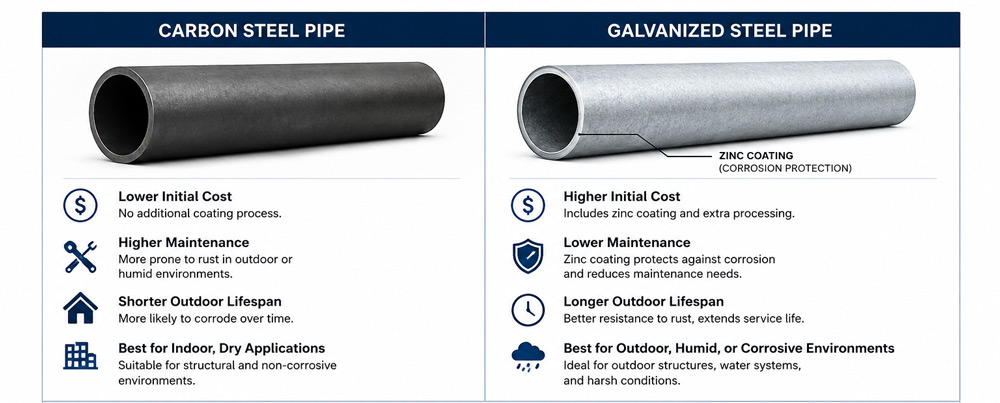
Although carbon steel pipe usually has a lower initial purchase price, galvanized steel pipe may reduce long-term maintenance and replacement costs in certain environments.
For projects exposed to moisture, rain, chemicals, or outdoor conditions, galvanized steel pipe often provides longer service life and lower corrosion-related maintenance requirements.
|
Factor
|
Carbon Steel Pipe
|
Galvanized Steel Pipe
|
|
Initial Cost
|
Lower
|
Higher
|
|
Corrosion Protection
|
Lower
|
Higher
|
|
Maintenance Cost
|
Higher
|
Lower
|
|
Outdoor Lifespan
|
Shorter
|
Longer
|
|
Replacement Frequency
|
More Frequent
|
Less Frequent
|
|
Long-Term Cost Efficiency
|
Lower in corrosive environments
|
Higher in corrosive environments
|
For indoor dry structural applications and short-term projects, carbon steel pipe is usually the more economical option because of its lower upfront cost.
However, for outdoor infrastructure, water systems, agricultural projects, and humid industrial environments, galvanized steel pipe may provide better long-term value by reducing maintenance frequency and extending service life.
In industrial procurement projects, pipe selection is often evaluated based on total ownership cost rather than initial material price alone. Maintenance frequency, service life, corrosion exposure, and replacement cost may all affect long-term project expenses. For budget-sensitive projects with limited corrosion exposure, carbon steel pipe is often selected because of its lower upfront investment.
Read more: Galvanized Steel Pipe vs Carbon Steel Pipe: Differences and Best Applications





 Eastern Steel Manufacturing Co.,Ltd not only improve product production and sales services, but also provide additional value-added services. As long as you need, we can complete your specific needs together.