The seamless
pipe (SMLS full form) can be classified according to various standards,
each containing multiple types. They can be categorized by manufacturing
method, cross-sectional shape, application, material, and precision. The
following is a detailed summary of seamless pipe classifications.
Seamless Pipe Types Classified by Production Method
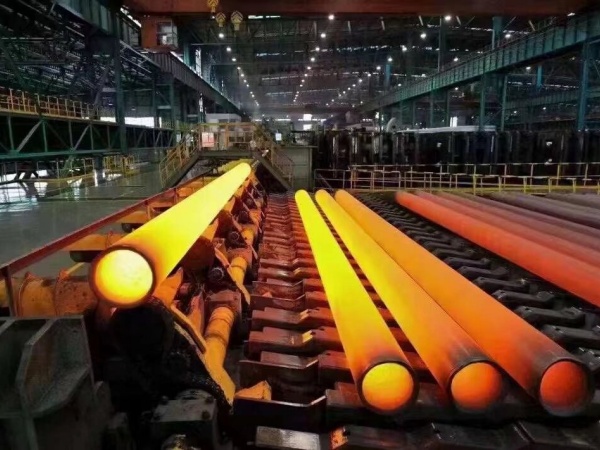
Production Process: Manufactured through
processes such as heating a round pipe billet, piercing, three-roll skew
rolling or continuous rolling, pipe removal, sizing (or reduction), cooling,
straightening, and hydrostatic testing (or flaw detection).
Features: High production efficiency, low
cost, suitable for mass production.
Production Process: Manufactured from round
pipe billets through processes such as heating, piercing, heading, annealing,
pickling, oiling (copper plating), multi-pass cold drawing (cold rolling),
billet pipe formation, heat treatment, straightening, and hydrostatic testing
(flaw detection).
Features: High precision, good surface
quality, but low production efficiency and higher cost.
3. Extruded Seamless Pipe
Production Process: Metal billets are
extruded into seamless pipe shapes using an extrusion process.
Features: Suitable for manufacturing SMLS
pipes of special shapes or materials.
4. Pipe Jacking
Production Process: A special method for
producing seamless pipes, using a jacking process to push metal billets into SMLS
pipes.
Features: Suitable for manufacturing
long-distance, large-diameter seamless pipes.
Seamless Pipe Types Classified by Cross-sectional Shape
1. Circular Seamless Pipe
Features: The most common shape of seamless
pipes, with a hollow cross-section and no seams around the perimeter.
Applications: Widely used in various fluid
transportation and structural support applications.
2. Irregularly Shaped Seamless Pipe
Classification: Includes square, oval,
triangular, hexagonal, seed-shaped, star-shaped, and finned pipes.
Features: Designed according to specific
needs to meet the requirements of different applications.
Applications: Such as automotive drive
shafts, oil drill pipes, and pipes for building structures.
Seamless Pipe Types Classified by Use
1. Structural Seamless Pipes
Applications: Used for general structures
and mechanical structures, such as buildings, bridges, and machinery
manufacturing.
2. Seamless Pipes for Fluid Transportation
Applications: Used for transporting fluids
such as water, oil, and gas, such as pipeline systems in the petroleum, natural
gas, and chemical industries.
3. Seamless Steel Pipes for Boilers
Classification: Includes seamless steel pipes
for low and medium pressure boilers and seamless steel pipes for high pressure
boilers.
Applications: Used in the manufacture of
boiler heating surface pipes, superheated steam pipes, boiling water pipes,
etc.
4. Seamless Steel Pipes for Geological
Drilling
Applications: Used by geological
departments for core drilling, such as in the exploration of oil, natural gas,
and mineral resources.
5. Seamless Steel Pipes for Petroleum
Cracking
Applications: Suitable for furnace pipes,
heat exchangers, and pipelines in petroleum refineries, used in the petroleum
cracking process.
6. High-Pressure Seamless Steel Pipes for
Fertilizer Equipment
Applications: Used in the manufacture of
fertilizer equipment and pipelines, capable of withstanding high pressure and
corrosive media.
7. Seamless Steel Pipes for Marine
Engineering
Applications: Used in the manufacture of
pressure-resistant piping systems, boilers, and superheaters for ships, meeting
the requirements for use in harsh environments.
8. Seamless Steel Pipes for Automobile Axle
Sleeves
Applications: Used in the manufacture of
automobile axle sleeves and drive axle housing pipes, capable of withstanding
vibrations and impacts during vehicle operation.
9. Other Special-Purpose Seamless Pipes
Such as high-pressure OCTG pipes for diesel
engines, precision inner diameter SMLS pipes for hydraulic and pneumatic
cylinders, etc., each suitable for equipment and pipelines in specific fields.
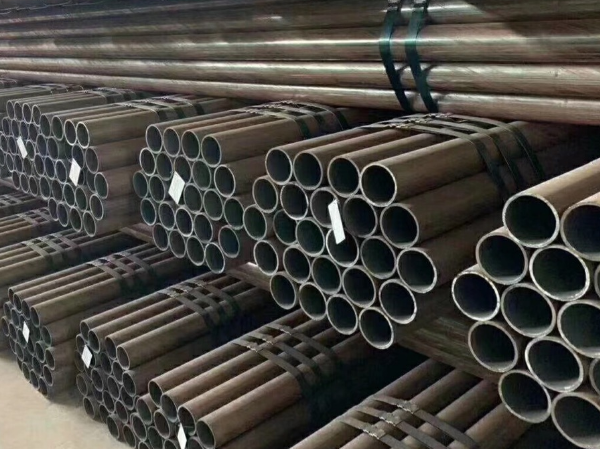
Seamless Pipe Types Classified by Material
Material: Made of ordinary carbon
structural steel or high-quality carbon structural steel.
Application: Seamless pipes made of
low-carbon steel such as 10#, 20#, and 45# are mainly used for fluid
transportation pipelines.
2. Alloy Seamless Pipe
Material: Made of low-alloy steel or alloy
steel.
Application: SMLS pipes made of low-alloy
structural steel such as 16Mn and 5MnV, or alloy structural steel such as 40Cr,
30CrMnSi, 45Mn2, and 40MnB, are used to manufacture mechanical parts or
pipelines that withstand high pressure.
3. Stainless Steel Seamless Pipe
Material: Made of stainless steel.
Application: Possessing corrosion
resistance, widely used in corrosion-resistant pipelines, structural
components, and parts in chemical, petroleum, light textile, medical, food, and
machinery industries.
Seamless Pipe Types Classified by Precision
1. Ordinary Seamless Pipes
Characteristics: Relatively low precision,
average surface quality.
Applications: Suitable for applications
where high precision is not required.
2. Precision Seamless Pipes
Characteristics: High precision, good
surface quality, and excellent inner and outer wall finish.
Applications: Such as precision inner
diameter SMLS pipes for hydraulic and pneumatic cylinders, suitable for
applications requiring high precision.
Summary
In conclusion, there are many types of
seamless steel pipes, each with its own characteristics. When selecting
seamless steel pipes, the appropriate type and material should be chosen based
on actual needs and applications to ensure performance and service life.
Read more: Seamless Pipe Material or Seamless Steel Pipe Sizes



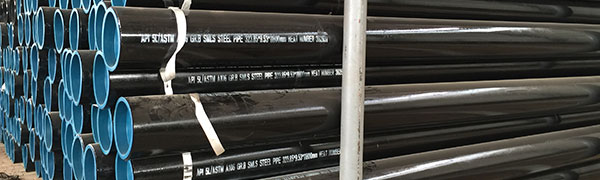
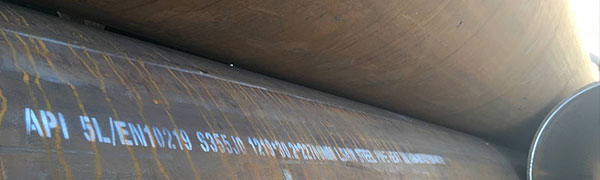
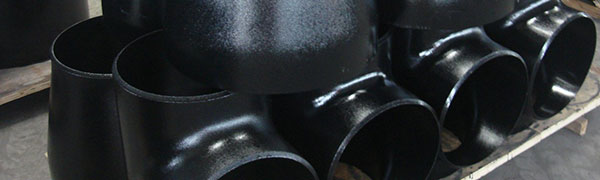
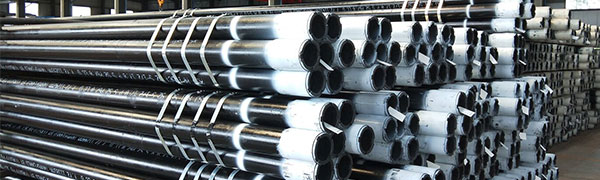
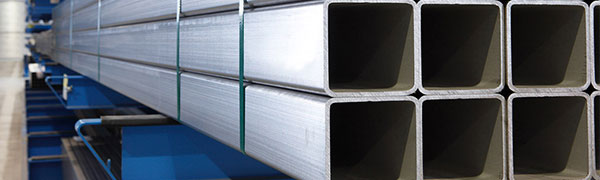
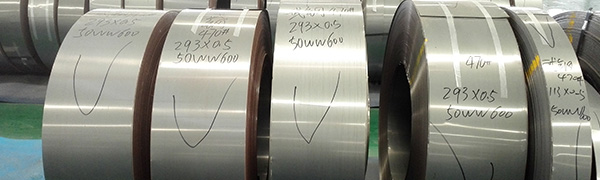


 Eastern Steel Manufacturing Co.,Ltd not only improve product production and sales services, but also provide additional value-added services. As long as you need, we can complete your specific needs together.