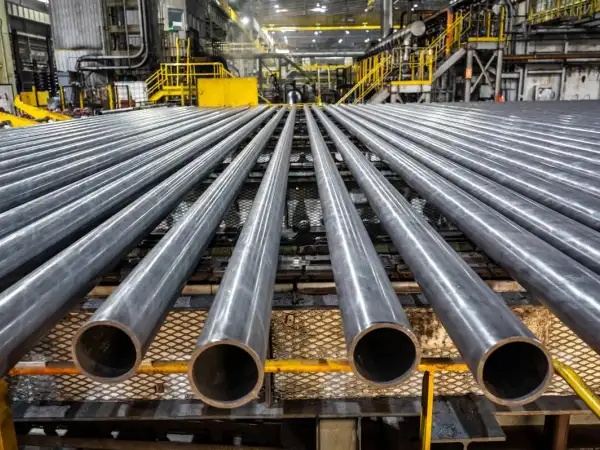
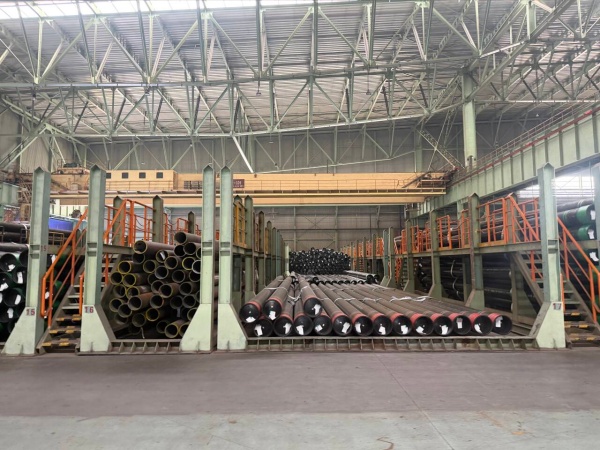
Heat treatment is a process in which carbon steel pipes (CS pipe full form) are heated to a certain
temperature, held for a period of time, and then cooled to change the internal
structure and properties of the pipe. Under different heat treatment
conditions, the mechanical, physical, and chemical properties of carbon steel
pipes will change accordingly to adapt to specific application environments and
requirements.
Heat treatment methods for carbon steel
pipes include annealing, normalizing, quenching, and tempering. Different heat
treatment methods can change the hardness, toughness, and other mechanical
properties of the steel, as well as its chemical composition, to meet the needs
of different fields.
Why Do Carbon Steel Pipes Need Heat
Treatment?
1. Influence of Wall Thickness
Heat treatment is necessary for thicknesses
exceeding a certain level. The wall
thickness of carbon steel pipes determines their cooling rate and
microstructure uniformity:
Carbon steel pipes with a wall thickness
<25 mm usually do not require heat treatment because cooling is uniform,
residual stress is low, and can be released through natural aging.
Carbon steel pipes with a wall thickness
range of 25–38 mm require heat treatment depending on
the working conditions, because local microstructure differences begin to
appear, and the weld heat-affected zone increases.
Carbon steel pipes with a wall thickness
greater than 38 mm (thick-walled pipes) must undergo heat treatment because the
different cooling rates inside and outside the pipe result in high residual
stress and a tendency to crack easily.
2. Welding and Cold Working Generate
Dangerous Stresses
Welding joints, cold bending, rolling, cold
drawing, and other processes can cause:
Local hardening (HAZ);
High residual tensile stress;
Grain distortion;
These factors can reduce pipeline life and
even become safety hazards.
3. Improving Low-Temperature Toughness and
Service Life
Applications such as LNG, cryogenic
pipelines, and pressure vessels often require pipes to have:
Higher impact absorption value (Charpy
V-notch);
More stable dimensional accuracy;
Higher microstructure uniformity;
Heat treatment can significantly improve
these properties.
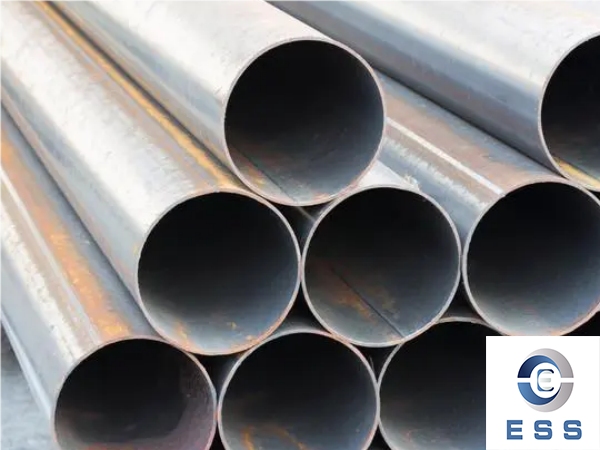
Heat Treatment of Carbon Steel Pipes
1. Pipe Annealing
Annealing is a heat treatment method that
involves heating carbon steel pipes to a certain temperature and then slowly
cooling them.
Typical Temperature: 700–900°C
Cooling Method: Slow furnace cooling (the
slower the cooling, the softer the pipe).
Function: Annealing can homogenize the
internal structure of steel, eliminate internal stress, reduce hardness, and
improve toughness and plasticity.
It also improves the steel's machinability
and corrosion resistance.
Application: Annealing is an essential step
for carbon steel pipes that require deep drawing, cold shearing, cold drawing,
and other cold working processes.
2. Pipe Normalizing
Normalizing is a heat treatment method that
involves heating the carbon steel pipe to a certain temperature and then
air-cooling it.
Typical Temperature: 850–950°C
Cooling Method: Air cooling (slightly
faster than annealing).
Function: This method can improve the
hardness and wear resistance of steel, while also increasing its tensile
strength and load-bearing capacity.
Application: Generally, high-alloy steels
require normalizing treatment to meet the requirements of high strength and
high hardness.
However, due to the relatively high
internal stress in normalized steel, tempering is usually necessary to
eliminate these stresses.
3. Pipe Quenching
Quenching treatment is a heat treatment
method in which carbon steel pipes are heated to a certain temperature and then
quenched in water, oil, or other quenching media.
Typical Temperature: 800–900°C
Media: Water, oil, polymers, or gas.
Purpose: This method can improve the
hardness, wear resistance, and toughness of steel, but it easily generates
significant stress, which usually requires tempering to eliminate.
Applications: Commonly used in turbine
components, high-pressure equipment, and wear-resistant pipeline systems.
The choice of quenching method and
temperature also depends on the specific steel material and requirements.
4. Pipe Tempering
Tempering treatment is a heat treatment
method in which quenched carbon steel pipes are reheated to a certain
temperature and then slowly cooled.
Typical Temperature: 200–700°C (varies depending on requirements)
Purpose: This method can eliminate internal
stress in the steel, adjust the hardness and toughness of the steel, thereby
optimizing the steel's performance.
Low-temperature tempering (200–350°C): Maintains hardness and reduces
stress.
Medium-temperature tempering (350–500°C): Improves elasticity and toughness.
High-temperature tempering (500–700°C): Obtains stable properties (combined
with quenching, this is called "tempering").
Applications: Quenched thick-walled pipes,
pressure pipes, and load-bearing structures.
Generally, the tempering temperature and
time need to be selected based on different steel materials and specific
requirements.
The Role of Heat Treatment
1. Eliminates Forming Stress
Localized
hardening zones caused by welding or cold bending can threaten pipeline safety
like time bombs.
2. Enhances Toughness Reserves
Thick-walled pipes are prone to brittle
fracture at low temperatures; heat treatment can awaken the material's impact
resistance potential.
3. Stabilizes Dimensional Accuracy
High-temperature tempering can prevent the
risk of deformation in subsequent processing of thick-walled pipes.
Effects of Heat Treatments on Carbon Steel
|
Heat Treatment
|
Temperature (°C)
|
Cooling Method
|
Main Effect
|
Application
|
|
Quenching
|
800–900
|
Controlled (air cooling)
|
Increases hardness
|
Tools, gears, bearings
|
|
Tempering
|
Corrosion resistance, toughness
|
Austenitic Stainless Steels
|
Reduces brittleness
|
Structural components, springs
|
|
Annealing
|
700–900
|
Slow (furnace cooling)
|
Increases ductility
|
Machinable parts, deformable components
|
|
Normalizing
|
800–900
|
Boilers, reactors
|
Improves uniformity
|
Structures, mechanical components
|
Factors for Selecting the Thickness of
Carbon Steel Pipes After Heat Treatment
1. Operating Environment and
Physicochemical Performance Requirements
Selection should be based on the operating
environment and physicochemical performance requirements of the carbon steel
pipe. This means minimizing processing and production costs while ensuring
mechanical strength and physicochemical properties.
2. Material Type, Shape, and Size
Different types, shapes, and sizes of pipes
may require different heat treatment strategies and solutions, which need to be
selected based on specific circumstances.
3. Production Standards and Specifications
Thickness should be evaluated and selected
according to domestic and international standards and specifications.
Precautions for Carbon Steel Pipe Heat
Treatment Operations
1. Preparation Before Heat Treatment
Before heat treatment, the pipe needs to be
inspected, cleaned, and adjusted to ensure that the pipe surface is free of
contaminants and defects such as oil and rust.
2. Heating Control
The heating and holding processes require
temperature and time control, and adjustments should be made according to
specific circumstances.
3. Cooling Method Selection
Water, oil, or air should be selected based
on the hardening capacity of the steel to avoid uneven cooling that could lead
to bending or cracking.
4. Subsequent Inspection
After heat treatment, inspection and
testing are required to ensure the pipe performance meets requirements.
FAQ
1. How to heat treat high carbon steel?
For high carbon steel, heat to 200°C (400°F), hold at this temperature for one
hour, and then cool to room temperature. Repeat this process twice, for a total
of three heating cycles.
2. Can carbon steel be heat treated twice?
Yes.
Carbon steel can be heat treated multiple
times, as long as the temperature, holding time, and cooling method are
properly controlled, it will not damage the material properties.
Repeated heat treatment is often used to
relieve stress, correct microstructure, or meet specific mechanical property
requirements. However, overheating should be avoided to prevent grain growth.
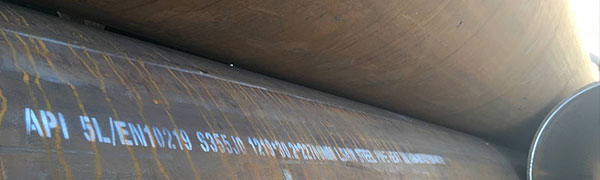
3. What is the best heat treatment for API 5L pipes?
Normalizing or normalizing + tempering
(N+T) is usually used.
These processes improve microstructure
uniformity, enhance toughness and tensile strength, enabling them to meet the
pressure and crack resistance requirements of oil and gas pipelines, and are
particularly suitable for PSL2 grade pipeline steel.
Summary
In summary, heat treatment of carbon steel
pipes is a crucial means to ensure the safe and stable operation of steel pipes
in high-temperature, high-pressure, corrosive, low-temperature, and
mechanically loaded environments. Selecting appropriate annealing, normalizing,
quenching, or tempering regimes based on wall thickness, material grade,
operating conditions, and industry standards can significantly improve steel
performance, extend service life, and reduce risks.
Read more: Heat
Treatment Process of Seamless Carbon Steel Pipe or Carbon
Steel Pipe Temperature Range





 Eastern Steel Manufacturing Co.,Ltd not only improve product production and sales services, but also provide additional value-added services. As long as you need, we can complete your specific needs together.